
Cambodia visa in 2026: what you actually need
Learn what you actually need for a Cambodia visa in 2026, including entry requirements, documents, and travel tips.
Planning a journey to Cambodia in 2026 means navigating a system that's both streamlined and digital, but not always intuitive for first-timers. With immigration requirements shifting towards more online pre-approval and mandatory declarations, it's essential to know exactly what to prepare before you board your flight. This comprehensive guide distills everything you need—the latest rules, shortcuts for stress-free arrivals, and clear answers for every traveler, whether you're dropping in for Angkor's sunrise or plotting a longer Southeast Asian adventure. Start here to avoid airport delays and discover how you can make Cambodia's new entry process work in your favor.
Do you actually need a visa for Cambodia?
Before diving into Cambodia's diverse landscapes, you first need to understand if a visa is required for your nationality. For 2026, travelers fall into three main groups: those who enjoy visa-free entry (mainly ASEAN countries), those eligible for an eVisa or visa on arrival, and those who must arrange entry through an embassy. No matter which group you belong to, there's one universal mandate: all travelers must submit the Cambodia e-Arrival digital declaration before arrival. This form is separate from your visa—it’s required even for visa-free visitors and must be completed online for a smooth immigration process. The following guide breaks down which travelers need a visa, how to check your own status, and what paperwork is mandatory for every arrival.
Who can enter Cambodia without a visa
Visa-free entry is Cambodia's way of welcoming neighbors—primarily ASEAN nationals—with quick, paperless travel for short trips. Notable durations for 2026: Malaysians, Singaporeans, Vietnamese, and Indonesians receive 30 days visa-free; Filipinos get 21 days; Thai and Bruneian passports are valid for 14 days. These allowances are for tourism or business visits only, never work or long-term stays. Passports for visa-exempt entries must have at least six months' validity from arrival and at least one blank page. Regardless of visa exemption, every traveler must complete the e-Arrival form online before travel—bring your confirmation to show at immigration.
The Cambodia visa types explained
Navigating Cambodia's entry process is much easier when you know which visa suits your plans. In 2026, the country offers a streamlined range: the tourist (T-class) visa for short visits, the eVisa for digital application convenience, visa on arrival for spontaneous travel, and the business (E-class) visa for those seeking longer or work-related stays. Other categories—such as diplomatic, official, and student—remain highly specialized. Read on for a practical breakdown of each option, its uses, and who can apply.
Tourist Visa (T-class)
The T-class tourist visa is Cambodia’s standard for leisure visits—valid for 30 days, single entry, and issued within three months of your planned arrival. It’s easily extended once for another month. Application is possible online, on arrival, or at an embassy.
Cambodia eVisa
The eVisa is a digital single-entry tourist visa. It's valid for 30 days and must be used within three months of issue. Apply only via the official government site evisa.gov.kh. Most nationalities are eligible, except those from Afghanistan, Algeria, Bangladesh, Iran, Iraq, Nigeria, Pakistan, Saudi Arabia, Sri Lanka, and Sudan. The eVisa is accepted at all international airports and major land borders, but you should print your approval for immigration.
Visa on Arrival (VOA)
VOA grants access for many travelers right at the checkpoint. Present a valid passport, printed passport photo, and clean US dollars. Not available for citizens of Afghanistan, Algeria, Bangladesh, Iran, Iraq, Nigeria, Pakistan, Saudi Arabia, Sri Lanka, or Sudan. Eligibility matches the eVisa system. Wherever you land—in airport or at most major borders—a fast VOA is an option for spontaneous travel.
Business Visa (E-class)
The E-class visa’s flexibility is ideal for digital nomads and professionals. It begins as a 30-day stay but can be extended (in-country) from one month up to twelve, with multi-entry rights on longer terms. The business visa allows you to live and work in Cambodia and is the standard choice for non-tourist long-term stays.
Other visa categories
Additional visa types, including Diplomatic (A), Official (B), Courtesy (C), and Student (ES) visas, apply to a narrow set of travelers: government or NGO personnel and full-time students. For standard tourism or business trips, these categories don’t apply—focus on T-class or E-class as appropriate.
Cambodia e-Arrival: the digital declaration everyone needs
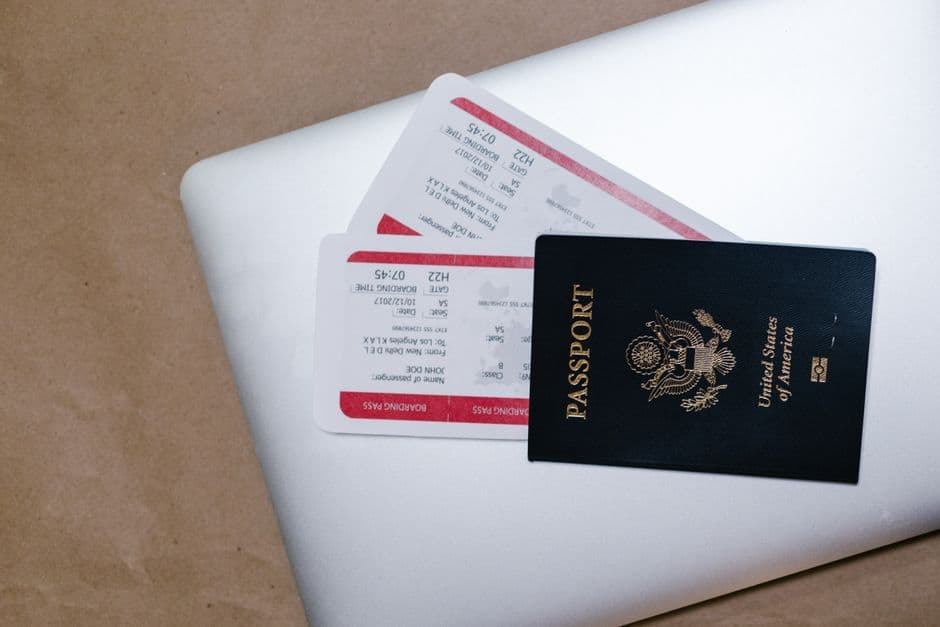
Passport and boarding passes on a laptop, RDNE Stock project
The Cambodia e-Arrival declaration is Cambodia’s new all-in-one digital customs, health, and immigration form—required for every traveler, no matter your visa or nationality. Submit the form online (app or arrival.gov.kh) within seven days before travel. You’ll need to provide passport details, travel info, and a destination address. This is not a visa, but a separate document you must show at border control. Print your e-Arrival confirmation or keep a copy on your phone for immediate presentation at immigration—the smoothest route through arrival.
What you need to apply: documents and passport rules
A successful Cambodia visa application starts with simple but strict paperwork. Your passport must have at least six months' validity left from the date you arrive, plus at least one blank page for entry stamps. Never attempt to travel with a damaged or worn passport, as border officials will refuse entry for torn, waterlogged, or loose documents. For eVisa, you'll upload a high-quality scan of your passport bio page and a recent passport-style photo that meets Cambodia’s 4x6 cm, white-background standard. Proof of confirmed accommodation and an onward or return ticket are routinely requested. If you plan to get a visa on arrival, bring crisp USD bills to pay the exact fee—damaged notes or missing photos can derail your journey.
Passport validity
Your passport is your key to Cambodia—ensure at least six full months' validity from arrival and at least one blank page for entry stamps. Carefully check the document’s condition: a torn cover, damaged pages, or any water damage can mean denied entry. Keep your passport pristine for hassle-free arrivals.
Photo and document checklist
Streamline your border crossing by preparing: a clear digital scan of your passport bio page for eVisa, a recent 4x6 cm passport photo, proof of onward/return travel, and your initial accommodation booking. For visa on arrival, pack fresh USD bills—avoid any that look old or marked—and have the exact processing fee ready. Carrying the right documents prevents snags and makes your first moments in Cambodia easy.
How to apply for the Cambodia eVisa step by step
Applying for the Cambodia eVisa is easy and all-digital. Start at the official government website (evisa.gov.kh)—avoid third-party lookalikes to sidestep inflated fees. Check your eligibility, then upload a clear digital scan of your passport bio page and a compliant JPEG passport photo (under 2MB, white background). Fill out personal and travel details, including your accommodation’s address. Pay the USD 36 fee (USD 30 visa plus USD 6 processing) by card. Processing takes up to three business days. Once approved, print two copies of your eVisa approval—one for immigration on arrival, the other for backup. Double-check all personal details match your passport to avoid last-minute issues at the border.
Cambodia visa fees and processing times at a glance
| application method | fee in USD | processing time | validity/stay duration | |
|---|---|---|---|---|
| Tourist eVisa | Online | ~USD 36 | 1-2 working days | 30 days |
| Tourist Visa on Arrival | On arrival | ~USD 30 | N/A | 30 days |
| Business eVisa | Online | ~USD 42 | 1-3 working days | 30 days |
| Business Visa on Arrival | On arrival | ~USD 35 | N/A | 30 days |
| Visa Extension (30 days) | Online or on arrival | ~USD 45 | 1-5 working days | N/A |
Entry requirements for Cambodia in 2026
Clearing immigration in Cambodia is simple when you bring the right documents. You must present a passport valid for at least six months from your arrival date, an approved visa (if required for your nationality) or proof of visa-free status, and your completed e-Arrival declaration. Be prepared to show your confirmed accommodation and onward ticket as well. Immigration officers may occasionally ask for proof of sufficient funds (USD 100 per day is the standard guideline, though rarely enforced). Entry by air is possible at Phnom Penh International (PNH), Siem Reap-Angkor International (SAI), or Sihanoukville International (KOS); main land border crossings include Poipet, Bavet, and Cham Yeam. As of 2026, there are no COVID-19 vaccine or testing requirements. Once stamped in, you’re free to explore.
Cambodia visa rules by nationality
See at a glance whether you need a visa for Cambodia and the permitted stay, broken down by select nationalities:
**Malaysia, Singapore, Vietnam
Malaysian citizens
Visa-free for 30 days; only e-Arrival digital declaration and valid passport needed.
Singapore citizens
Visa-free for 30 days; e-Arrival declaration is required along with passport (valid for 6 months from entry).
Thai citizens
Visa-free for 14 days; e-Arrival declaration required. Longer stays require tourist visa application (eVisa or on arrival).
Vietnamese citizens
Visa-free for 30 days for tourism. E-Arrival form required before travel.
Indonesian citizens
Visa-free for 30 days for tourism, e-Arrival is mandatory. No visa fees or paperwork needed for short stays.
Indian citizens
Visa (eVisa or on arrival) required before entry. E-Arrival form mandatory. Apply online in advance to skip airport queues.
Chinese citizens
Visa (eVisa or on arrival) required. E-Arrival form is mandatory. Advance eVisa application recommended to avoid lines.
UK citizens
Tourist visa (eVisa or on arrival) required for stays up to 30 days. E-Arrival confirmation required. eVisa streamlines entry during peak travel.
Visa-free vs eVisa vs Visa on Arrival: which route is best?
If you qualify for visa-free entry, enjoy the simplest process: just fill your e-Arrival form and walk in—no fees or paperwork required. For most other travelers, the eVisa offers the smoothest path: apply in advance, skip queues, and breeze through immigration. The visa on arrival is best for last-minute or in-person planners, but keep USD cash ready. Note: eVisa is accepted at all major airports and borders, but on-arrival visas aren't available everywhere. Immigration volume peaks in high season, so advance eVisa approval is highly recommended for a fast, easy arrival. The e-Arrival declaration is mandatory for every route.
Common Cambodia visa mistakes to avoid
Imagine rushing to immigration only to be turned away for a small mistake. Avoid classic pitfalls by following a few smart moves:
- Double check your documents: Ensure your passport is valid for 6+ months and has a blank page; damaged passports are refused.
- Don’t confuse the e-Arrival with a visa: Both are separate; you often need both.
- Apply only through official websites: Use evisa.gov.kh for visas, arrival.gov.kh for e-Arrival. Avoid third-party agents charging unnecessary fees.
- Choose the right visa type: Business travelers cannot use tourist visas; mismatched applications can mean denied entry.
- Check your eVisa for typos: Airlines may deny boarding for minor spelling errors.
- Don’t overstay: Penalties are USD 10 per day—and escalate quickly.
Plan ahead, use official channels, and check your paperwork at every step so you can savor Cambodia, not stress at the border.
Your pre-flight Cambodia visa checklist
Set yourself up for a smooth landing in Cambodia with this essential checklist:
- Confirm your visa requirements by nationality
- ASEAN passport holders: verify visa-free eligibility
- Check your passport’s expiration—6 months validity needed, plus a blank page
- Apply for your eVisa (if required) at least 5 days in advance
- Complete the Cambodia e-Arrival declaration within 7 days before arrival
- Save your eVisa/e-Arrival confirmation digitally and print hard copies
- Keep proof of accommodation and onward travel handy
- Recheck any last-minute rule changes 48 hours before your flight
With documents ready, you can make the most of your adventure from the moment you step off your flight to Cambodia!
- Book a flight to Phnom Penh
- Book a flight to Siem Reap
- Book a flight to Sihanoukville
Also, find yourself a comfortable hotel in Cambodia for the best experience! You can choose from popular cities like Phnom Penh, Siem Reap, and Sihanoukville.
Frequently Asked Questions: Cambodia Visa

Phaksornkan T.
19 August 2026