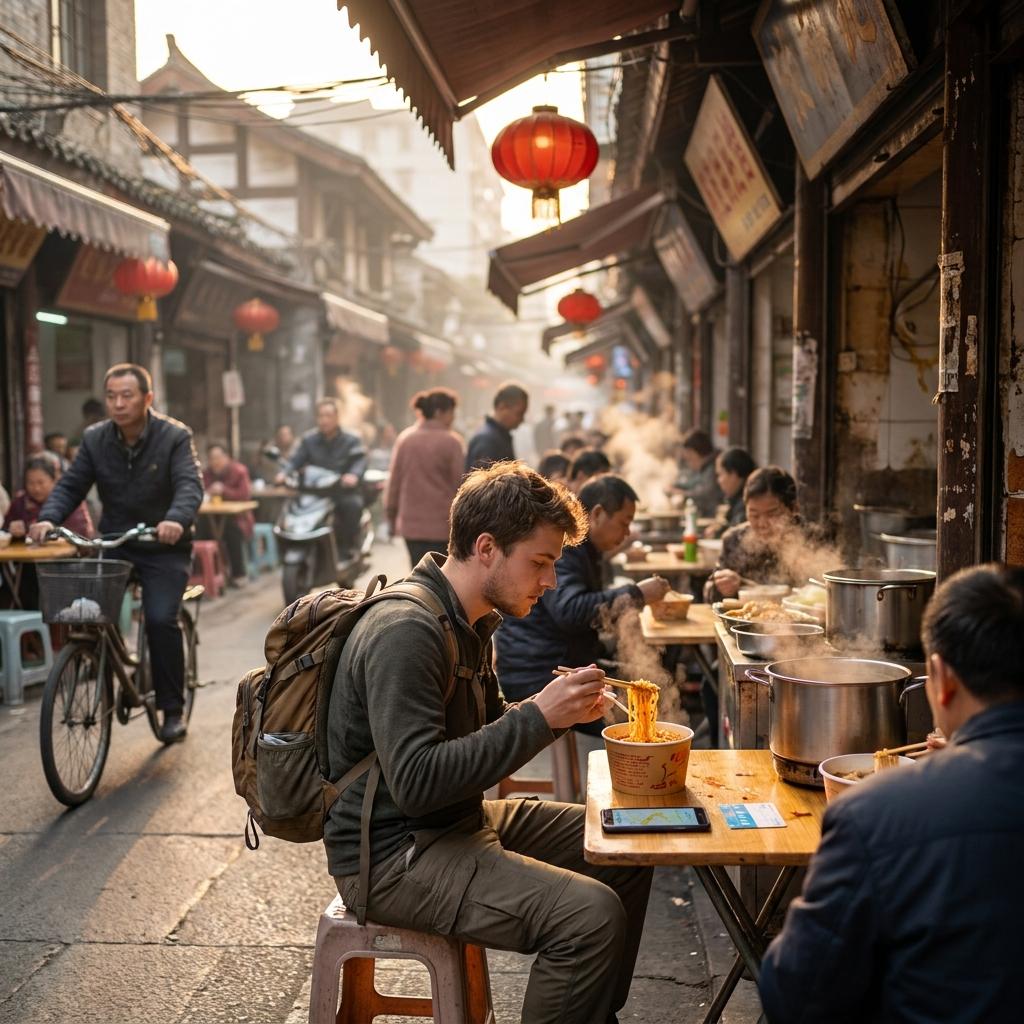
Best Budget Travel in Chengdu: What it Actually Costs in 2026
Planning budget travel in Chengdu in 2026? Discover real costs, money-saving tips, and local secrets to make every ringgit count in this vibrant city.
Budget travel in Chengdu is one of the best-value experiences for Malaysian travellers heading to China in 2026. You're probably wondering how far your money will actually go. Between the rich, spicy aroma of street-side hotpot and the quiet, leafy paths of ancient temples, this city offers incredible value. This guide covers the real costs, smartest savings, and local secrets for making every ringgit count on your Chengdu journey.
So, is Chengdu really that cheap?
Explore the unique local habits and everyday hacks that keep your wallet happy in Chengdu.
Budget travel in Chengdu isn't just wallet-friendly—it's a playground for those who know where to look. Many locals swear by sprawling street markets serving up spicy noodles and dumplings for a handful of coins. Furthermore, teahouses let you linger for hours over endless refills without breaking the bank. Backpacker hostels tucked in quiet alleys often include free walking tours or breakfast.
Meanwhile, public parks become gathering spots for impromptu opera, dancing, or games at zero cost. Find deals by eating where the lunchtime crowds go. You'll also uncover neighbourhood festivals, open-air fairs, and food stalls offering hearty, authentic fare at astonishingly low prices. As a result, Chengdu rewards travellers who drift from the main drag—delivering a truly affordable, flavour-rich experience. Can't wait to explore this city? Book your flight to Chengdu now!
Chengdu budget travel at a glance
Your no-fuss cheat sheet to stretch your budget the smart way in Chengdu.
| Answer | |
|---|---|
| Is Chengdu expensive? | One of China's more affordable major cities; great value beyond the tourist centres |
| Daily budget (RMB / RM) | 150–200 RMB/day for backpackers (about RM 100–135); mid-range: 250–350 RMB (RM 165–235) |
| Cheapest areas to stay | Hostels and guesthouses near Chunxi Road, Wuhou, Kuanzhai Alley, Wenshu Monastery |
| Cheapest transport | Metro: 2–6 RMB |
Is Chengdu cheap to travel compared with Beijing and Shanghai?
Find out how Chengdu stacks up to China's big-name cities for everyday traveller expenses.
Absolutely—budget travel in Chengdu stands out as a wallet-friendly, value-for-money choice compared with China's glitzy giants. Moreover, many recent travel comparisons put Chengdu's daily costs roughly 25–35% below Beijing or Shanghai, especially for accommodation and food.
Hostel dorm beds in Chengdu typically run about ¥60–100 per night, compared to ¥80–150 in Beijing or ¥70–120 in Shanghai. Meanwhile, solid 3-star hotels usually cost ¥200–500 per night—often much less than equivalent stays in the capital.
Day-to-day food spending is similarly pocket-friendly. Think dan dan noodles for ¥10–15, and typical local meals from ¥15–60, so your whole day of tasty Sichuan cuisine rarely breaks the bank. As a result, backpacker travellers can expect to spend ¥150–200 a day (about RM98–RM130 at RM0.65/¥, exchange rate as of September 2026), covering a hostel, street eats and unlimited metro or bus use. For a mid-range experience—3-star hotel, sit-down dinners, and a taxi here or there—budget ¥250–500 daily (about RM163–RM325).
Metro rides are both easy and easy on the wallet (about ¥2–7 per trip). Additionally, local buses are rarely more than ¥2–3. Attractions are generally affordable—but true bargain hunters get their savings on where they sleep, eat and ride. According to the China National Tourism Administration, Chengdu consistently ranks among the most affordable tier-one destinations in the country.
All told, Chengdu is perfect for solo adventurers, street-food lovers, panda enthusiasts and first-time China explorers. You'll get big-city buzz, bucket-list eats and a walkable city—all without Beijing- or Shanghai-level bills.
How much does a budget trip to Chengdu actually cost?
The cost breakdown you need, in the easiest format for quick budgeting.
Budget travel in Chengdu stands out as an affordable big-city experience, especially for solo or independent-minded Malaysian travellers. Here's a user-friendly summary that works for quick trip planning, based on September 2026 currency exchange (RMB 1 ≈ RM 0.60):
Accommodation
- Hostel dorm: ¥80–150 / RM48–90 per night
- Budget hotel: ¥200–300 / RM120–RM180 per night
Food
- Street snacks & noodles: ¥30–40 / RM18–RM24 per day
- Hotpot or restaurant upgrade: ¥60–100 / RM36–RM60+ per day
Transport
- Metro & city buses: ¥10–20 / RM6–RM12 per day (add ¥60–80 / RM36–RM48 for airport Didi/taxi)
Attractions & Activities
- Pandas: ~¥55 (RM33)
- Temples/Parks: Mostly ¥5–30 (RM3–RM18), sometimes free
- Optional activities (teahouse, opera): ¥15–60 (RM9–RM36)
| Expense | Budget per day (RMB / RM) | Mid-range per day (RMB / RM) |
|---|---|---|
| Accommodation | 80–150 / 48–90 | 200–300 / 120–180 |
| Food | 30–40 / 18–24 | 60–100 / 36–60 |
| Transport | 10–20 / 6–12 | 30–50 / 18–30 |
| Attractions | 20–60 / 12–36 | 60–150 / 36–90 |
| Activities | 20–40 / 12–24 | 100–150 / 60–90 |
| Total | 160–250 / 96–150 | 450–750 / 270–450 |
Pick a daily range that fits your pace—more street eats and self-guided walks for shoestrings, more hotpot and cultural shows for a bigger budget.
What to eat in Chengdu on a budget
Let your senses guide you through Chengdu's affordable culinary wonders.
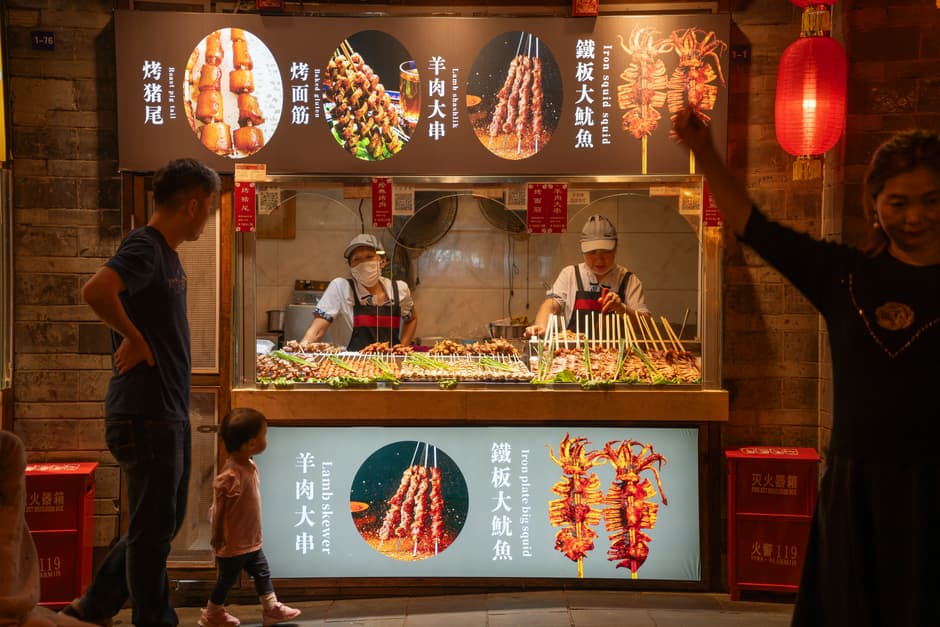
Chengdu night market skewers, Vincent Tan
Eating in Chengdu isn't just cheap—it's a festival for your taste buds, best experienced on the street corners and buzzing night markets. Imagine the tingle of dan dan noodles: springy wheat threads tossed in savory pork, nutty sesame, and a gentle—or fiery—chili oil that perfumes the air, all for as little as ¥8–18 (RM5–12). Mapo tofu arrives bubbling in a clay pot, drenched in tongue-numbing Sichuan pepper and vivid scarlet oil, setting your senses alight for just around ¥20–30 (RM13–20).
Dive into dumpling stalls for zhong shui jiao—tender pockets glistening in spicy sauce. Alternatively, track down chuan chuan skewers at a smoky roadside cart, where you can point at anything—from fish balls to lotus root—grilled fresh for a few crisp yuan. Hotpot in Chengdu is an event: bubbling cauldrons, platters of meats and greens, and dipping sauces custom-blended at your table. Moreover, you'll enjoy a room crackling with laughter and the clinks of shared chopsticks—without the tourist mark-up if you follow the locals' lead (¥60–120/RM40–80 per person).
For breakfast, the aroma of freshly fried dan hong gao pancakes and creamy tofu pudding draws early risers to market lanes. Each bite is layered in local tradition for under ¥10. Finally, wrap it up like a local in a sun-dappled teahouse—fragrant green or jasmine served in bottomless cups for ¥15–30, while bamboo leaves whisper and card games click around you.
Budget Food Price Guide
- Street snack: ¥5–15 (RM3–10)
- Noodle bowl: ¥15–25 (RM10–17)
- Hotpot (per person): ¥60–120 (RM40–80)
- Teahouse tea: ¥15–30 (RM10–20)
Let curiosity be your guide—skip tourist menus, follow the crowd to the best queues, and you'll savour Chengdu's rich culinary landscape without ever breaking the bank.
Getting around Chengdu without burning cash
Effortlessly explore Chengdu's sights while sticking to your budget with easy transport tips.
Chengdu's public transport is a dream for those focused on budget travel in Chengdu. First and foremost, the Metro is your main ally: it's clean, rapid, and runs to almost every district. Single rides rarely exceed RMB 10. Moreover, stations are English-friendly, and a prepaid Tianfutong card or linked Alipay/WeChat Pay ensures quick tap-and-go access. Public buses offer an even cheaper option (flat RMB 2), perfect for short hops to markets or side streets—just keep small change or activate a bus-capable payment app ahead of time.
Foot-friendly central districts mean you can stroll safely between many big stops—Tianfu Square, Chunxi Road, and lively alleys. When you need a direct ride, Didi's ride-hailing app (China's Grab equivalent) is widely used. Book ahead for airport trips, but remember, fares are higher than metro or bus. For arrivals at Shuangliu Airport, hop on Metro Line 10 for centre-city access at a fraction of taxi prices. Alternatively, use airport express buses to/from Tianfu as posted.
Most journeys are streamlined by digital payments. However, be aware some apps have changing requirements or mixed reliability for foreign cards—therefore, always carry a small cash reserve just in case. Spend less time stressing and more time soaking up the city: choose the Metro for speed, combine with walks, and keep rideshare for occasional convenience.
FAQs about budget travel in Chengdu
Straight-to-the-point answers for quick planning without the fluff or repeat details.

Phaksornkan T.
10 September 2026