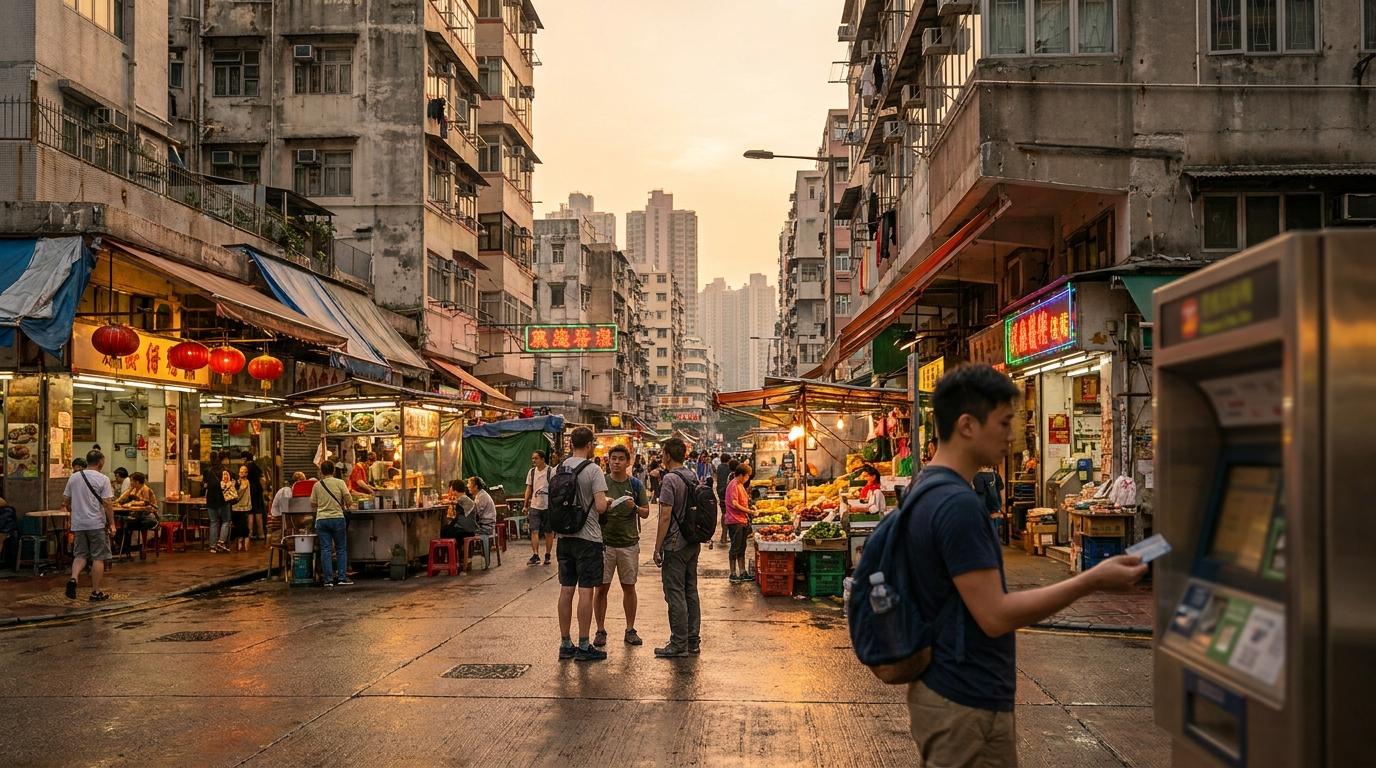
Best Budget Travel in Hong Kong (2026 Guide)
Discover practical budget travel in Hong Kong tips—affordable sights, local transport, street food, and smart money-saving ideas for 2026.
Think Hong Kong's flash and neon are out of reach for travellers on a budget? Think again. With some strategic planning and insider know-how, you can experience this world-class city's vibrant energy, iconic cuisine, and breathtaking views—without overspending. This 2026 guide to affordable Hong Kong travel is your passport to adventuring through bustling streets and savoring authentic eats while keeping your savings intact.
Can you actually do Hong Kong on a budget?
Travelling Hong Kong on a budget is truly within reach for the determined visitor—aim for RM250–RM400 per day with smart choices and you'll see the best the city has to offer. Focus on guesthouse stays (Mong Kok for max savings, Tsim Sha Tsui for all-access convenience), master the MTR, and get acquainted with the city's most beloved and affordable dining haunts.
Next steps? Book your flight, secure your stay in a value neighbourhood, and prep with an Octopus card and an eSIM for hassle-free city days. Don't overlook travel insurance for peace of mind on the go. Dive deeper with our guides on top sights, food adventures, extended itineraries, and airport transfer tips, and you'll be set for a memorable adventure where every Ringgit goes further.
Hong Kong budget travel at a glance
| Question | Quick Answer |
|---|---|
| Is Hong Kong expensive? | Yes, mainly for accommodation |
| Daily budget | RM180–RM350 backpacker to mid-range |
| Cheapest areas to stay | Mong Kok, Sham Shui Po |
| Cheapest transport | MTR, buses, trams |
| Cheap food | • Cha chaan tengs • Dai pai dong • Local dim sum |
| Best for budget travellers | Food, culture, harbour views, hiking |
Takeaway: Hong Kong isn't cheap, but savvy travellers focused on exploring this city affordably can stick to budget-friendly areas, use public transport, and enjoy affordable local food for a great trip.
How much a budget Hong Kong trip really costs
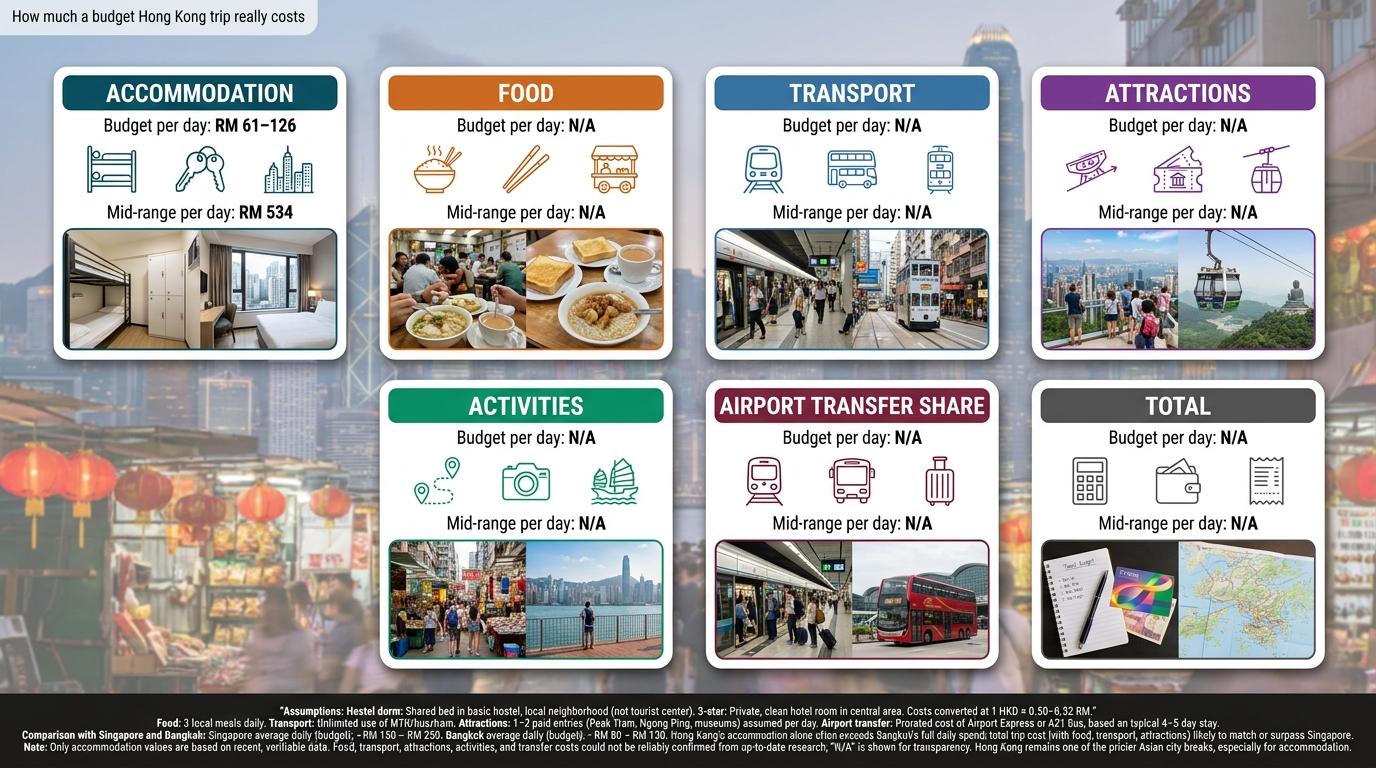
AI generated image showing Hong Kong daily budget cost breakdown
| Expense | Budget per day (RM) | Mid-range per day (RM) |
|---|---|---|
| Accommodation | 61–126 | 534 |
| Food | N/A | N/A |
| Transport | N/A | N/A |
| Attractions | N/A | N/A |
| Activities | N/A | N/A |
| Airport transfer share | N/A | N/A |
| Total | N/A | N/A |
Assumptions:
- Hostel dorm: Shared bed in basic hostel, local neighborhood (not tourist center)
- 3-star: Private, clean hotel room in central area
- Costs converted at 1 HKD ≈ 0.50–0.52 RM
- Food: 3 local meals daily
- Transport: Unlimited use of MTR/bus/tram
- Attractions: 1–2 paid entries (Peak Tram, Ngong Ping, museums) assumed per day
- Airport transfer: Prorated cost of Airport Express or A21 bus, based on typical 4–5 day stay
Comparison with Singapore and Bangkok
- Singapore average daily (budget): ~RM 150 – RM 250
- Bangkok average daily (budget): ~RM 80 – RM 150
- Hong Kong's accommodation alone often exceeds Bangkok's full daily spend; total trip cost (with food, transport, attractions) likely to match or surpass Singapore.
Note: Only accommodation values are based on recent, verifiable data. Food, transport, attractions, activities, and transfer costs could not be reliably confirmed from up-to-date research; "N/A" is shown for transparency. Hong Kong remains one of the pricier Asian city breaks, especially for accommodation.
Where to stay in Hong Kong without blowing your budget
When planning affordable travel in Hong Kong, think beyond price alone and consider the pulse of each neighbourhood. Kowloon-side districts like Mong Kok, Yau Ma Tei, and Tsim Sha Tsui offer more spacious guesthouses, unbeatable street scenes, and convenient MTR links. Each area delivers its own distinct personality. Meanwhile, Causeway Bay on Hong Kong Island suits travellers seeking instant access to shopping and nightlife—even if rooms come at a premium. Here's how four popular areas set themselves apart in atmosphere, attractions, and accessibility:
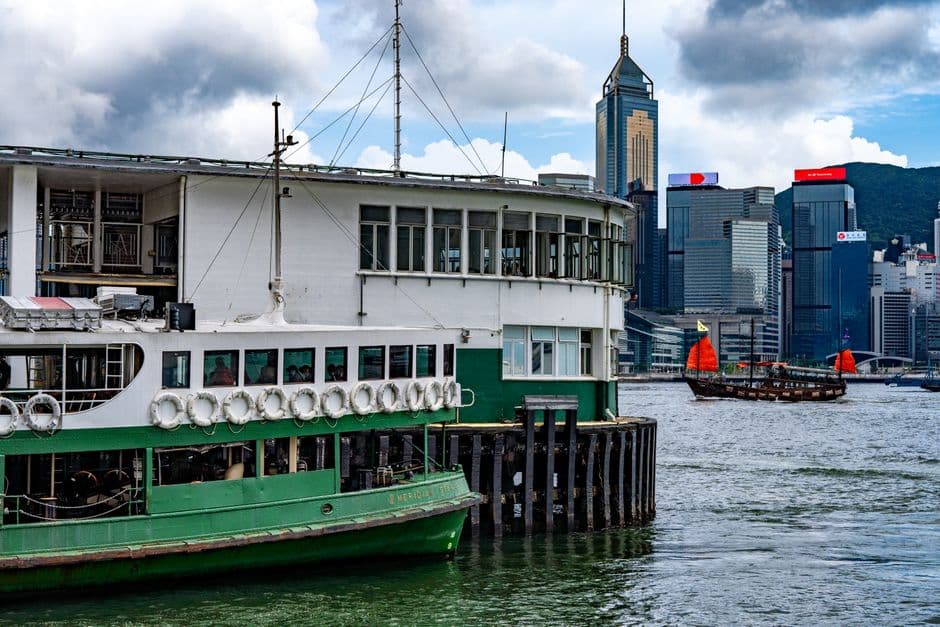
Tsim Sha Tsui Star Ferry Pier Hong Kong budget travel, Water White
Tsim Sha Tsui
Nestled on Victoria Harbour's southern Kowloon edge, Tsim Sha Tsui is a launchpad for newcomers hungry for city highlights. It's packed with landmarks, skyline strolls, and guesthouses in iconic buildings like Chungking Mansions. Here, nights buzz with neon, the Star Ferry glides by, and quick access to the Tsuen Wan MTR line keeps you connected. Opt for Tsim Sha Tsui if you crave action, walkable sights, and a taste of cosmopolitan city life on a shoestring—day or night.
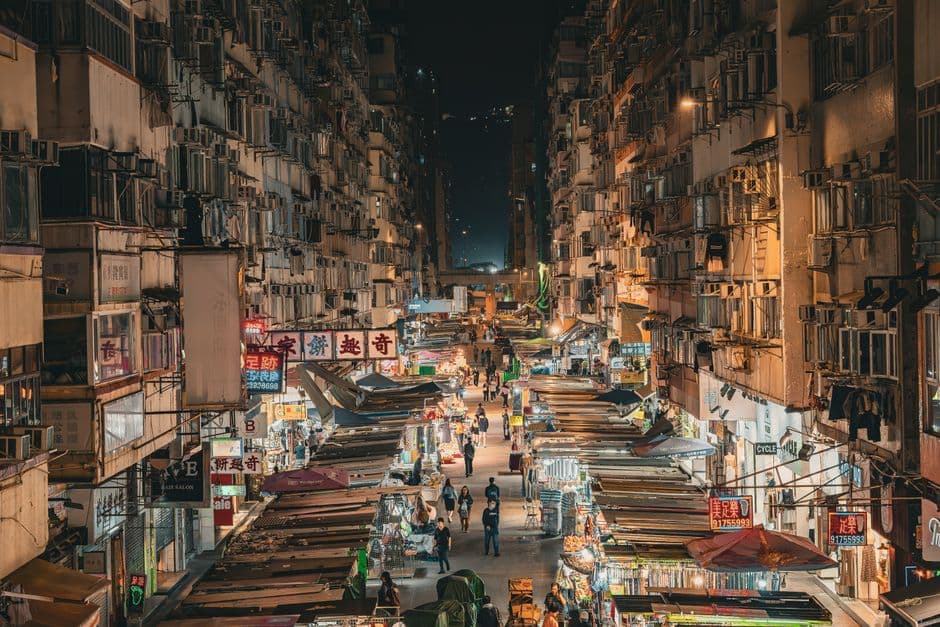
Mong Kok night market streets Hong Kong, Ehsan Haque
Mong Kok
For pure local energy and unbeatable access to markets and street food, Mong Kok stands out. Clustered around its MTR station, you'll find budget hostels and capsule hotels, plus a dense web of stalls in Ladies' Market, Temple Street, and Sneaker Street. Furthermore, you'll never be far from a late-night snack or a surprise bargain. Mong Kok is ideal for those craving city buzz, round-the-clock eats, and a distinctly authentic Kowloon vibe—a cornerstone of any thrifty Hong Kong adventure.
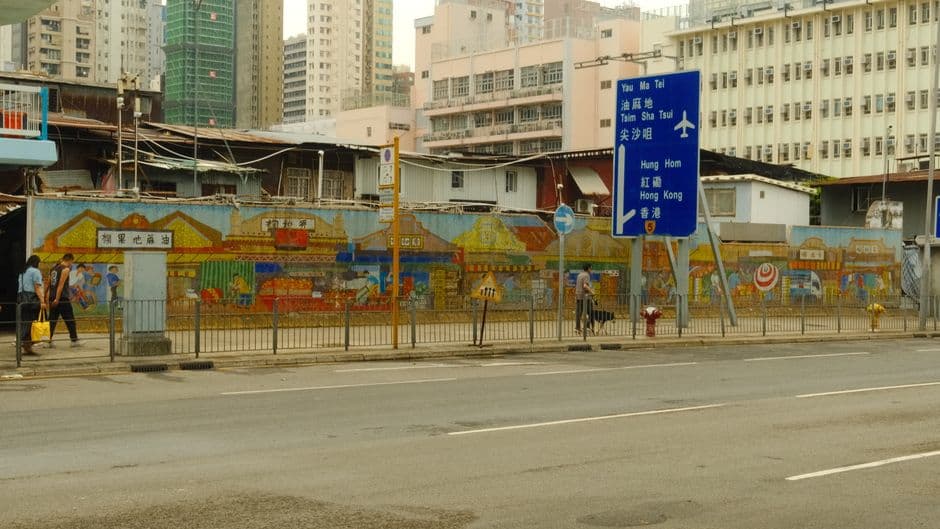
Colorful street art and urban life in Yau Ma Tei Hong Kong, Ivo Stirling
Yau Ma Tei
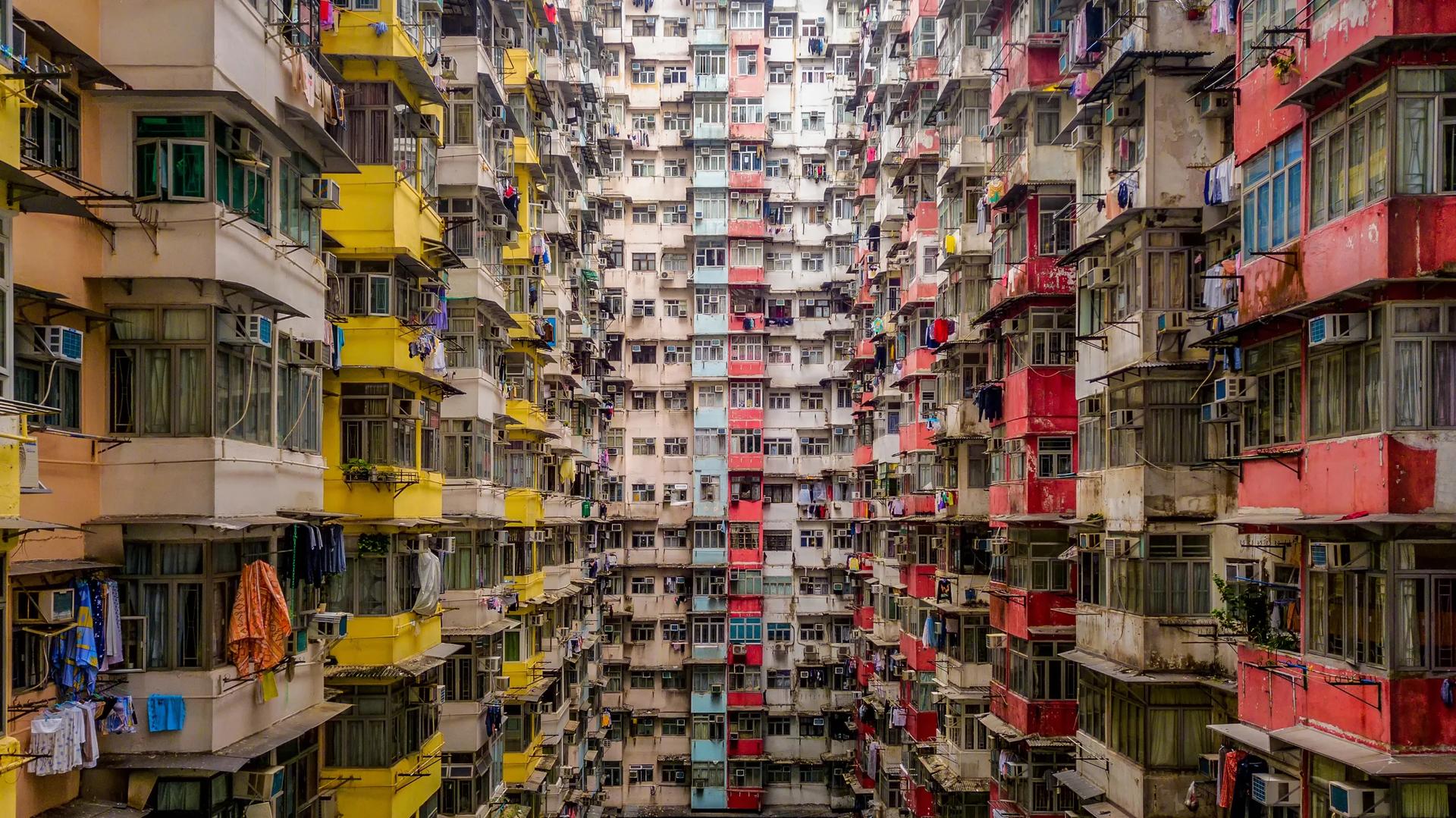
Yau Ma Tei is ideal for those who want to immerse themselves in old Kowloon's local flavour at the lowest rates. Home to historic Tin Hau Temple and the Temple Street Night Market, it's quieter than Mong Kok but packed with authenticity. With the Tsuen Wan and Kwun Tong lines nearby, getting around is cheap and effortless. In addition, Yau Ma Tei offers longer, tranquil evenings and a neighbourhood vibe where old-school cha chaan tengs await after a day of sightseeing.
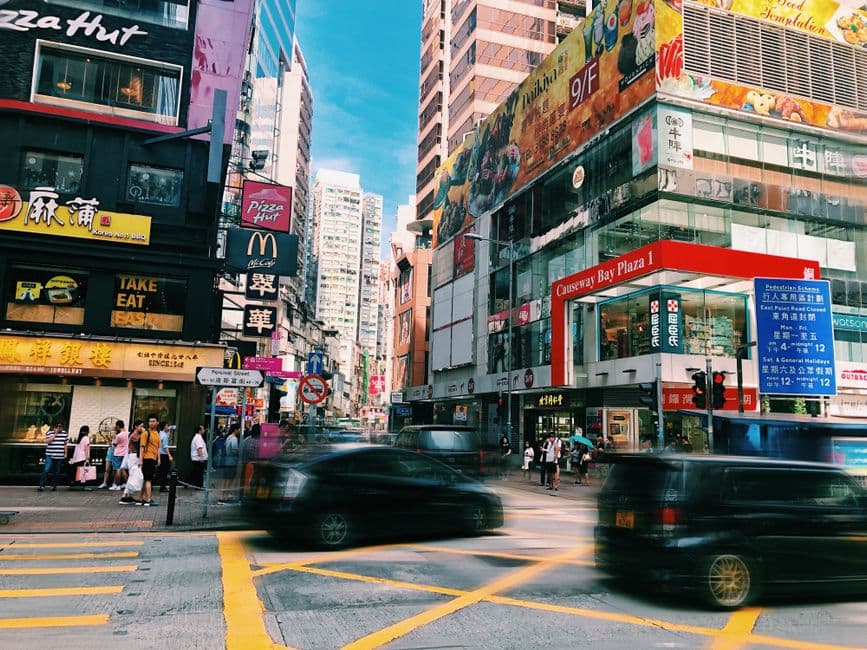
Causeway Bay street scene Hong Kong, Han Gong124
Causeway Bay
For those who thrive on shopping, entertainment, and Hong Kong Island's unique pace, Causeway Bay is worth the upgrade—even if nightly rates stretch your travel funds. Hong Kong's beloved tram lines provide a charming, low-cost ride to trendy boutiques, malls like Times Square, and vibrant night life. While you'll pay more for convenience here, the energy of Causeway Bay makes it a strong base for social explorers willing to invest a little extra for urban action.
Cheap and free things to do that don't feel cheap
Hong Kong's greatest joys are often those that don't appear on your credit card statement. Imagine joining the city's heartbeat on a sunset stroll along the harbour, or slipping into lantern-lit temples thick with the aroma of incense. Wander hillside trails that end in dazzling skyline views or lose yourself in the chaos of neon-lit markets—no tickets needed. The best days of exploring Hong Kong on a shoestring start with open eyes and a sense of adventure. Whether you're hiking a misty ridge at dawn or laughing with new friends over midnight snacks, these priceless moments will shape your trip for years to come.
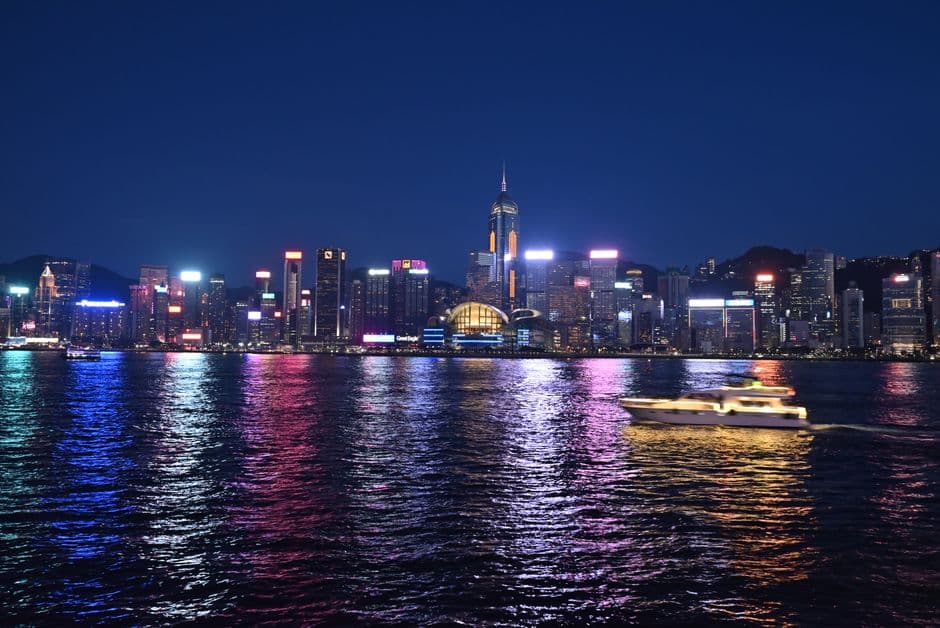
King Ho, Hong Kong skyline reflecting on Victoria Harbour Symphony of Lights
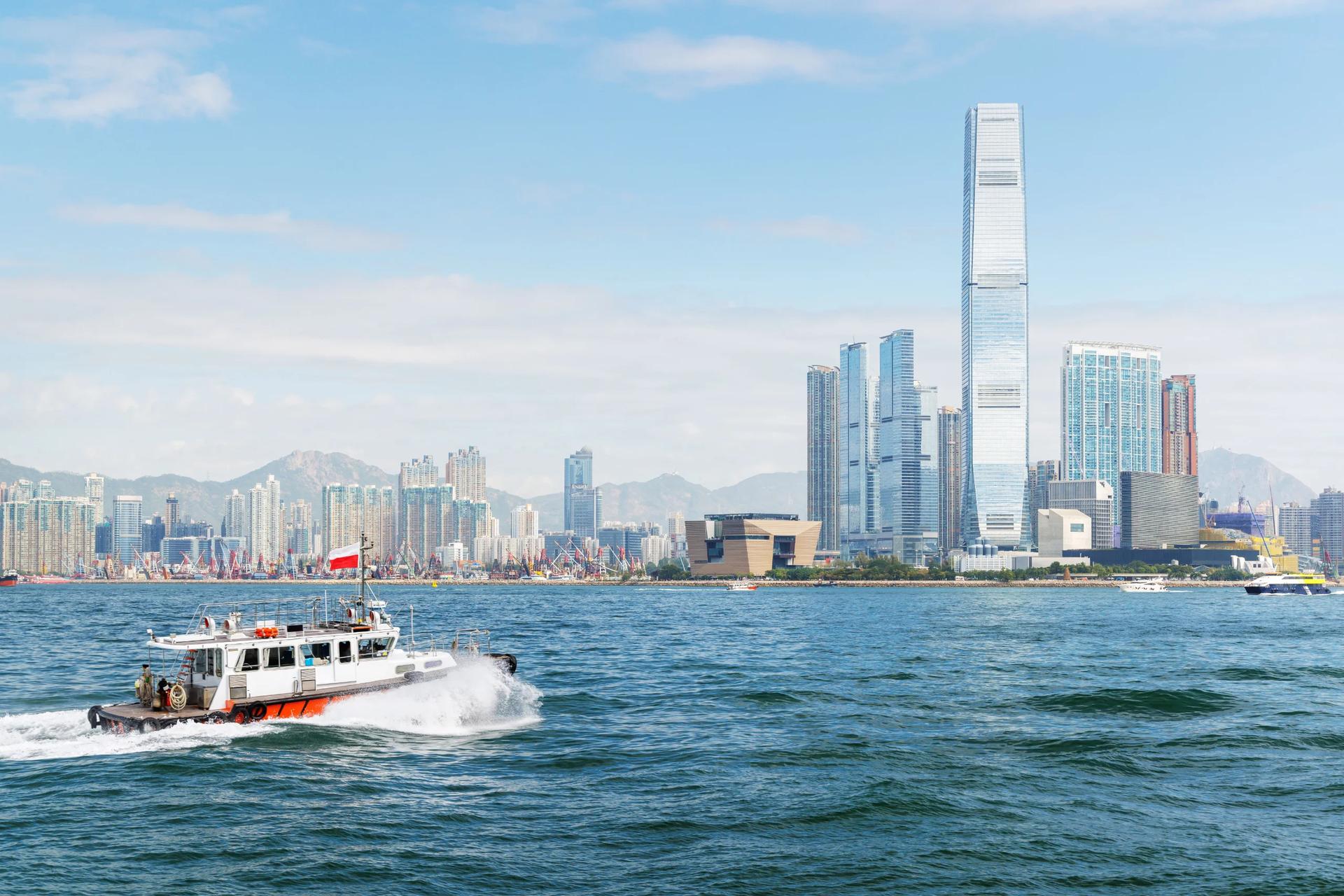
Victoria Harbour and Symphony of Lights
As dusk falls, make your way to the Tsim Sha Tsui promenade and let the city's nightly spectacle unfold before you. The Symphony of Lights paints the skyline in colour and rhythm, its music and glow rippling across the water. Crowd in with locals—some snapping endless photos, others lost in conversation—before hopping a Star Ferry for that legendary view from the waves. This is Hong Kong's grand gesture to all who visit, and the only ticket required is a sense of wonder.
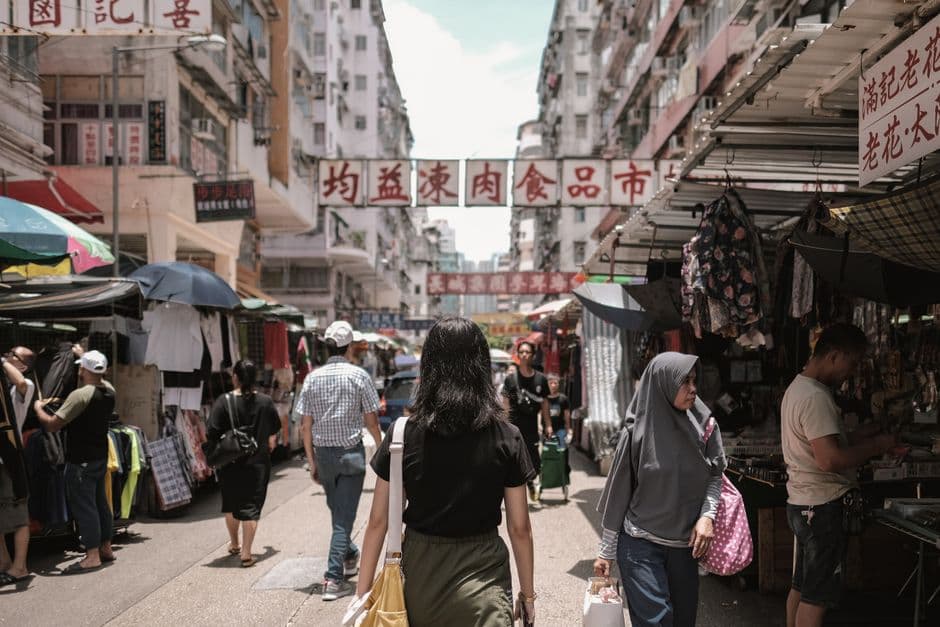
Bustling Hong Kong market street Mong Kok, Airam Dato-on
Markets and street walks
Step into the swarming lanes of Mong Kok—lights dancing off hundreds of stalls, fragrant steam rising from sizzling skewers—as you browse markets bursting with stories. Amid the chatter of bargaining and the laughter of locals, even window shoppers can drink in the full sensory experience. Wander past rainbow flower vendors, sneaker stalls, and neon-lit corners. Sometimes, the real souvenirs are the memories of sights and sounds you carry home. These market walks are a highlight of any thrifty Hong Kong exploration.
Temples and cultural stops
Slip off city shoes and enter another pace: Man Mo Temple, with curling incense in dark, wooden halls; Chi Lin Nunnery, cloistered amidst tranquil lotus ponds; and Wong Tai Sin, aglow with prayers and lanterns. You'll absorb centuries of faith for the cost of a smile or a quiet moment. These sites invite you to pause, breathe, and connect with Hong Kong's spirit for free—a true treasure for those exploring this city affordably.
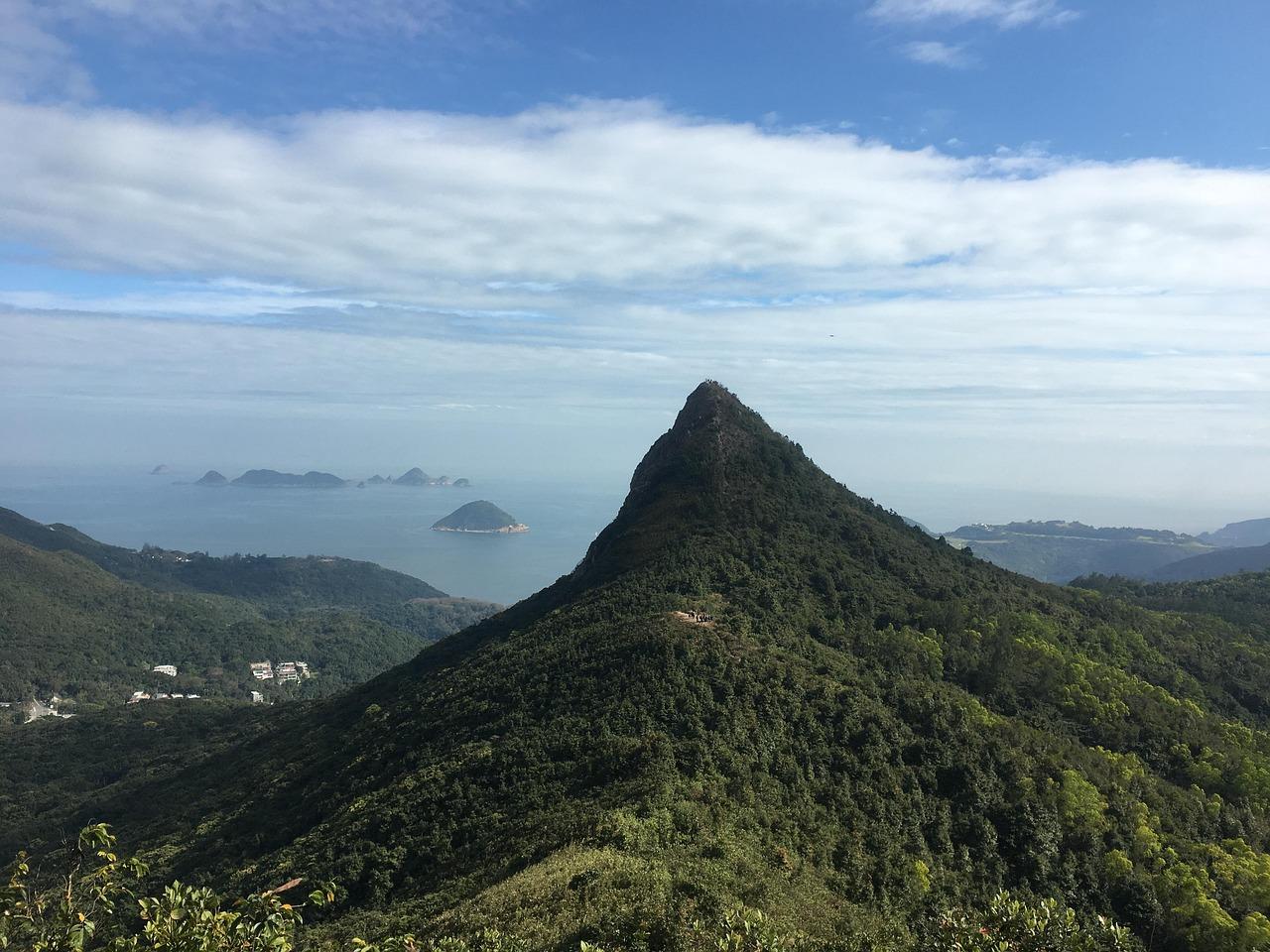
Sharp Peak landscape Hong Kong hiking trail, Cassty1
Hiking and nature
Nothing beats the thrill of climbing above the city's din to a crest on Dragon's Back. The wind chases away fatigue as the skyline and sea unfurl beneath you. Early morning, birdsong rises with the sun as you wind steep trails toward Lion Rock or Victoria Peak. Each viewpoint is hard-earned and awe-inspiring. These spaces offer stories, laughter, and selfies that need no filter—all at no cost but your own effort. Hiking is consequently one of the best free activities for those on a tight Hong Kong travel budget.
Neighbourhood wanders
Set out with no agenda but curiosity. In Sheung Wan, be surprised by artful shophouse facades, indie boutiques, or local artists quietly sketching on a café terrace. Sham Shui Po tempts with bargain havens—old men sipping tea at folding tables, grandmothers buying Chinese pastries for family gatherings. On the Central–Mid-Levels Escalator, you're suspended between city layers, each section a slice of daily life. These free explorations let you get wonderfully lost and make your Hong Kong adventure truly your own.
What to eat in Hong Kong on a budget
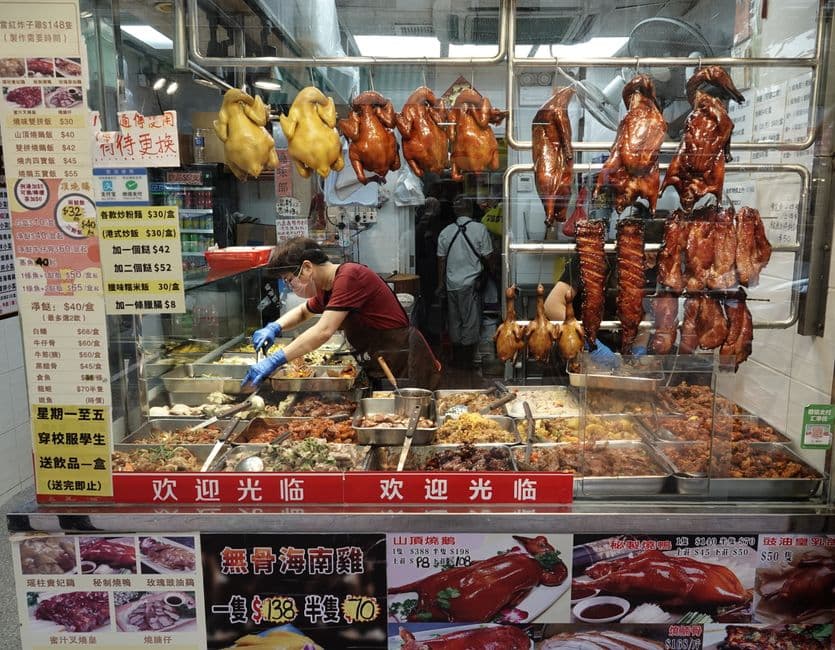
Kowloon food stall Hong Kong street food, Kamus Cheung
A true culinary adventure while travelling Hong Kong affordably starts where locals queue for breakfast. Picture the fragrance of buttery pineapple buns paired with silky milk tea at sunrise, or steam rising from bamboo baskets filled with plump shrimp dumplings.
Slipping into a Formica booth, you join city workers for macaroni soup topped with a runny fried egg—the hum of conversation underscoring every meal. At lunch, moreover, navigate the crunch of roast pork (char siu) or the spring of perfect wonton noodles, handed over by a smiling shopkeeper.
As evening falls, the air grows thick with the promise of curry fishballs, sweet egg waffles, and freshly baked egg tarts with buttery crusts. Hong Kong's markets and streets offer discovery with every bite—meals that nourish nose, eyes, and soul for under RM80 a day.
Eating here isn't just about price or hunger; it's about sharing in the city's rhythm and generosity, one mouthful at a time. Food is therefore one of the great joys of budget travel Hong Kong has to offer.
Getting around Hong Kong cheaply
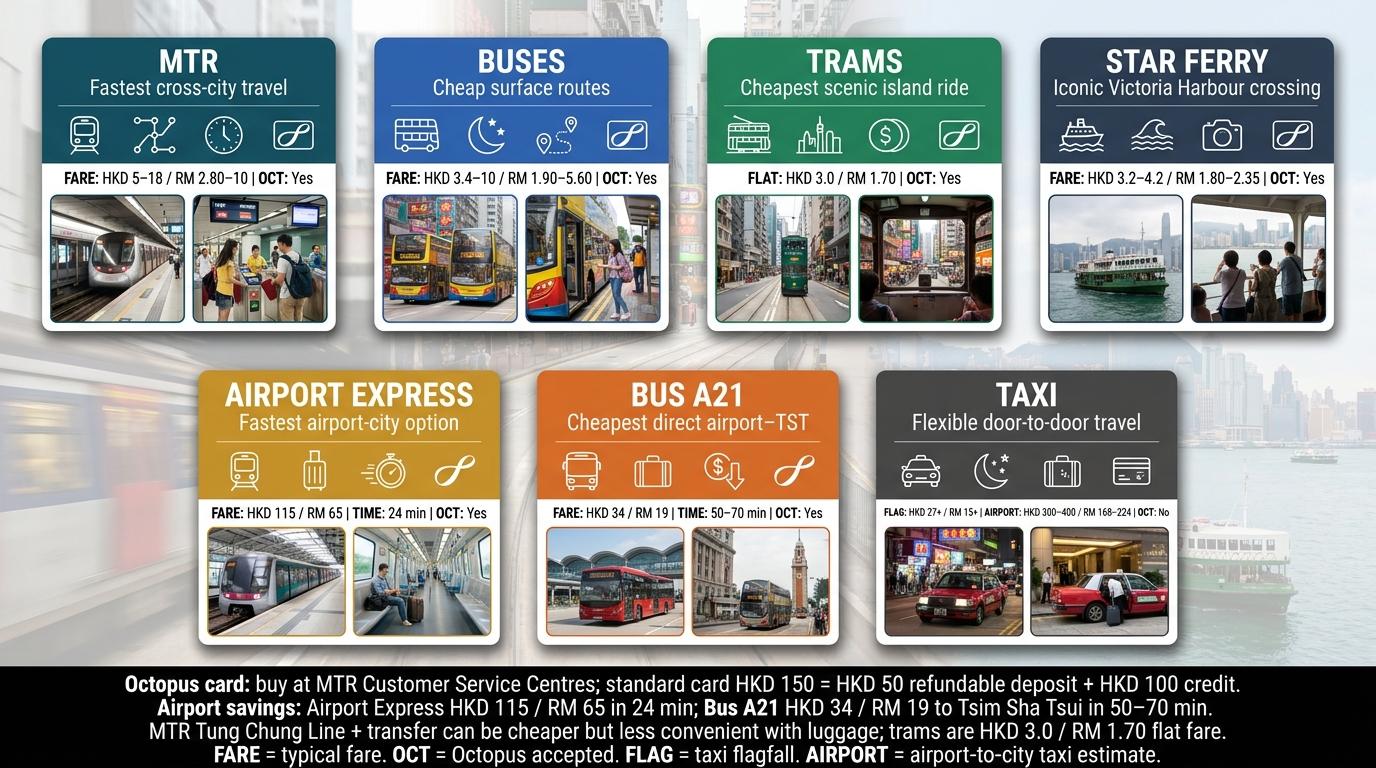
AI generated image of Hong Kong public transport Octopus card MTR
| Transport | Typical fare (HKD / RM) | Best for | Octopus card accepted? |
|---|---|---|---|
| MTR | Typical local trip: HKD 5–18 / RM 2.80–10 | Fastest cross-city travel, main tourist routes, reliability | Yes |
| Buses (KMB/Citybus) | HKD 3.4–10 / RM 1.90–5.60 | Cheap surface travel, routes MTR doesn't cover, night buses | Yes |
| Trams ("ding ding") | HKD 3.0 / RM 1.70 (flat fare) | Cheapest and most scenic way along Hong Kong Island | Yes |
| Star Ferry | HKD 3.2–4.2 / RM 1.80–2.35 | Iconic, scenic Victoria Harbour crossing (Central–TST) | Yes |
| Airport Express | HKD 115 / RM 65 (to HK Station) | Fastest airport-city (24 min), lots of luggage, convenience | Yes |
| Bus A21 (airport alternative) | HKD 34 / RM 19 (to Tsim Sha Tsui) | Cheapest direct airport–Kowloon/TST option, budget travelers | Yes |
| Taxi | Typically HKD 27+ / RM 15+ (flagfall); HKD 300–400 / RM 168–224 (airport-HK city) | Most flexible, late night, door-to-door, heavy luggage, groups | No (cash/card only) |
When planning your day, use the MTR for speedy urban hops between neighbourhoods. This is especially useful for early sightseeing or making connections in time for local markets. Buses reach further-flung attractions and let you catch glimpses of old Hong Kong from the top deck—perfect for routes to hiking trailheads or scenic temples.
The classic "ding ding" trams are your go-to for a slow, photogenic loop around Hong Kong Island's heart. Fares are so low you can hop on and off at whim. For crossing Victoria Harbour, the Star Ferry is an experience in itself—pairing iconic views with a wallet-friendly fare.
If you're heading into town from the airport, save by taking the A21 bus to Tsim Sha Tsui unless speed or big luggage demand the Airport Express. The Octopus card is your best investment: load it once, ride everywhere, enjoy discounts, and never fumble for cash. In short, each mode reveals a new city facet—so mix and match for the fullest and most affordable Hong Kong travel experience.
When to visit Hong Kong for the cheapest prices
If your top priority is stretching every Ringgit, the best seasons for affordable Hong Kong travel are May to early June and September. During these months, both airfares and hotel prices dip noticeably. However, these savings come with the city's steamy, rain-soaked days—expect tropical downpours, muggy afternoons, and the occasional typhoon warning.
Pack light clothes, quick-dry shoes, and an umbrella. Plan for flexible indoor detours—museums and shopping arcades—when storms roll in. In contrast, October to early December is the sweet spot for comfortable weather with moderate prices. It's slightly higher than monsoon season, but infinitely more pleasant for long walks and outdoor feasts.
Avoid the festival crunch: Chinese New Year, Golden Week, and Christmas send room rates soaring and crowds swelling. If you're travelling in budget season, embrace the weather with smart packing. Keep rain gear on hand, plan your sightseeing around cloud cover, and have local snacks ready for cozy shelter moments. Overall, this trade-off lets you discover a more spontaneous, intimate side of this vibrant city while scoring real savings on your budget travel Hong Kong adventure. Sounds like a plan? Book your flight to Hong Kong now!
A realistic 3-day Hong Kong budget itinerary
Make the most of your time and Ringgit by mixing world-famous sights with everyday city moments. Begin in energetic urban hubs, snack through atmospheric markets, and slow down for temple tranquillity or ridge-top hikes. Prioritize walkable districts and cluster free or low-cost attractions to keep costs in check. An Octopus card makes navigating seamless, and eating where locals do is both delicious and wallet-friendly. Below, find a sample cost breakdown for a Hong Kong budget itinerary—then check the daily guides for moments you can make your own.
| Expense | Estimated cost (RM) |
|---|---|
| Accommodation | 250–400 (2 nights guesthouse) |
| Food | 180–250 |
| Transport (Octopus) | 60–80 |
| Attractions | 30–80 |
| 3-day total | 520–810 |
All figures are rounded guidelines—individual costs will vary. The day-by-day plan balances Hong Kong's must-sees with genuine daily life, so you leave with deep memories and savings to spare.
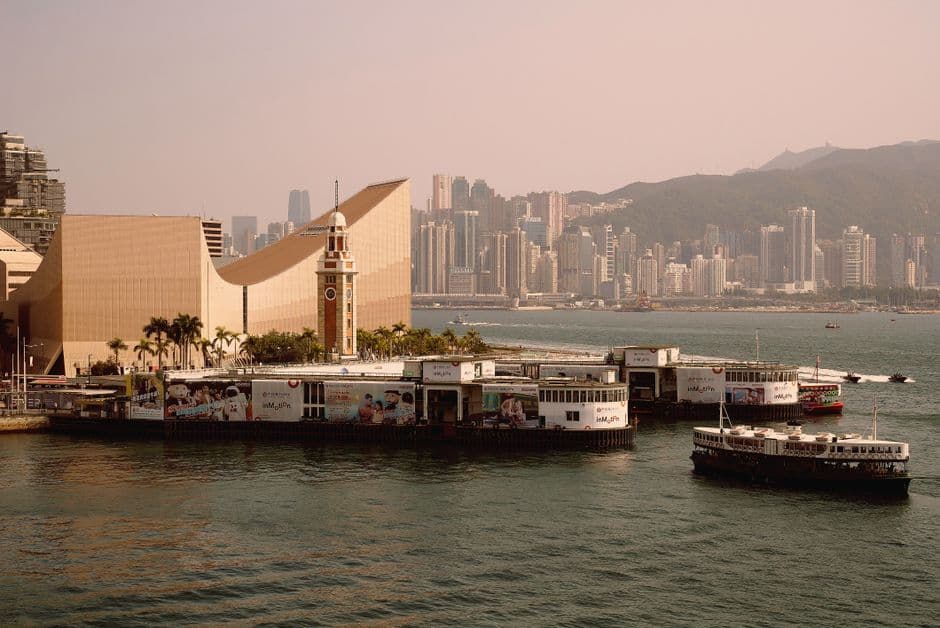
Clock Tower and Victoria Harbour skyline Hong Kong itinerary, Harry Shum
Day 1: Central + Victoria Harbour + Tsim Sha Tsui
Begin your adventure in the layered streets of Central. Ride the iconic Central–Mid-Levels Escalator, tracing a path past creative pop-ups and heritage shophouses on your way to incense-filled Man Mo Temple. Lunch means baskets of steaming dim sum—budget RM45 for a classic set to fuel up. Next, cross Victoria Harbour on the legendary Star Ferry for next-to-nothing, and lose yourself in the energy at Tsim Sha Tsui's waterfront. When darkness falls, settle in for the Symphony of Lights, then feast on local specialties at open-air dai pai dongs—savoring the flavours of Hong Kong's street food scene for less than you might expect.
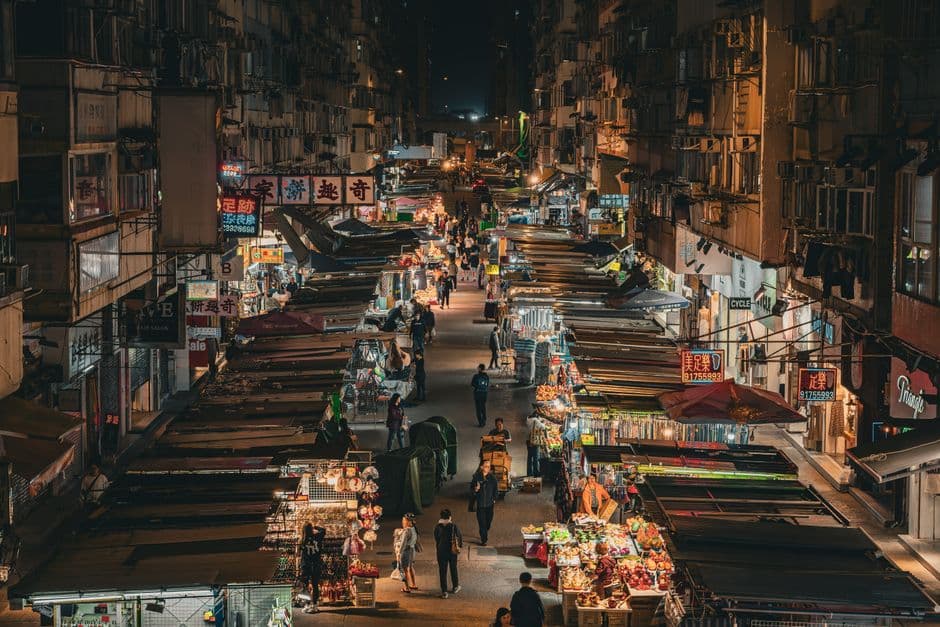
Mong Kok night market Hong Kong street food, Ehsan Haque
Day 2: Mong Kok + markets + local food
Sink into Mong Kok's spirited chaos. Morning finds you browsing the colours of Flower Market and listening to birdsong in the Bird Garden. Let hunger lead you to a cha chaan teng for noodles and brisk service—a meal you'll remember for both taste and street-level atmosphere (budget RM30). Afternoon means trawling market after market—Ladies' Market for trinkets, Sneaker Street for rare finds, and Temple Street as dusk arrives. Cap the day with a street food crawl; mix and match favourites like curry fishballs or egg waffles. Here, the city's pulse beats loudest at night, and stories collect with every bite and glance.
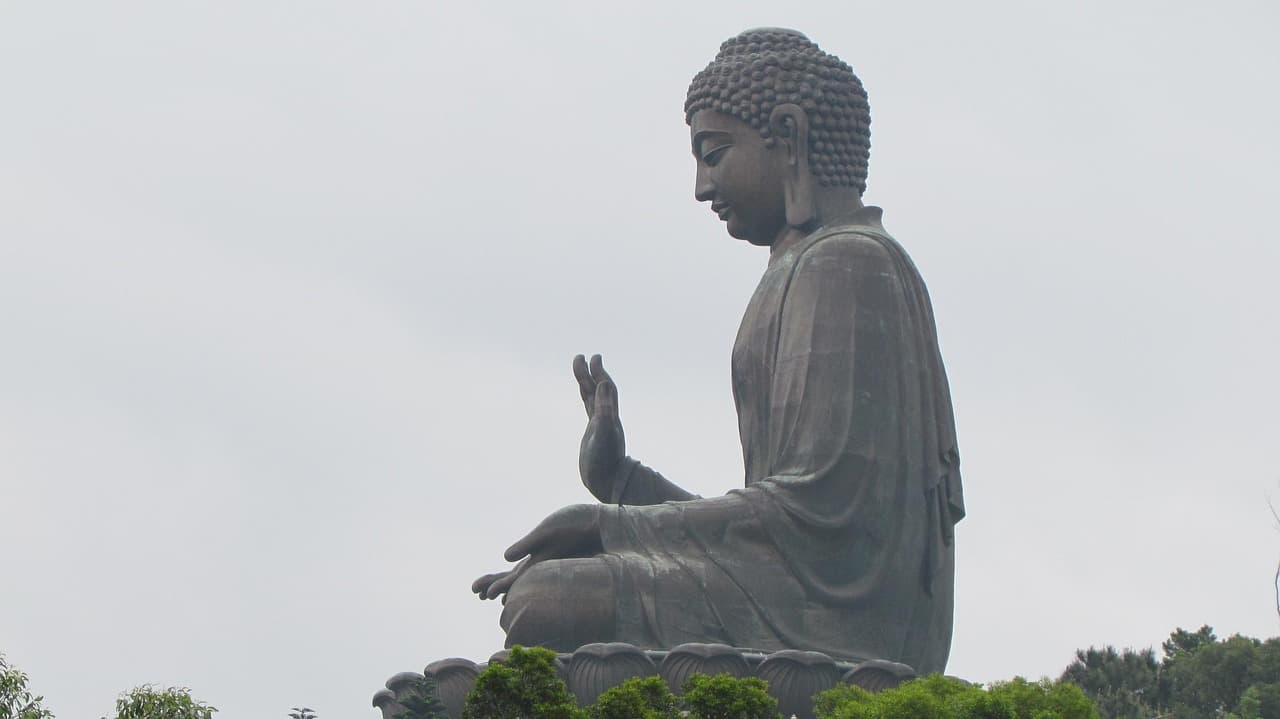
Hong Kong Buddha in forest hiking trail, clachcl0
Day 3: Culture + hiking + neighbourhood
Savour your final day by weaving through the spiritual and natural escapes that only Hong Kong can deliver. Begin at Wong Tai Sin Temple and the serene paths of Chi Lin Nunnery and Nan Lian Garden—all open to curious visitors for free. After a simple lunch, head towards Shau Kei Wan, hop a bus, and set out on Dragon's Back, where city and sea stretch before your eyes. In the evening, dive into Sham Shui Po's indie cafés and family-run eateries (about RM50 for dinner). This is a day for reflection, city vistas, and gathering every last experience—proof that exploring this iconic city affordably is accessible to any traveller.
Planning to extend your stay in Hong Kong? Check out our guide to *Hong Kong 5 Day Itinerary: Best Places, Food & Travel Costs* for the ultimate budget trip!
How to save money in Hong Kong
Start by choosing your neighbourhood wisely—Kowloon districts like Mong Kok or Yau Ma Tei almost always offer better nightly value than glitzy Hong Kong Island. Pick up an Octopus card for seamless, discounted rides on the MTR and city buses, and take full advantage of public transport's efficiency.
Eat like a local in buzzing cha chaan teng diners or at makeshift market stalls; these spots help you fill up and taste Hong Kong's real culture without tourist markups. Furthermore, take the tram or Star Ferry for scenic, wallet-friendly routes instead of pricier taxis. Consider climbing to Victoria Peak on foot rather than paying peak admission.
Plan your sightseeing days by grouping nearby attractions, limiting wasted time and unnecessary transport fares. For airport transfers, look at buses instead of the Airport Express if time allows. Budget savers also travel off-peak—mid-week, outside holiday festivals—and make use of free public refill stations rather than buying bottled drinks.
Overall, tracking daily expenses curbs surprises and keeps your Hong Kong travel spending on track. Always stay flexible, letting the city's rhythm—and your wallet—guide your next step.
Is Hong Kong good for budget travellers? The honest verdict
Budget travel Hong Kong rewards smart, flexible travellers. Backpackers and solo visitors can enjoy affordable eats and easy city navigation, but accommodation will be your biggest challenge—especially for couples and families seeking privacy and space.
Go local, leverage the Octopus card, and stick to free experiences for the best value. Overall theme: Hong Kong can deliver top-tier city excitement on a shoestring, but savings require deliberate choices in accommodation, transit, and daily itinerary.
Also, check out our guide to Hong Kong Visa in 2026: Do You Actually Need One? to ensure a smooth arrival.
Ready to plan your budget Hong Kong trip?
Travelling Hong Kong on a budget is truly within reach for the determined visitor—aim for RM250–RM400 per day with smart choices and you'll see the best the city has to offer. Focus on guesthouse stays (Mong Kok for max savings, Tsim Sha Tsui for all-access convenience), master the MTR, and get acquainted with the city's most beloved and affordable dining haunts.
Next steps? Book your flight, secure your stay in a value neighbourhood, and prep with an Octopus card and an eSIM for hassle-free city days. Don't overlook travel insurance for peace of mind on the go. Dive deeper with our guides on top sights, food adventures, extended itineraries, and airport transfer tips, and you'll be set for a memorable adventure where every Ringgit goes further.

FAQs about budget travel in Hong Kong

Phaksornkan T.
8 September 2026
Phaksornkan T.
8 September 2026