The Origin of the Kebaya and How It Became an Asean Icon
The kebaya is one of Asean’s most enduring traditional garments. From the timeless Nyonya kebaya to the quintessential Javanese kebaya, the elegant traditional costume has endured for centuries and cemented itself as a fashion icon in the region.
The kebaya is one of Asean’s most enduring traditional garments.
From the timeless Nyonya kebaya to the quintessential Javanese kebaya, the elegant traditional costume has endured for centuries and cemented itself as a fashion icon in the region.
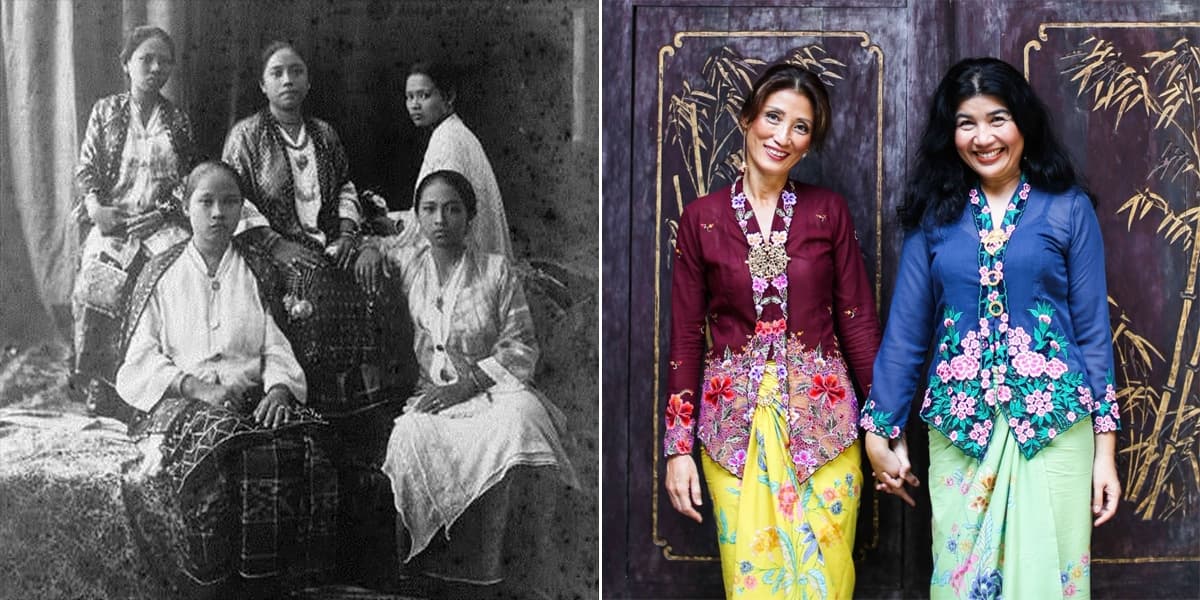
First, a little history. The earliest form of the kebaya is believed to have originated in the 15th century in the court of the Majapahit Empire, based in eastern Java (now part of modern-day Indonesia).
The tailored blouse was worn over the existing kemban torso wrap, as aristocratic women began embracing modest fashion in light of emerging Islamic influence in the region.
The Javanese-style kebaya was later adopted by neighbouring kingdoms including Aceh, Riau, Northern Sumatra and Johor.
Kebaya’s influence in Sulu, Philippines circa 1900s.
Denys Lombard, a leading expert in Asean studies, noted that the word “kebaya” was derived from the Arabic word qaba (clothing) and later introduced to the archipelago through the Portuguese loanword cabaya.
At the time, the kebaya was exclusively worn by royalty, aristocrats and minor nobility. It wasn’t until the 17th century that commoners and peasant women in Java started wearing simpler versions of the kebaya, using peniti (safety pins) to fasten the blouse.
Through trade and diplomatic relations, the kebaya’s influence spread to nearby territories such as Bali, Malacca, Sulawesi, as well as Sulu and Mindanao between the 17th and 19th centuries. The kebaya soon began to take various forms and styles across the region.
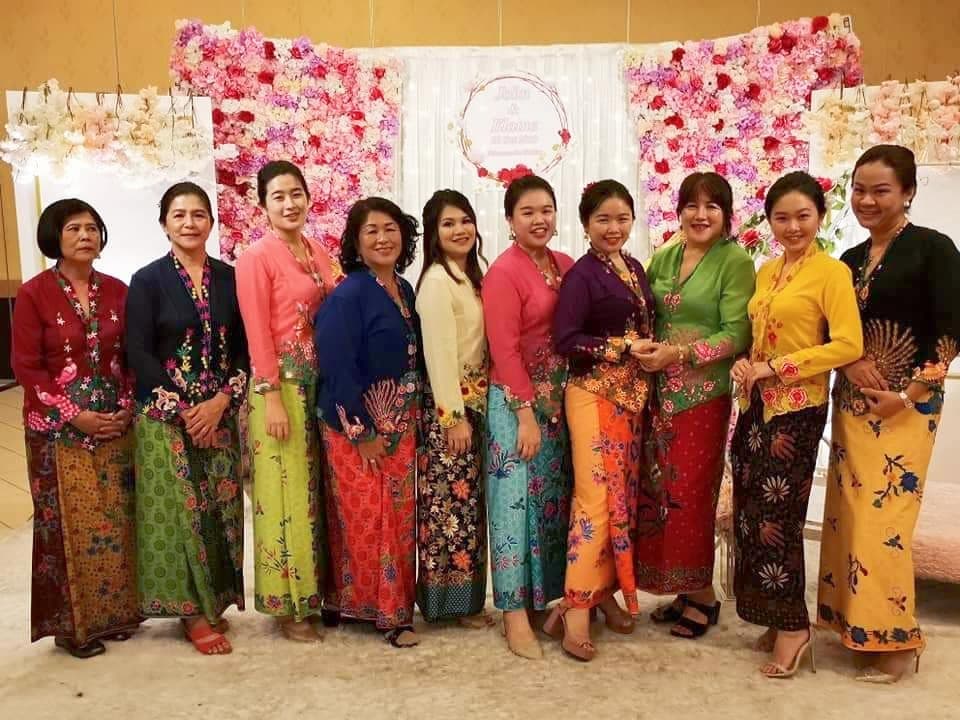
Image: Instagram @nanyangvoyage.
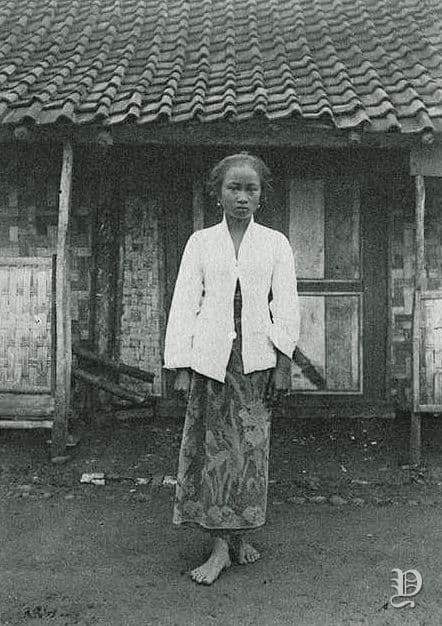
A Javanese woman wearing a simple kebaya. Image: Rasya Ardannary / Pinterest.
Kebaya Labuh or Kebaya Panjang
Considered the earliest iteration of the kebaya, the Kebaya Labuh or Kebaya Panjang was widely worn in Java and neighbouring islands like Sumatra, where Portuguese women were said to have adopted the style of dress when they arrived in the East Indies in the 16th century.
The garment was likely modelled after the qaba, a regal robe worn by rulers and the upper class in the Middle East, Central Asia and northern India since the 9th century.
Some other sources suggest it may have also been influenced by the Chinese, as the open-fronted tunic is reminiscent of dresses worn by women during the Ming Dynasty.
The kebaya resembles a loose, knee-length tunic and is usually made of semi-transparent fabrics such as cotton. The central opening of the blouse-dress is usually fastened by brooches and is traditionally worn over the kemban torso wrap, along with a sarong wrapped around the hips.
Similar variants of the Kebaya Labuh are also popular in Malaysia, such as the kebarung (a combination of baju kurung and kebaya) and Kebaya Pahang-Riau, which has a high cekak musang collar and is fastened with seven or nine buttons.
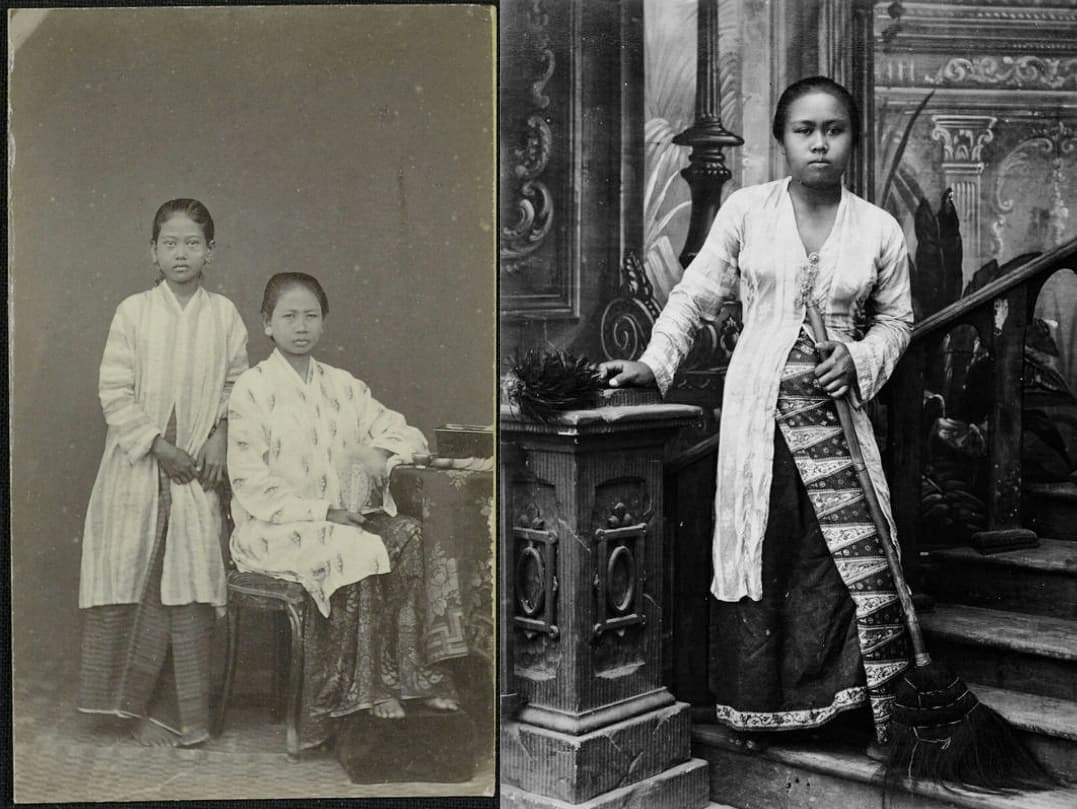
Images: Larissa Duliar / Pinterest (left) and Donny A / Pinterest (right).
Kebaya Jawa (Javanese kebaya)
Considered the earliest iteration of the kebaya, the Kebaya Labuh or Kebaya Panjang was widely worn in Java and neighbouring islands like Sumatra, where Portuguese women were said to have adopted the style of dress when they arrived in the East Indies in the 16th century.
The garment was likely modelled after the qaba, a regal robe worn by rulers and the upper class in the Middle East, Central Asia and northern India since the 9th century.
Some other sources suggest it may have also been influenced by the Chinese, as the open-fronted tunic is reminiscent of dresses worn by women during the Ming Dynasty.
The kebaya resembles a loose, knee-length tunic and is usually made of semi-transparent fabrics such as cotton. The central opening of the blouse-dress is usually fastened by brooches and is traditionally worn over the kemban torso wrap, along with a sarong wrapped around the hips.
Similar variants of the Kebaya Labuh are also popular in Malaysia, such as the kebarung (a combination of baju kurung and kebaya) and Kebaya Pahang-Riau, which has a high cekak musang collar and is fastened with seven or nine buttons.
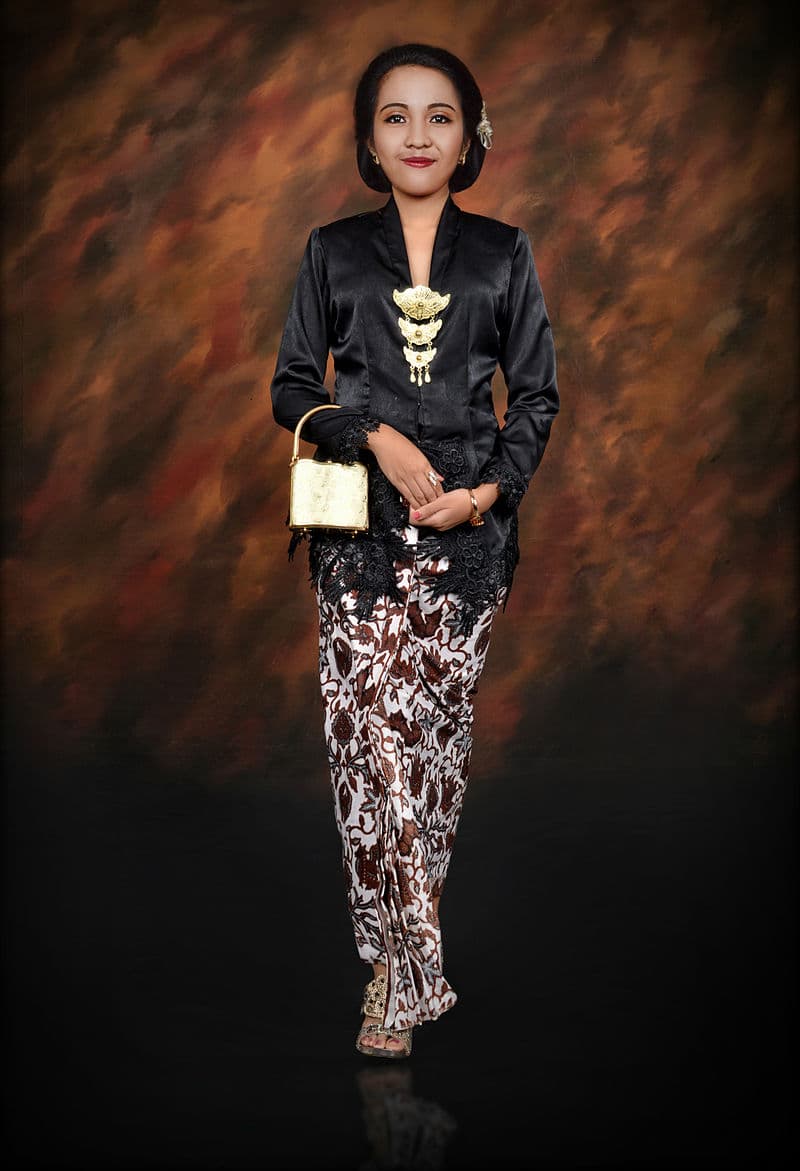
Image: Srikinasih17 / Wikimedia Commons.
Kebaya Kartini
Worn almost exclusively by aristocratic Javanese women in the 19th century, the Kebaya Kartini was especially popular during the lifetime of Indonesian heroine and education advocate Raden Adjeng Kartini (1879-1904), whom this kebaya variant is named after.
The length of the Kebaya Kartini covers the hips and the V-shaped collar folds in a vertical line shape, making the wearer look taller and more slender.
Unlike the Javanese kebaya, a basic Kebaya Kartini can be quite plain as white or plain colours are preferred, and there are minimal adornments save for some stitching or lace applied along the edges of the blouse.
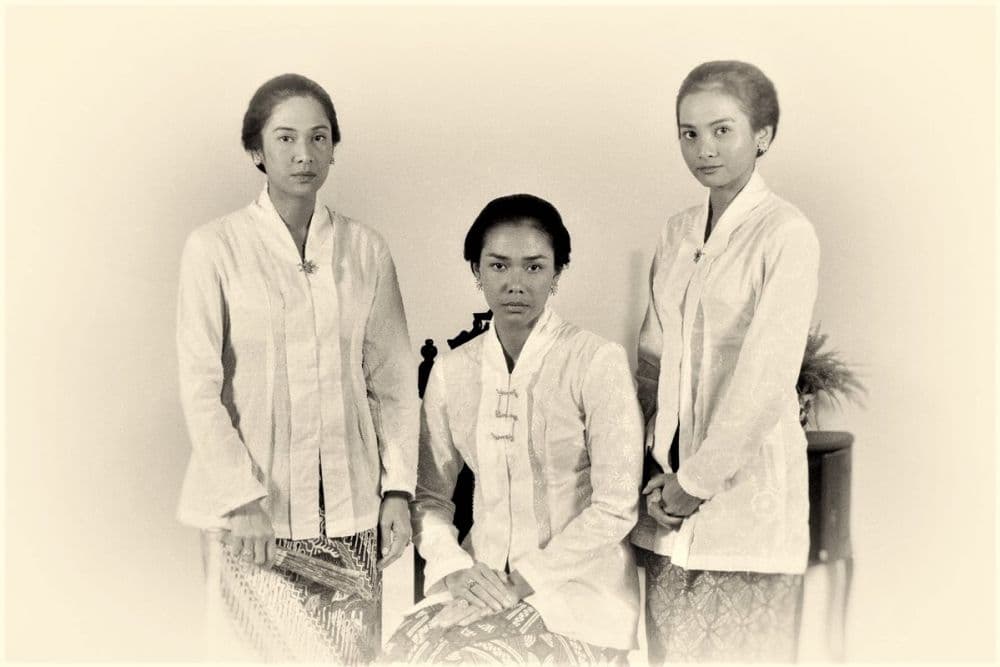
The cast of 2017 biopic Kartini wearing the Kebaya Kartini. Image: Legacy Pictures.
Kebaya Kutubaru
Said to have originated from Central Java, the Kebaya Kutubaru is a look often sported by commoners and peasant women due to its ease of mobility. Today, this kebaya variant is one that is often modified by designers and even the wearers themselves.
Meant to recreate the look of an unsecured kebaya blouse over a matching kemban undergarment, it has an additional piece of fabric (bef) connecting both sides of the kebaya, creating a rectangle-shaped collar. Alternatively, a rubber-enforced corset may be worn instead.
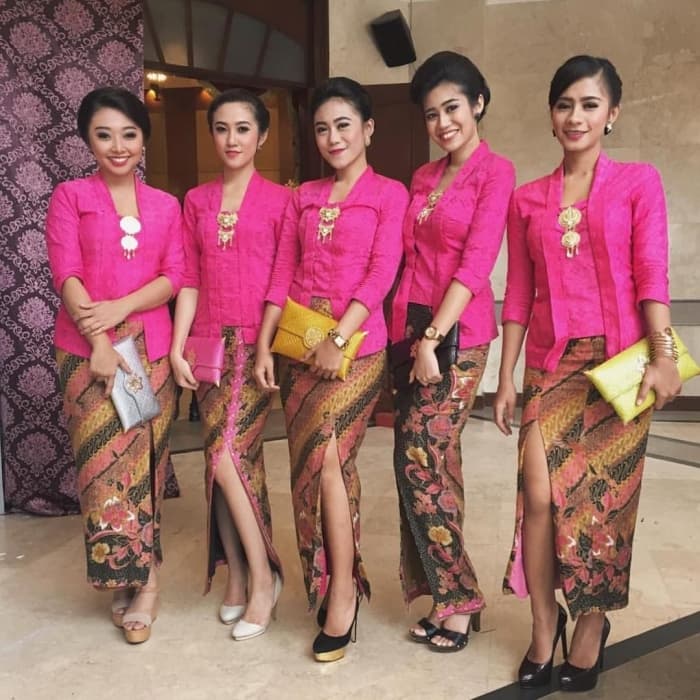
Image: Barony Tavern.
Kebaya Bali
Compared to the rest of the Indonesian archipelago, women in Bali only started wearing kebaya sometime in late 19th to early 20th century.
Dutch colonisers are believed to have enforced the rule of wearing kebaya in Bali, where women’s chests are typically uncovered except for during formal and ceremonial occasions.
Kebaya Bali is considered part of busana adat (customary dress) and is required to be worn during Balinese Hindu rituals and ceremonies.
The Kebaya Bali draws inspiration from the Javanese kebaya and even looks pretty similar to the Kebaya Kutubaru, with several slight differences.
For example, unlike traditional Javanese kebaya, buttons are added to fasten the sides of the blouse instead of brooches. The blouse also has shorter sleeves and a sash is wrapped around the waist to complete the look.
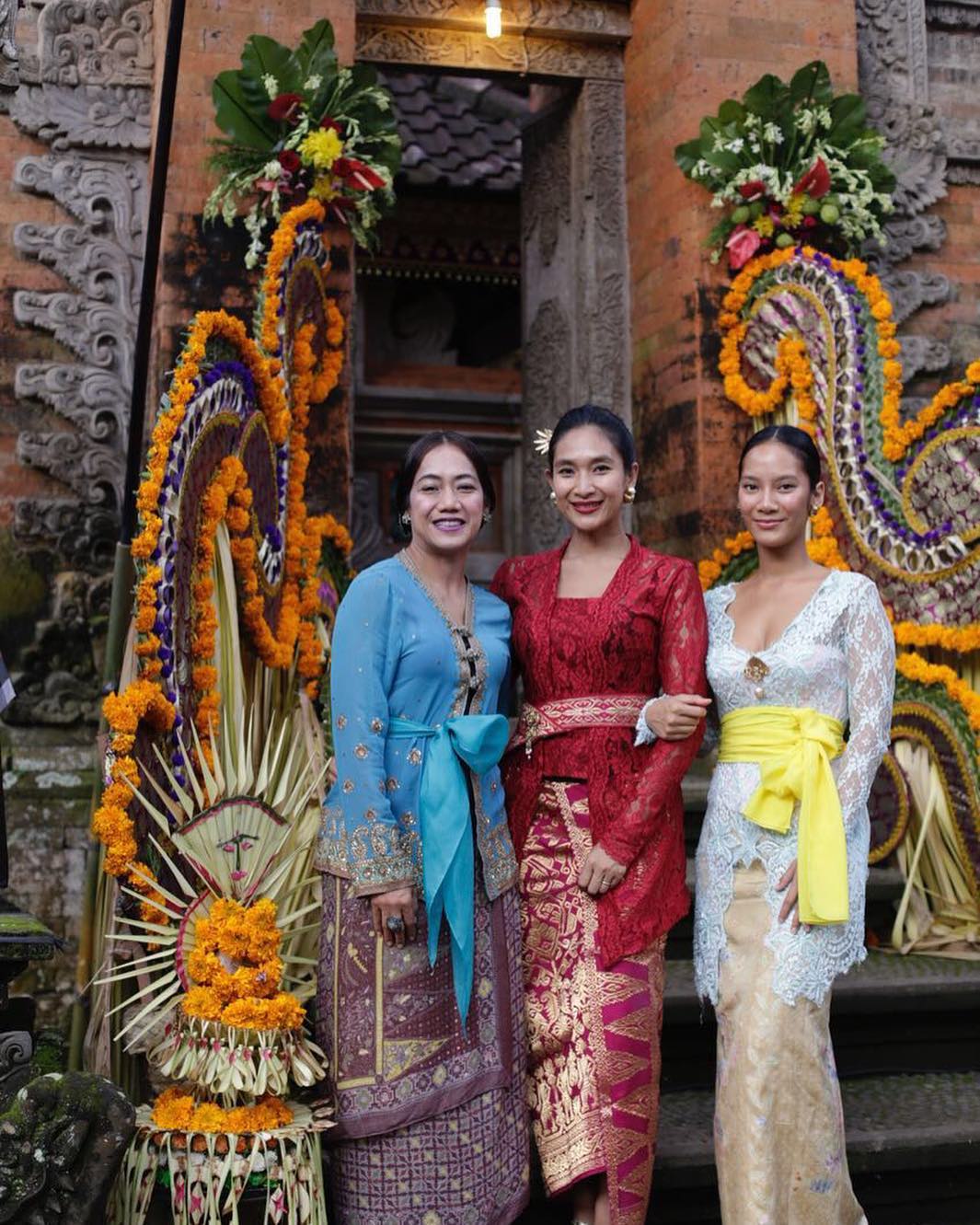
Image: Instagram @happysalma.
Kebaya Sunda
Compared to the rest of the Indonesian archipelago, women in Bali only started wearing kebaya sometime in late 19th to early 20th century.
Dutch colonisers are believed to have enforced the rule of wearing kebaya in Bali, where women’s chests are typically uncovered except for during formal and ceremonial occasions.
Kebaya Bali is considered part of busana adat (customary dress) and is required to be worn during Balinese Hindu rituals and ceremonies.
The Kebaya Bali draws inspiration from the Javanese kebaya and even looks pretty similar to the Kebaya Kutubaru, with several slight differences.
For example, unlike traditional Javanese kebaya, buttons are added to fasten the sides of the blouse instead of brooches. The blouse also has shorter sleeves and a sash is wrapped around the waist to complete the look.
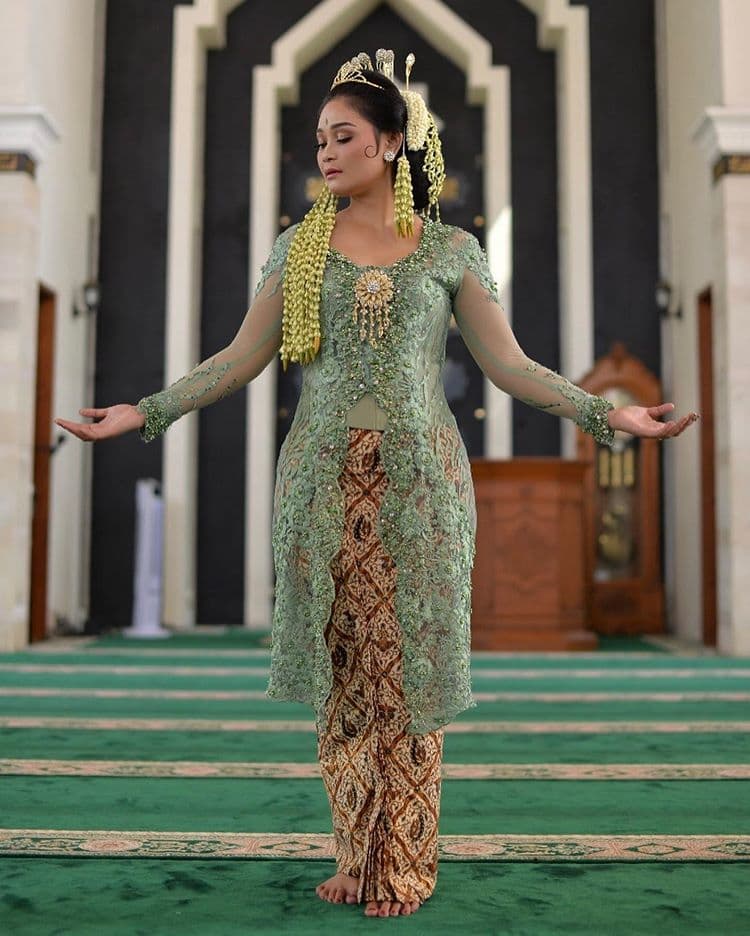
Image: Instagram @djenarwedding.id.
Kebaya Noni
During the Dutch East Indies era, colonial European and Eurasian women adopted the long kebaya blouse as a formal and social dress as it was deemed to be less restrictive and more cooling.
The Kebaya Noni, however, fell out of fashion among European and Eurasian ladies in the 1920s with the emergence of nationalist sentiment in Indonesia.
It is similar to the Javanese kebaya, with slight differences such as shorter sleeves and blouses that are mostly made of cotton. In the late 18th century, handmade lace trimmings - some of which were imported from Europe - were added.
While day kebayas are mostly white and made of light fabrics, evening kebayas were made of black silk. Colonial ladies also abandoned tight corsets in favour of light, comfortable undergarments under their kebaya.
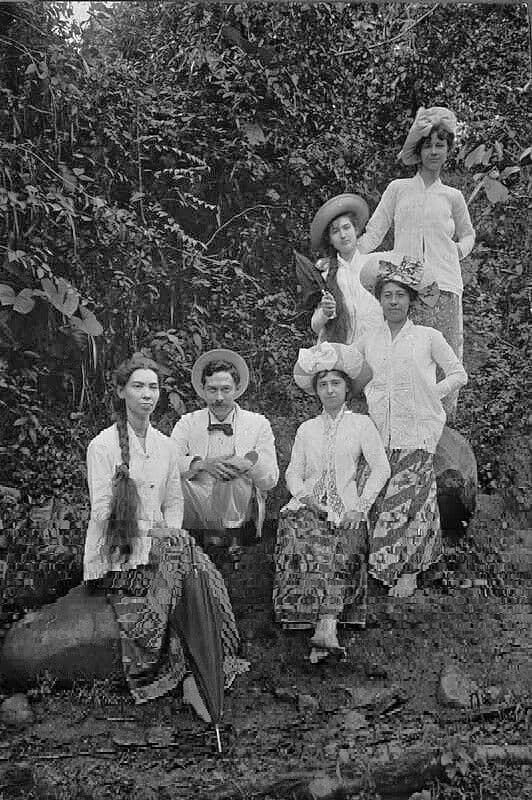
Indo-European ladies wearing kebaya noni circa 1910. Image: Ralistu Pratiwi / Pinterest.
Kebaya Peranakan or Nyonya Kebaya
Also known as Kebaya Encim in Indonesia, this kebaya variant is exceptionally popular among Chinese Peranakan communities in Melaka, Penang, Singapore and Phuket, as well as with Melaka Chetties (Indian Peranakan).
Peranakan women used to wear knee-length tunics developed from the Malay baju panjang over a batik sarong. However, at the turn of the 20th century, Peranakan ladies began drawing inspiration from the lace-embroidered kebaya popularised by European and Eurasian ladies, and the hip-length Kebaya Peranakan became popular in the 1920s.
The Nyonya Kebaya, as it is commonly known today, is similar in style to the Javanese kebaya with some notable differences. For example, the blouse is typically in more vibrant colours and has finer embroidery along the edges. Popular motifs include flowers, butterflies, phoenixes, dragons, insects, and even people.
The outfit is not complete without a sarong, which often comes in bright colours and dynamic patterns such as flowers, birds, butterflies and even checkered and geometric patterns.
For formal occasions, it’s also worn with decorative accessories such as cucuk sanggul (hairpin for buns), a silver belt to secure the sarong and intricate kasut manek (hand-beaded shoes).
Although it’s no longer worn daily by the younger generation, the kebaya is considered a hallmark of the Peranakan identity and is still worn for special occasions today.
For more stories about Southeast Asia, check out our curated Asean Pride list.
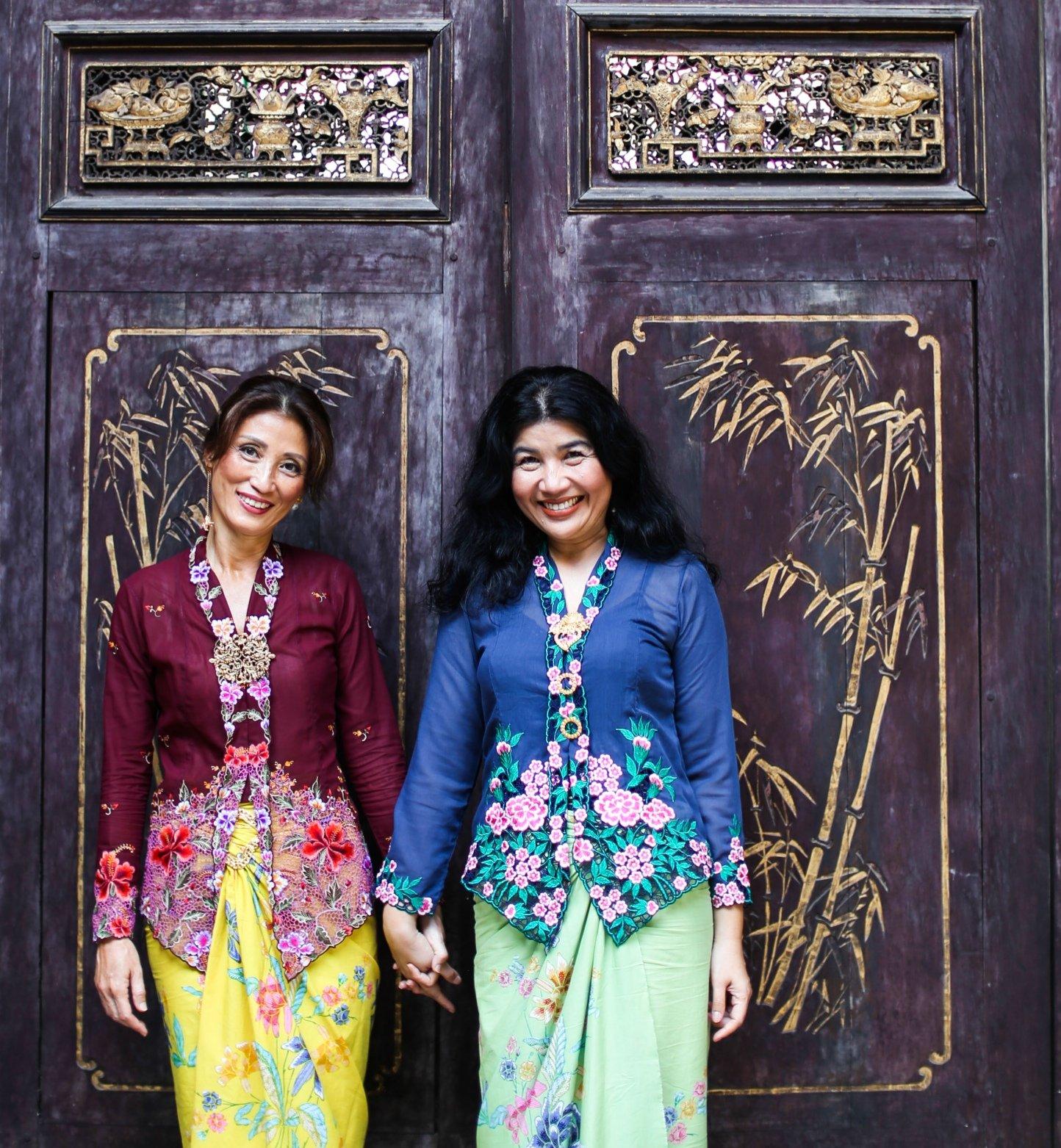
Image: Twitter @mokcibnab.