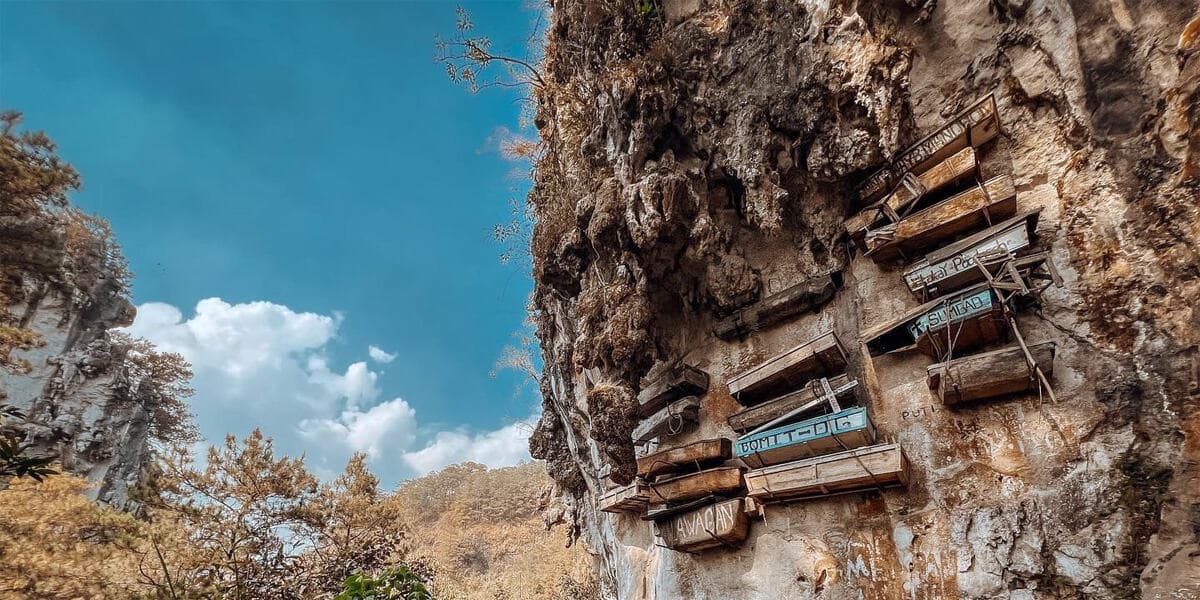
Closer to Heaven: The Hanging Coffins of Sagada
In the mountainous town of Sagada in the Philippines’ main Luzon island, the dead are laid to rest in an unconventional way.
In the mountainous town of Sagada in the Philippines’ main Luzon island, the dead are laid to rest in an unconventional way. Here, the dead are entombed in coffins hung off the side of cliffs, a remarkable tradition that is both religious and practical in nature. Practised by the Kankanaey tribe of the Igorot, an ethnic group indigenous to the Cordilleras, this ancient custom is believed to date back over 2,000 years.
An ancient tradition
The Kankanaey hang their dead high up on the mountainside so the spirit of the deceased could be closer to the ancestral plane. Suspending the bodies high off the ground also safeguarded them from being destroyed by wild dogs, overly wet soil or, in the days of yore, even headhunters.It is believed doing this also allows the anito or spirit of the dead to roam free and continue to protect the living.
Elderly members of the tribe will carve their own coffins while still alive - family members step in only when they’re too infirmed to continue. The coffin is made from local timber and the owner’s name is painted on the side in bright colours. When a member of the tribe dies, the body is first placed in a sangadil or “death chair”, where it will remain for relatives to pay their respects over the next few days. The remains are secured in place with vines and smoked to keep it from rotting. After the wake ends, the deceased is placed into the coffin in a fetal position - the Igorot believe a person should exit the world in the same way they entered it.
Because the coffins were traditionally only about a metre long, this sometimes involved breaking some bones so that the body would fit. In recent years, however, more standard-sized caskets have been used. When the coffin is carried into the mountains, mourners stay close by in the hopes of coming into contact with deeng or fluids from the decomposing body. This is believed to pass on the blessings and talents of the deceased.
Once the procession reaches the burial site, however, all attention is turned to the arduous task of hauling the casket up the cliff face with the aid of ropes and ladders. Finally, the coffin will be suspended on metal pegs driven into the mountainside, where they will remain until they succumb to the elements.
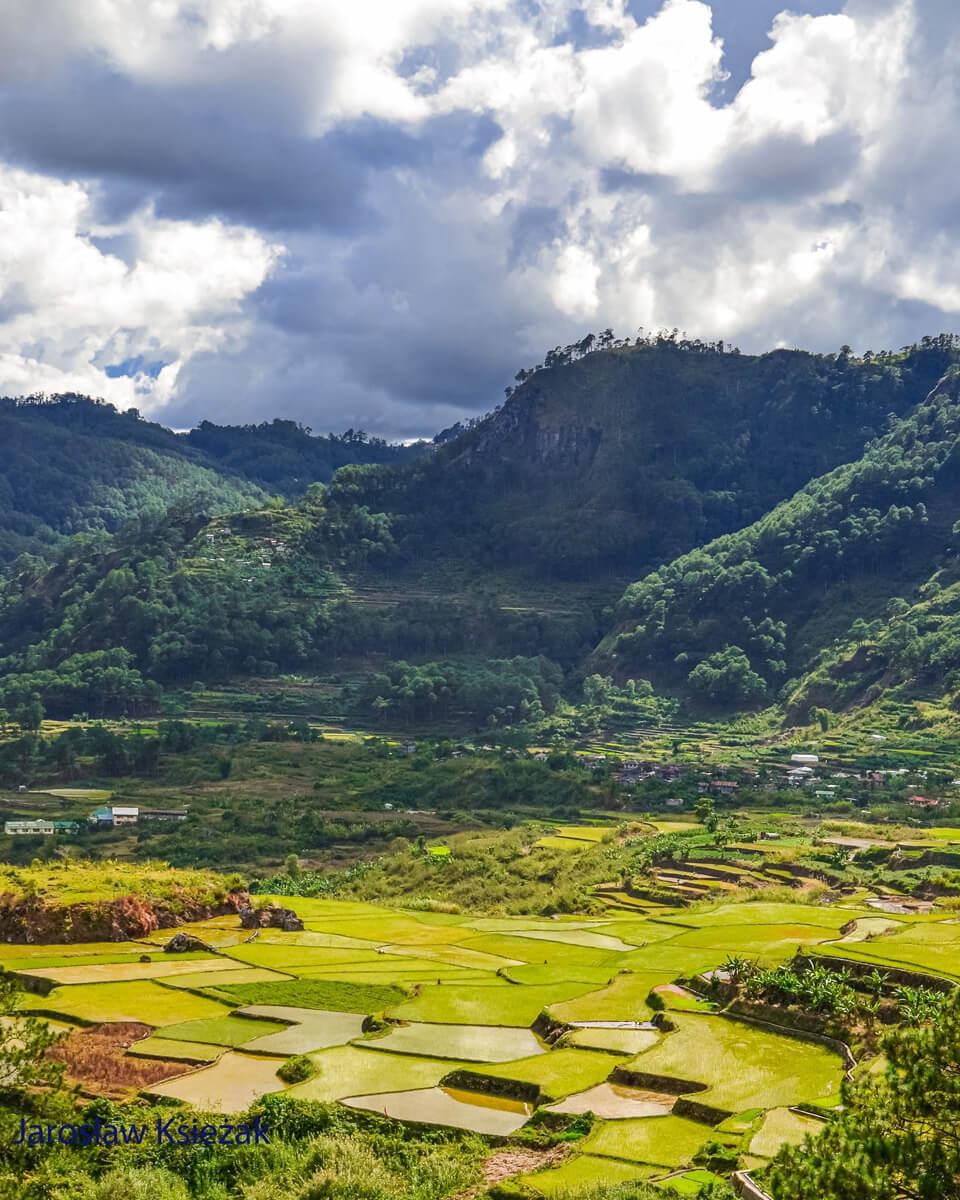
Sagada is a small town in Luzon's Mountain Province. Image: Instagram @jaroslawksiezak
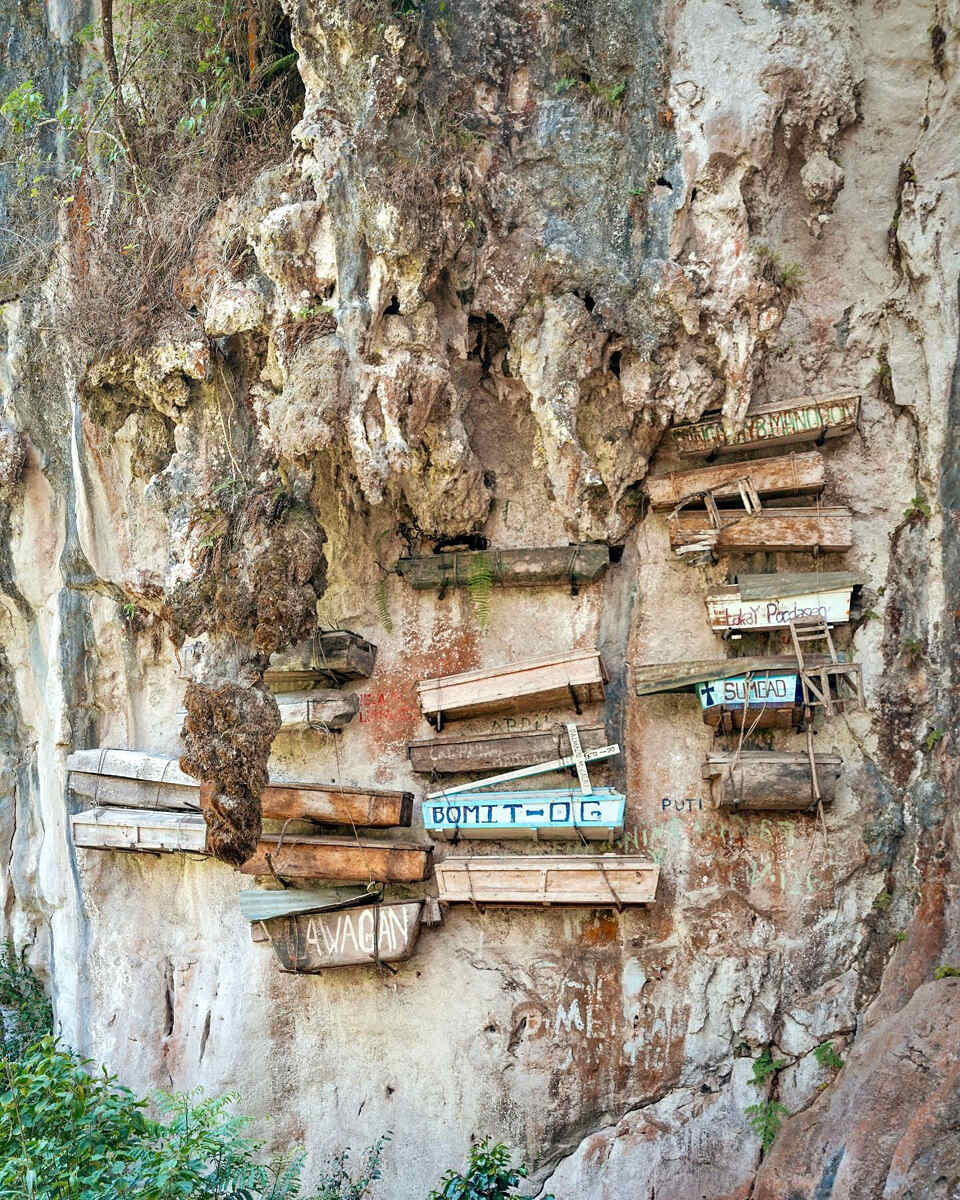
Echo Valley is home to the most well-known hanging coffins in Sagada. Image: Instagram @kei_suke0318
Besides being nailed to the mountainside, coffins are also perched on cliff ledges. Image: Instagram @anusgo
Hanging in the balance
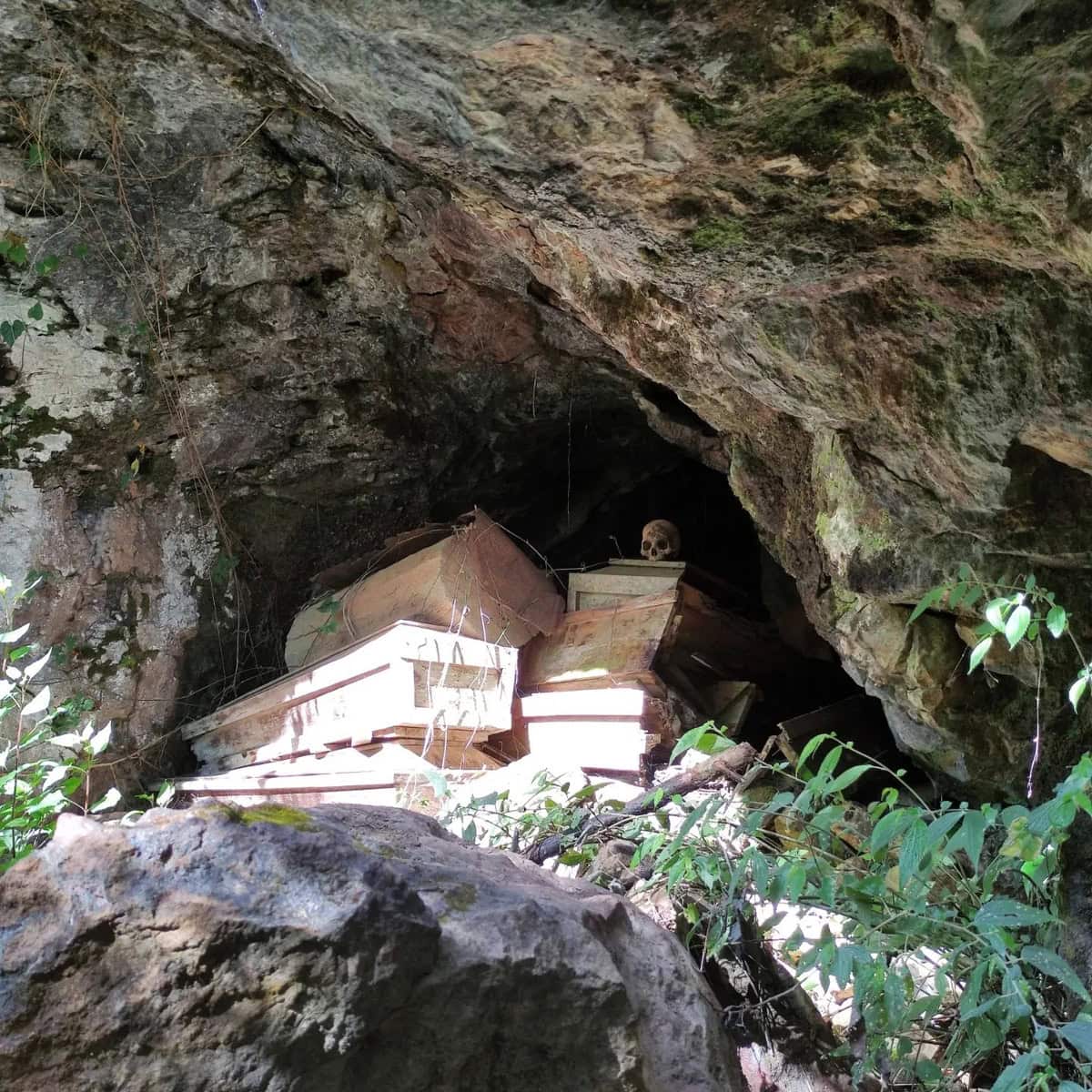
As iconic as this funerary practice has become in Sagada, not all members of the Kankanaey tribe qualify for a hanging burial. It is seen as a mark of honour, with more respected individuals earning a higher spot up the cliff face. Ordinary members of the tribe are interred in caves or, if they opt for the Christian tradition, buried in the church graveyard.
The mountains of Sagada are home to a mix of hanging and cave burial sites, the most well-known being the hanging coffins in Echo Valley. Some of the hanging coffins in Echo Valley are believed to be centuries old but are still in good condition, possibly due to their placement beneath a natural overhang. Locals have stated that they intend to continue carrying out hanging burials there. While in the Philippines this practice is considered unique to Sagada, hanging coffins can be found elsewhere in the world, but as a cultural relic rather than an ongoing tradition.
In China, the various ethnic groups who practised hanging burials in Fujian, Yunnan, Sichuan and other mountainous regions have largely gone extinct. Meanwhile, in Indonesia, the Toraja have mostly replaced their hanging coffins with caverns built into the cliffs instead. Not surprisingly, this has made the hanging coffins of Sagada a point of interest for travellers. Tourists are allowed to visit the cliffside coffins in Echo Valley, as long as they’re accompanied by a registered local guide. Penchant for the eerie notwithstanding, this presents a golden opportunity to learn more about this unique cultural practice right from the source - before it possibly becomes a thing of the past.
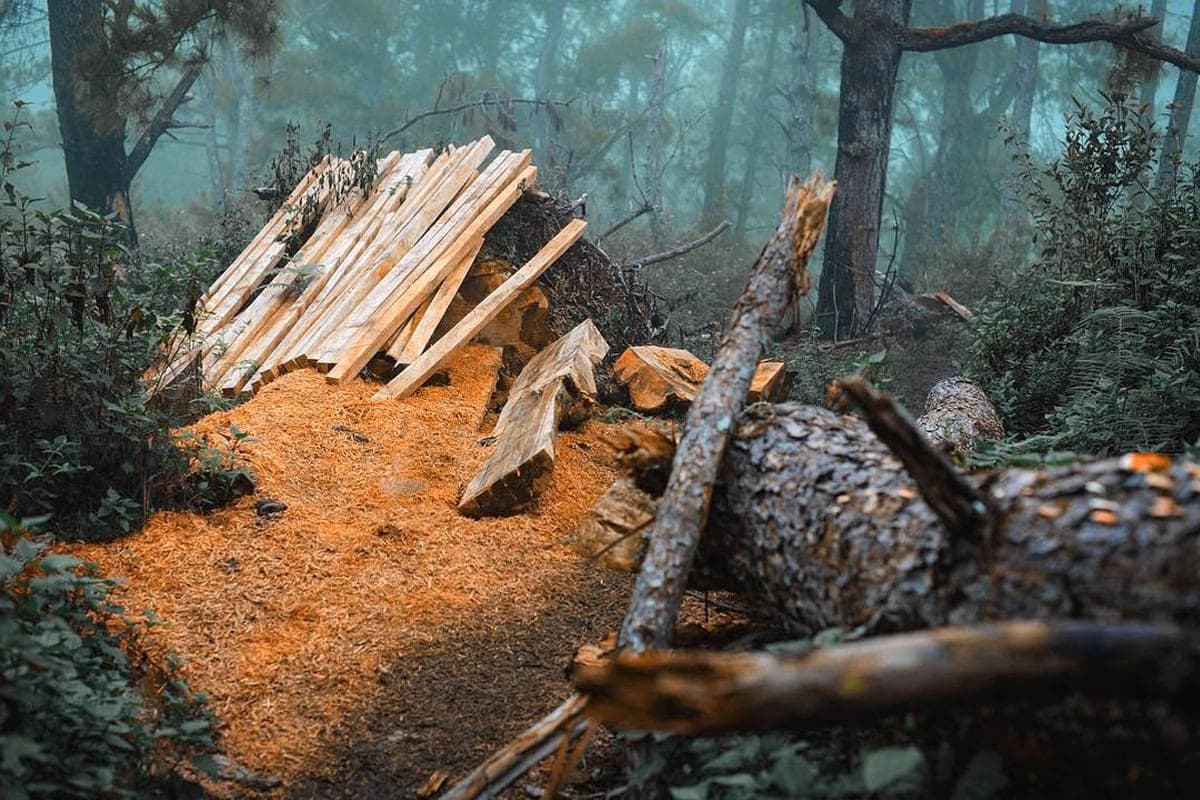
The elderly carve their own coffins out of local lumber. Image: Instagram @jasoniazid
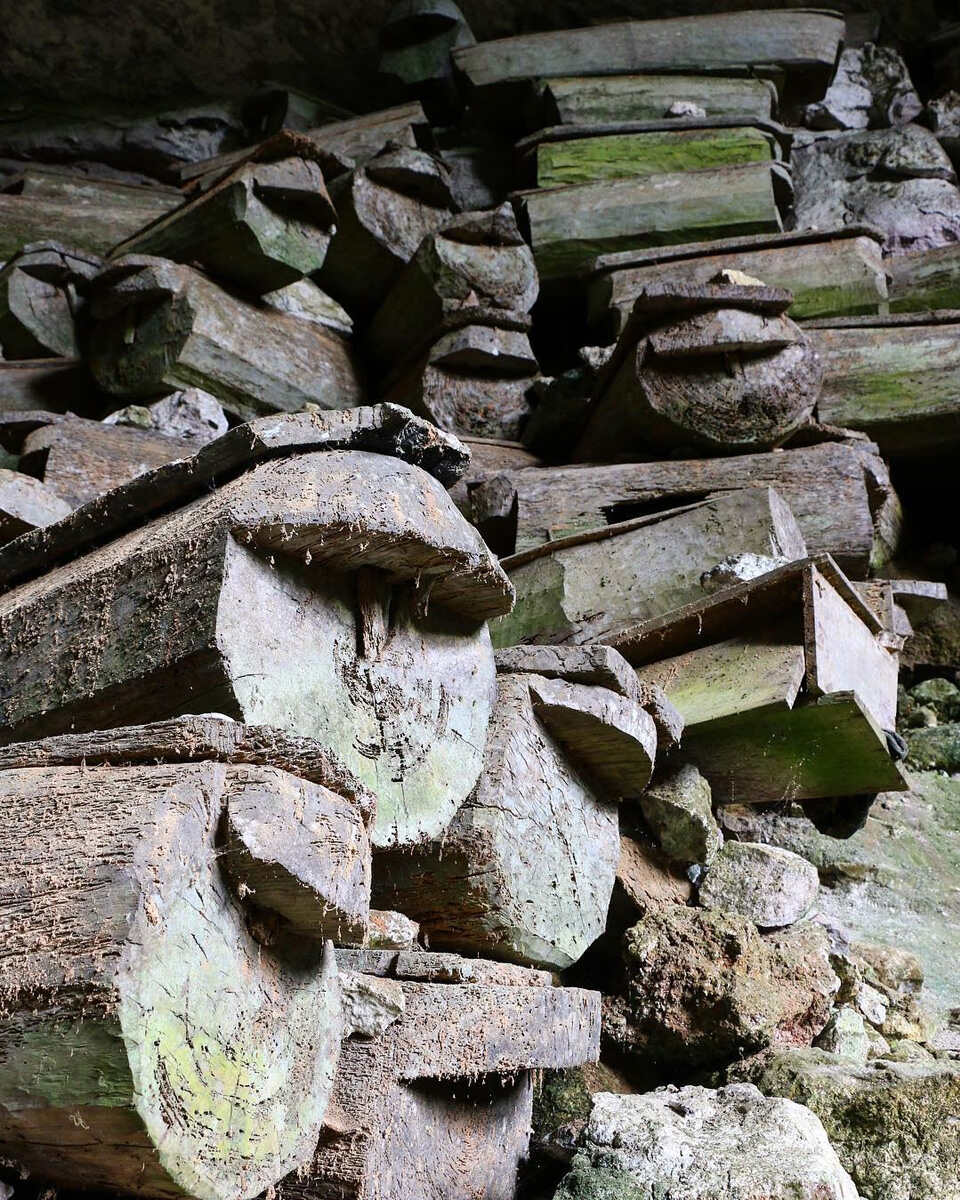
The Kankanaey also practise cave burials, as seen here in the Lumiang Burial Cave, Sagada. Image: Instagram @wildromo
Jacie Tan Cheng Hwee
14 May 2024