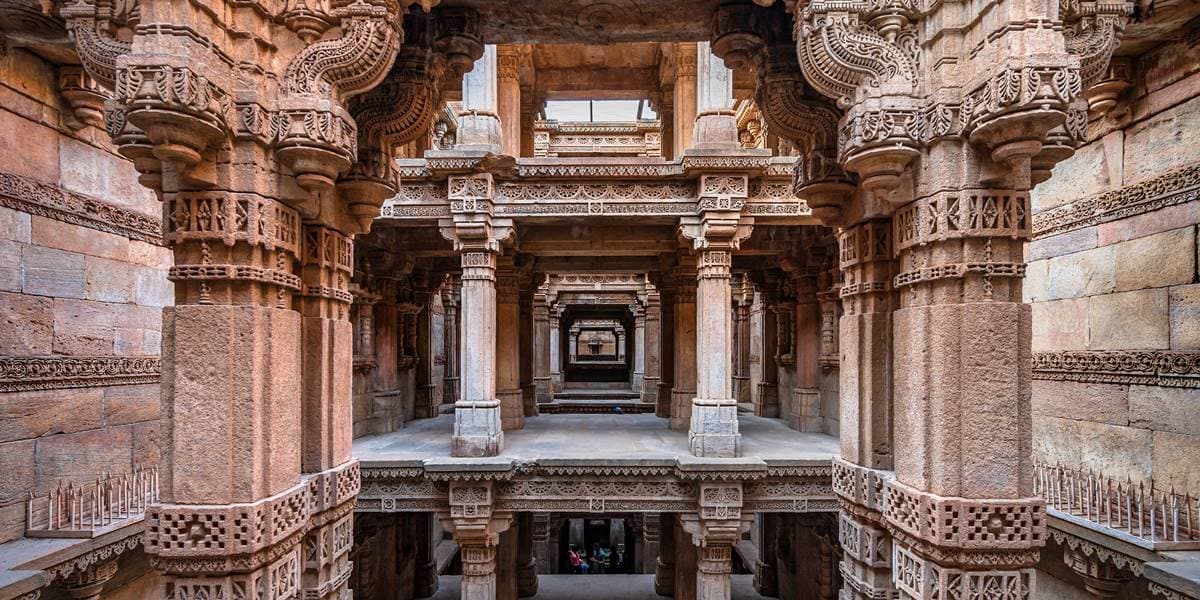
Adalaj Vav, the Beautiful Indian Stepwell With a Tragic Tale
Some 20 kilometres north of Ahmedabad lies one of India’s most beautiful stepwells
Some 20 kilometres north of Ahmedabad lies one of India’s most beautiful stepwells, the Adalaj Stepwell, sometimes referred to as Adalaj Vav in Gujarati.
Featuring a magnificent blend of Indo-Islamic architecture and intricate carvings, the five-storey stepwell is often hailed as a masterpiece of 15th century stonemasonry.
But perhaps the most intriguing aspect of the stepwell is its tragic backstory involving a bereaved queen and her enduring love for her late husband.
A legendary sacrifice
The Adalaj Stepwell was originally commissioned by Veer Singh, a Hindu king who ruled over the land of Dandai Desh. However, it was his queen Roopba who ensured its completion.
Work on the stepwell first began in 1499. Shortly after, Singh’s territory was annexed by Mahmud Begada of the Gujarat Sultanate, following a battle that resulted in the chief’s defeat and death.
Smitten by Roopba’s beauty, the victorious Begada proposed marriage to the queen, who initially wished to follow her husband into the afterlife.
Roopba agreed to Begada’s proposal on the condition that he complete the construction of the stepwell as a sign of his devotion to her.
The building of the well thus resumed, now with Islamic motifs added to the existing design.
When the stepwell was almost finished, Begada approached the queen once more. In response, Roopba, having met her objective of getting the stepwell built, circled the well uttering prayers before flinging herself into its waters, drowning herself.
Construction was promptly halted and the stepwell’s planned dome was never finished.
Fortunately, Begada did not call for the stepwell to be destroyed, likely because he was pleased with its outcome. He did, however, order the execution of the masons who worked on it so that the structure would not be replicated.
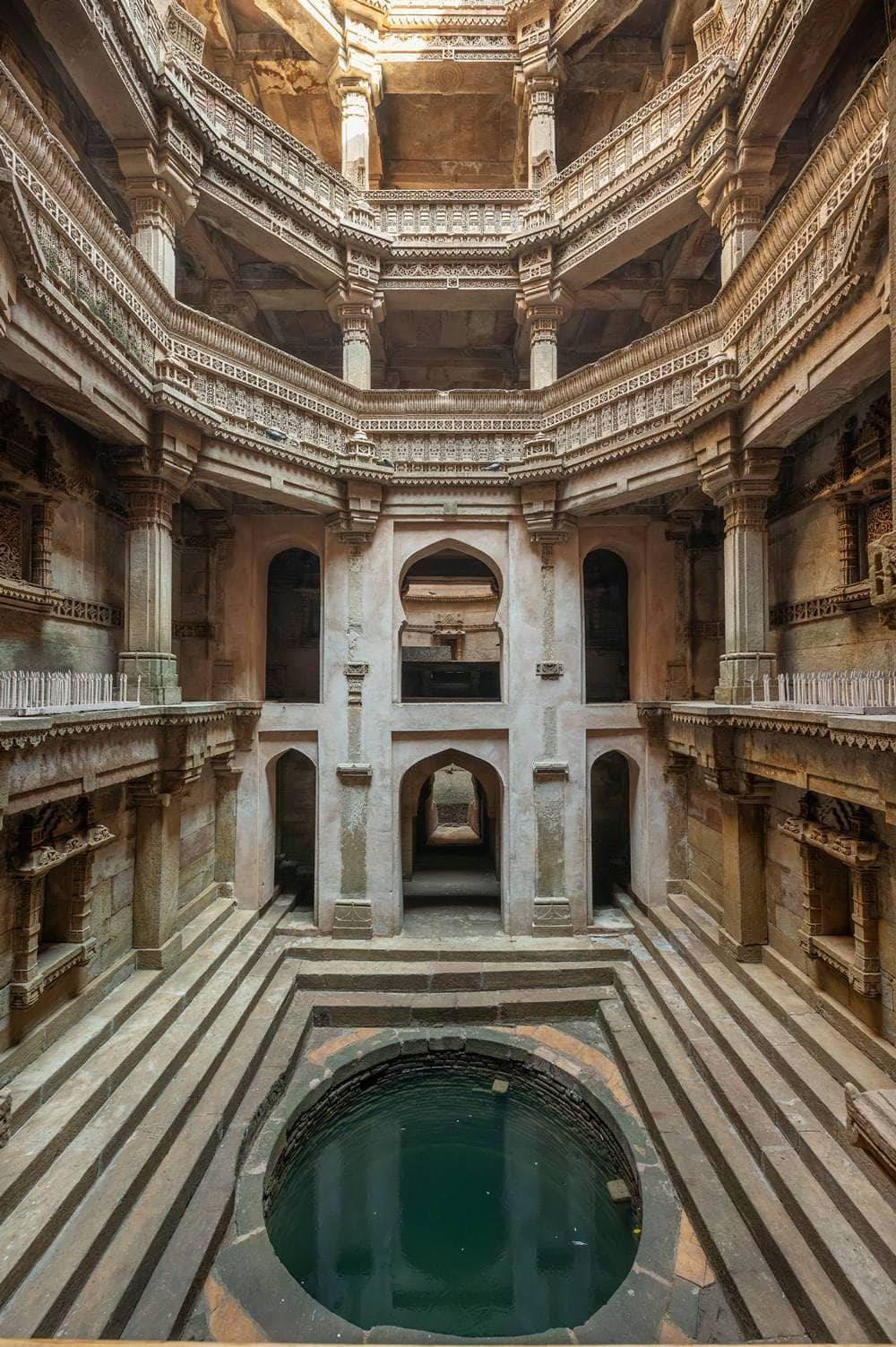
The waters of the Adalaj Stepwell. Image: Adobe Stock
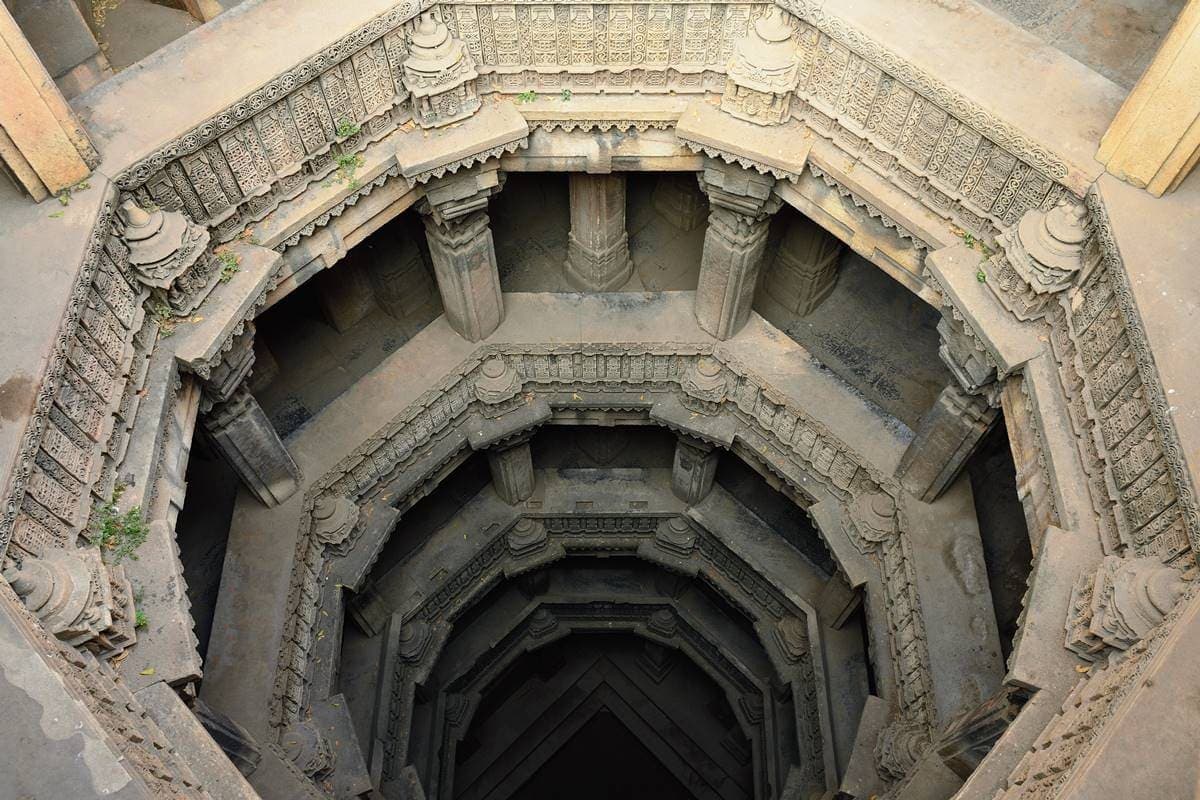
The stepwell is symbolic of a queen’s love for her late husband. Image: Adobe Stock
Marvel of masonry
Built entirely of sandstone, the Adalaj Stepwell boasts five storeys of colonnaded arcades centred around an octagonal, open-air well shaft.
Its structure is typically Indian in design, bearing a strong resemblance to Solanki architecture with its temple-like finish. The bottom level of the well can be reached by three staircases, a unique feature among Indian stepwells.
Also stunning are the intricate carvings present throughout the stepwell’s labyrinthine rooms and passages. Some sport prominent, Islamic-inspired floral motifs, while others are decidedly Hindu with their showcase of animals, humans and deities.
One that particularly stands out is the depiction of ami khumbor(pot containing the water of life) and kalpavriksha (wish-fulfilling tree), carved from a single block of stone.
There are also a number of pillars and walls featuring carvings with Buddhist and Jain symbols.
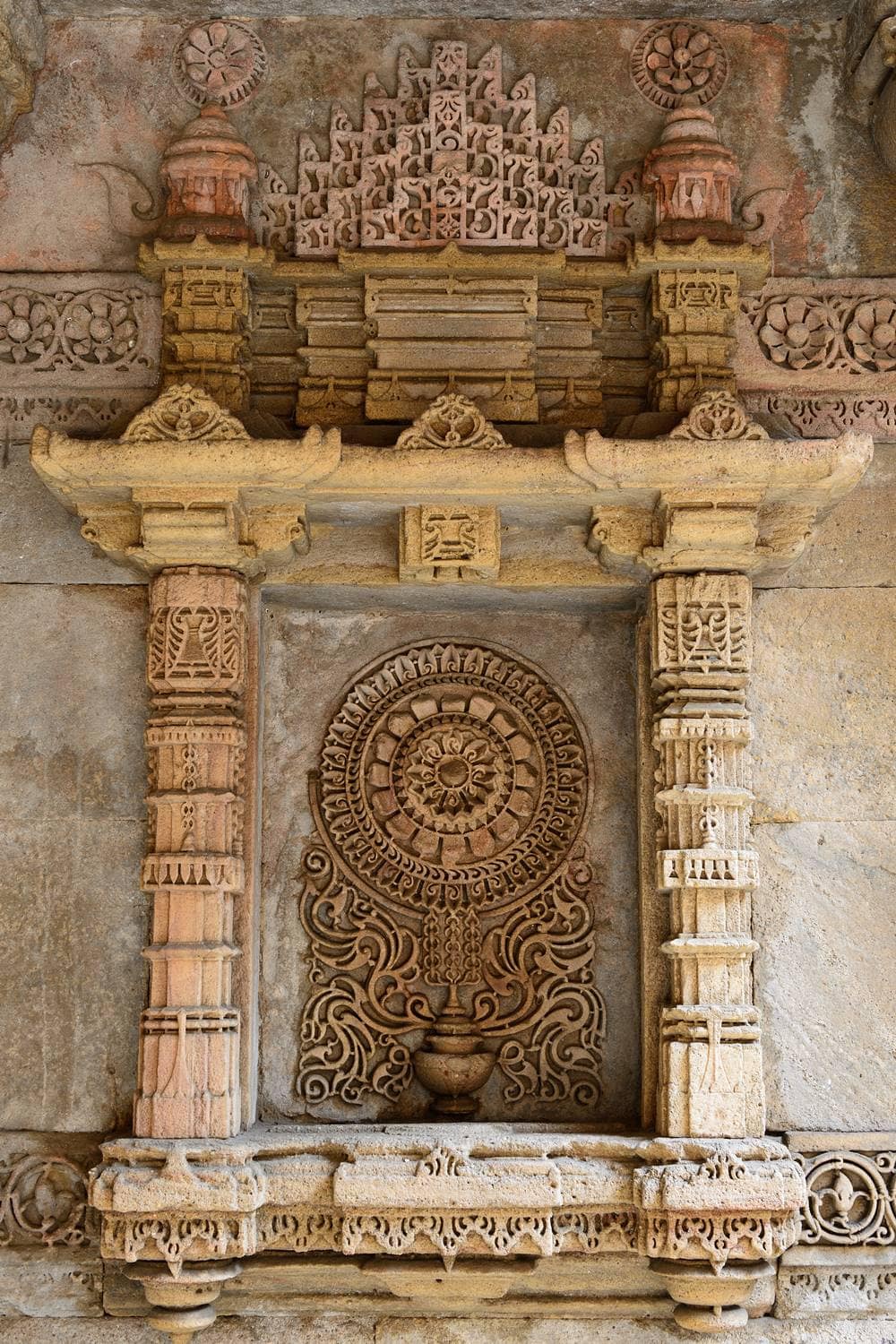
Some of the stepwell’s carvings bear religious significance among locals. Image: Adobe Stock
More than just water
As a source of water for drinking, washing and irrigation, the Adalaj Stepwell served a utilitarian function in a semi-arid region that often faced water shortages, especially during the medieval period.
At the same time, the structure grew into a place of cultural and ritualistic significance for locals due to the religious imagery on display.
There’s also evidence the stepwell was a place for people to congregate, away from the harsh heat of day. Each floor of the stepwell was made with enough space for people to gather and the wide landings were likely used as a resting place for weary travellers.
Despite the open vents which enable light and air to enter, the interior was designed to be shielded from direct sunlight except for a brief period at noon.
The presence of water also results in the natural air-conditioning effect. Modern research has shown that the temperature inside the stepwell is consistently cooler than the outside by 5 to 6 degrees Celsius.
Today, the Adalaj Stepwell is considered one of India’s most beautiful stepwells and is a popular tourist attraction in Gujarat.
It is a 15-minute drive away from Gandhinagar - the state capital and home to India’s state-of-the-art Gandhi museum - and 30 minutes’ drive from Ahmedabad, Gujarat’s most populous city.
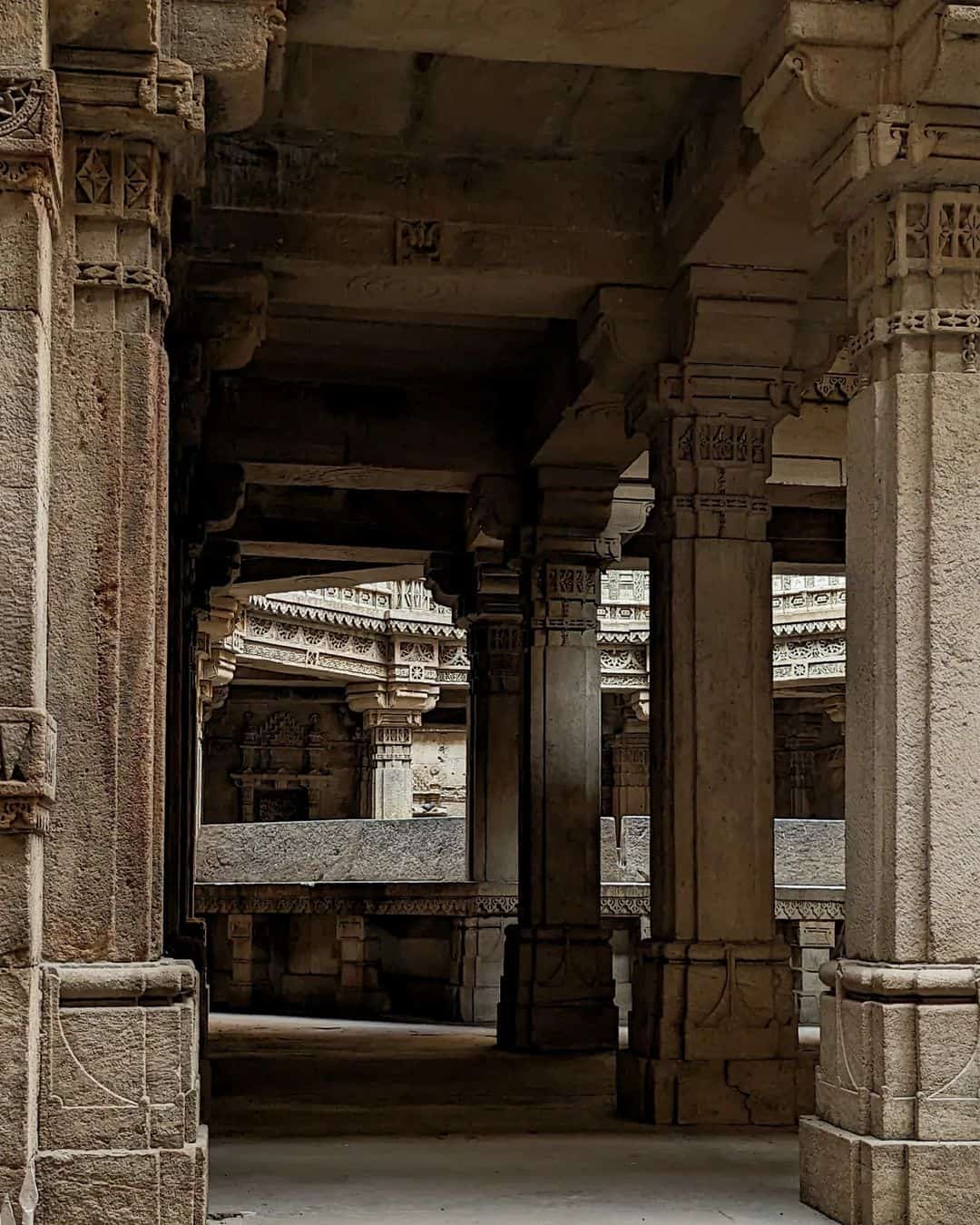
The arcades are supported by sandstone columns. Image: Instagram @sagarbhasin_
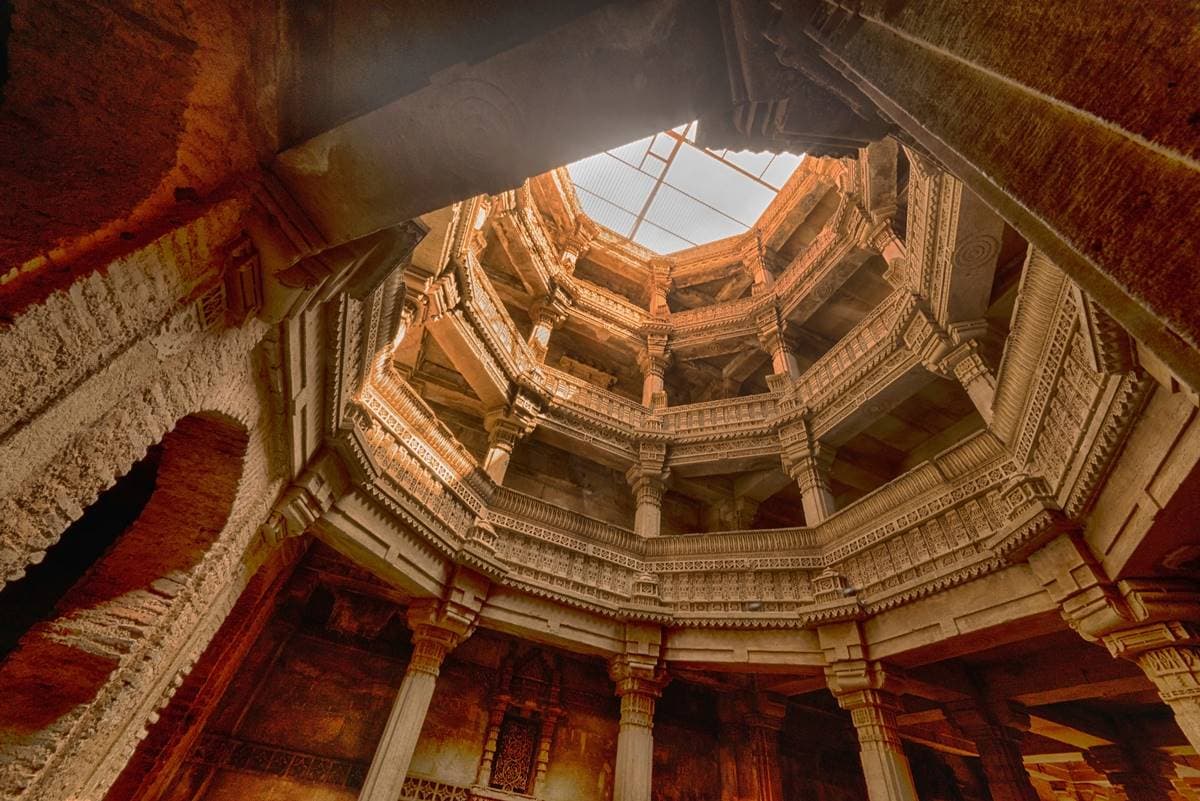
The open-air well shaft. Image: Adobe Stock
Jacie Tan Cheng Hwee
15 August 2024