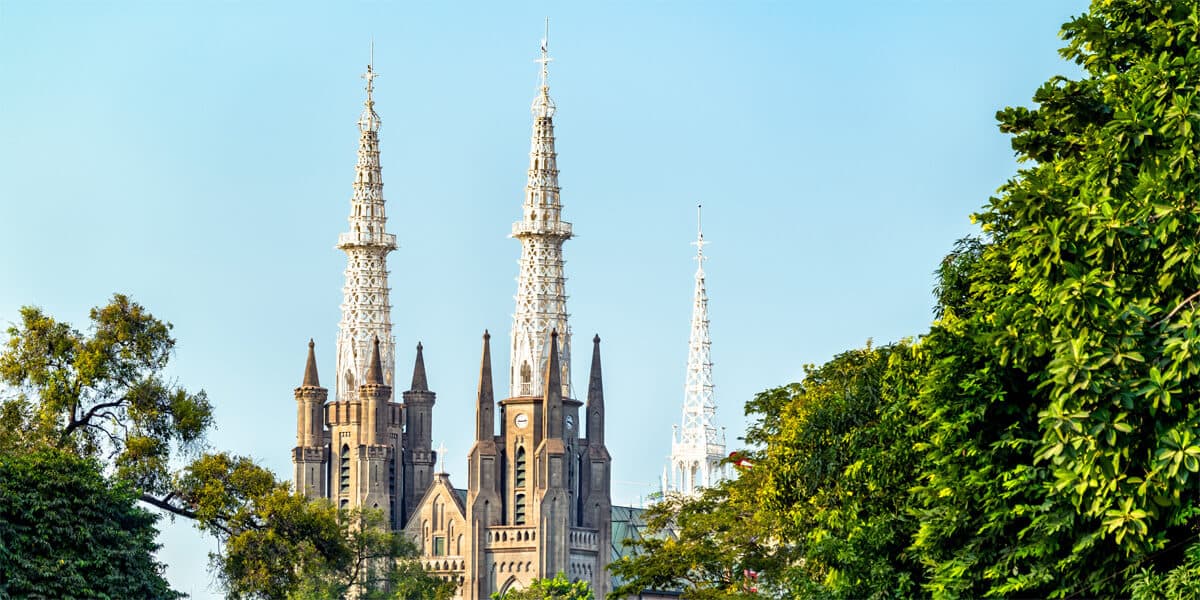
5 Facts About Jakarta Cathedral, a Twin-Spired Neo-Gothic Gem
Even amid the bustling cityscape of the Indonesian capital brimming with heritage sites and historical monuments, Jakarta Cathedral stands out.
Even amid the bustling cityscape of the Indonesian capital brimming with heritage sites and historical monuments, Jakarta Cathedral stands out.
The soaring Neo-Gothic beauty is nestled in historic Central Jakarta, right at home with other big draws such as the Monas national monument and Pos Bloc Jakarta, a Dutch colonial era building turned creative hub.
The cathedral is the seat of the archbishop of Jakarta and serves the needs of the Roman Catholics, who make up about 3 percent of the city’s population.
It owes its existence to Napoleon (ish)
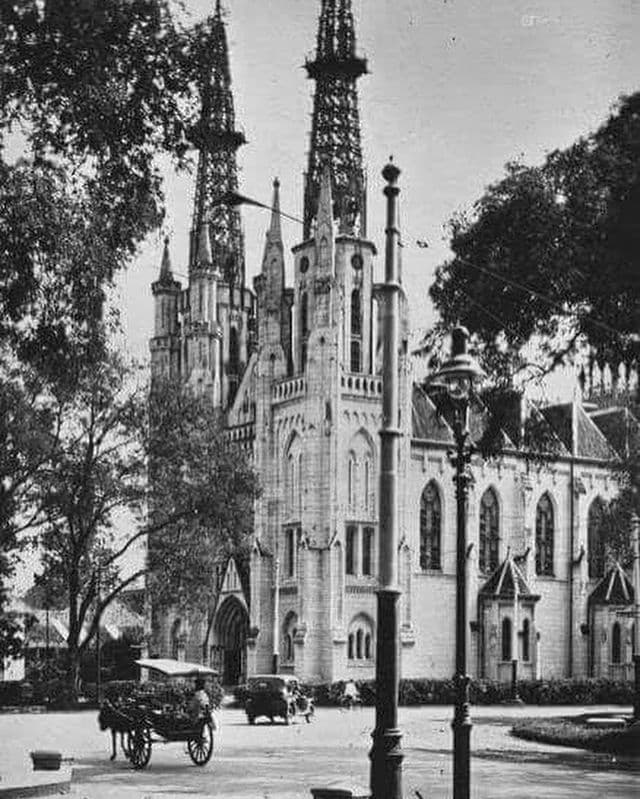
Image: Instagram @museumkatedraljkt
After Napoleon Bonaparte appointed his brother, Louis, as prefect of the Kingdom of Holland in 1806, the Protestant Dutch found themselves with a Roman Catholic ruler. Louis took this opportunity to convince the Vatican to appoint an apostolic prefect for the Dutch East Indies colony.
Less than a year later, a chapel the Church of St Ludovikus - “Louis” in Dutch - was set up in Kwitang, Batavia (now in Central Jakarta).
Sadly, a fire razed the church in 1828. It was succeeded one year later by the Church of Our Lady of the Assumption, a Neoclassical structure built on a plot of land owned by a Dutch nobleman named de Kock.
This second church collapsed in 1890, three days after Easter, and Jakarta Cathedral was built on its site.
Its Neo-Gothic style was unusual at the time
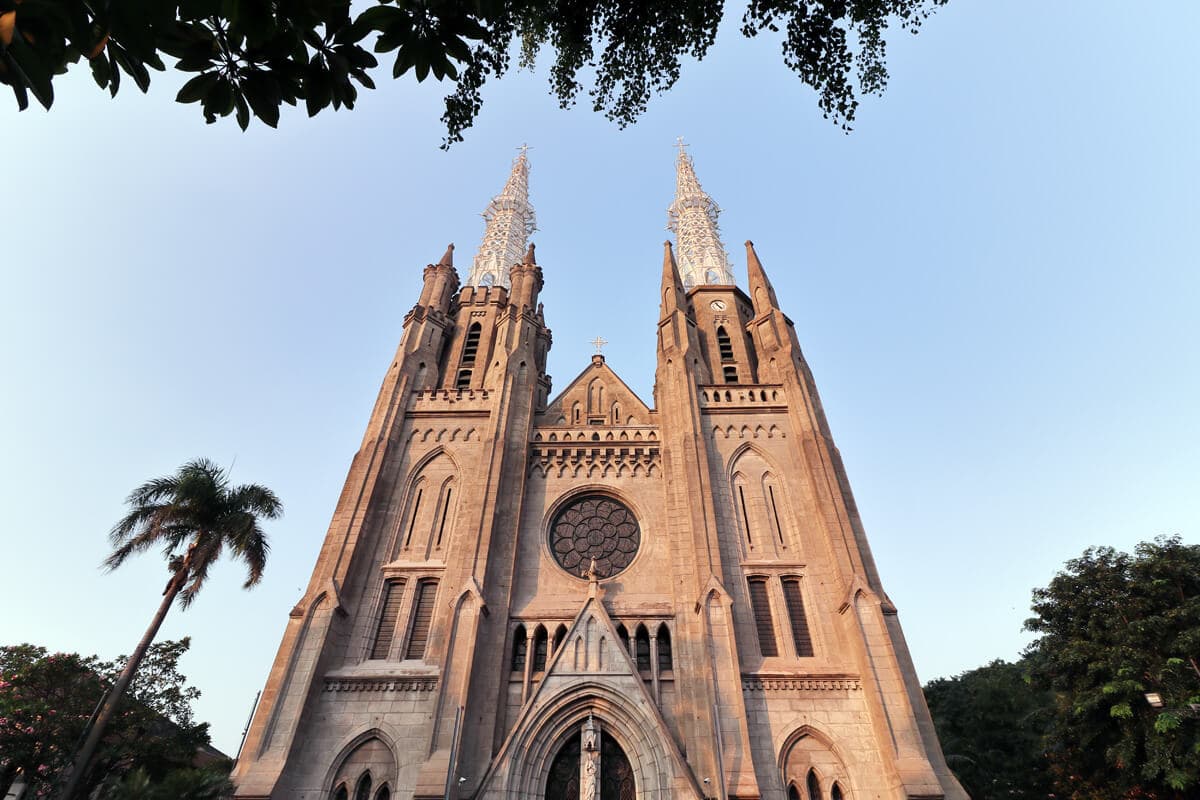
Image: Adobe Stock
The design of Jakarta Cathedral was entrusted to Dutch Jesuit priest Antonius Dijkmans, an accomplished architect who had designed two churches in Europe.
In contrast to the prevalent Neo-Classical trend in Batavia at the time, Dijkmans went with the Neo-Gothic style which was popular back home.
The frontage consists of a 45-metre high central tower flanked on either side by 60-metre tall towers - each with a different design, in keeping with Neo-Gothic sensibilities.
The left tower, the Fort of David, represents the strength of the king in protecting his people. The Ivory Tower on the right symbolises the purity of the Virgin Mary, to whom the cathedral is dedicated.
Interestingly, the cathedral’s stained glass windows feature repetitive floral patterns, unlike its European counterparts that typically depict Jesus or the saints.
It was built to resist earthquakes
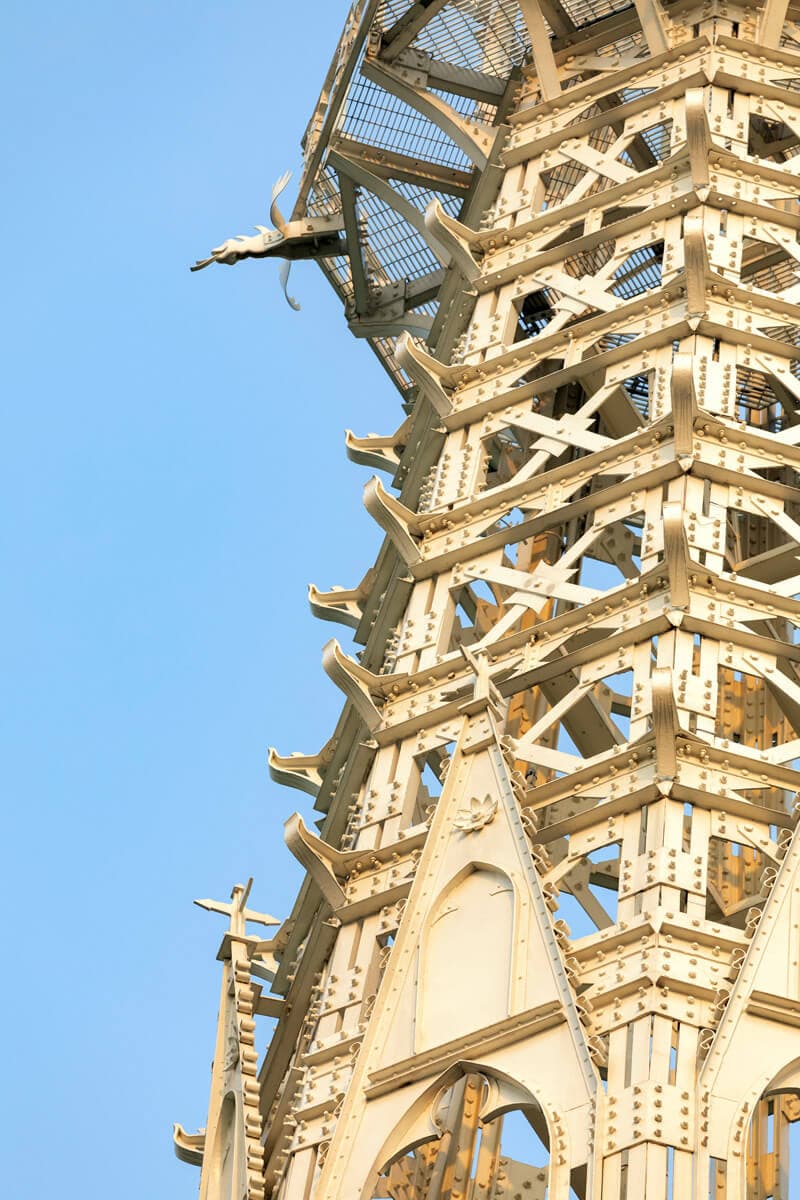
Image: Adobe Stock
Jakarta Cathedral was designed with Indonesia’s tectonically-volatile nature in mind.
Although the church looks like it was made from stone, the main structure actually consists of locally manufactured bricks wrapped around an earthquake-resistant steel frame.
And while wood is not conventionally employed in Neo-Gothic architecture, Indonesian teak was used for the ribbed vault ceiling and roof beams instead of masonry to lighten the structure.
The tall, wrought iron spires that top the three towers were made from steel for that same reason.
It is filled with artworks
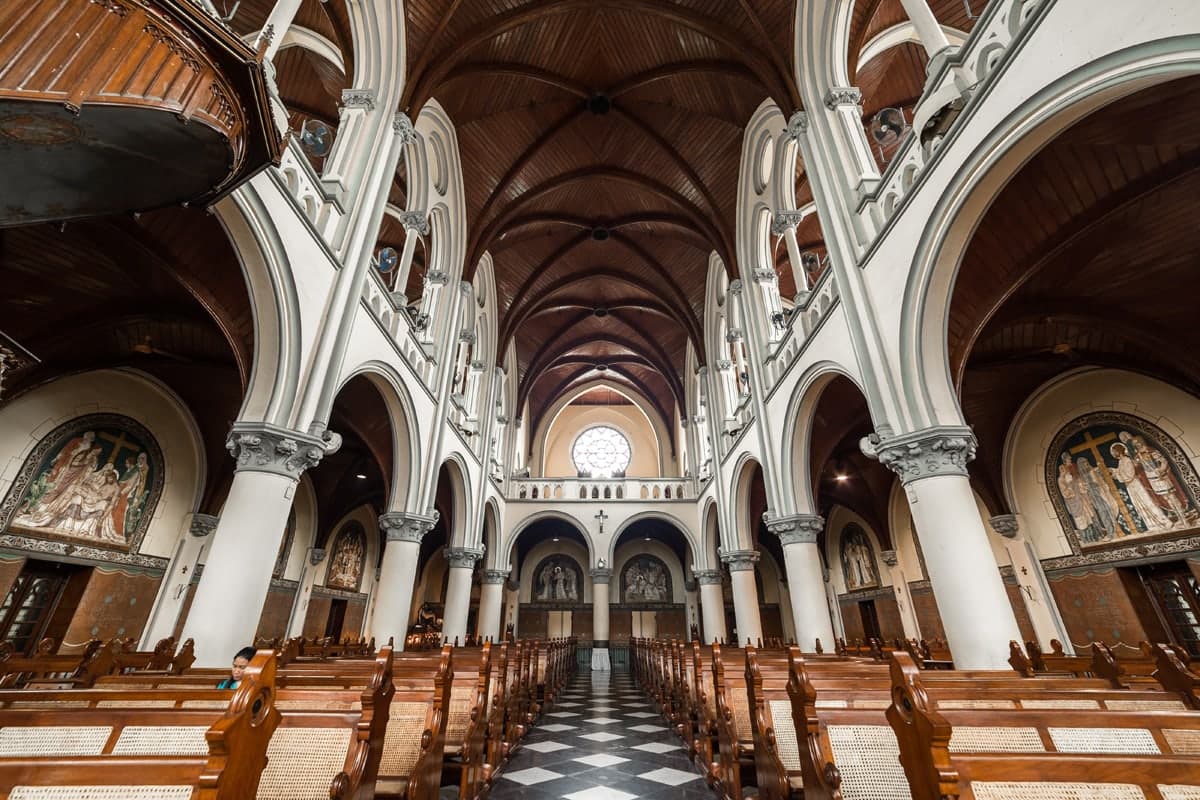
Image: Adobe Stock
Mounted on columns on either side of the altar are sculptures of St Ignatius of Loyola and St Francis Xavier, founders of the Society of Jesus. They signify the cathedral’s affiliation with the religious order.
On the walls are depictions of the Stations of the Cross, a series of images depicting the crucifixion of Christ. In each image, Jesus has a halo coated in gold.
One distinctively Indonesian feature of the cathedral is a statue of the Virgin Mary dressed in traditional batik, with the national emblem, Garuda Pancasila, on her chest. Two famous shadow puppets representing wisdom and prosperity can be seen on her robe.
There’s also an on-site museum that preserves religious relics. Among the items on display are Pope Paul VI’s staff, the chalice and chasuble of Pope John Paul II, as well as hats and robes worn by priests and cardinals from the colonial era.
It is a symbol of interfaith harmony
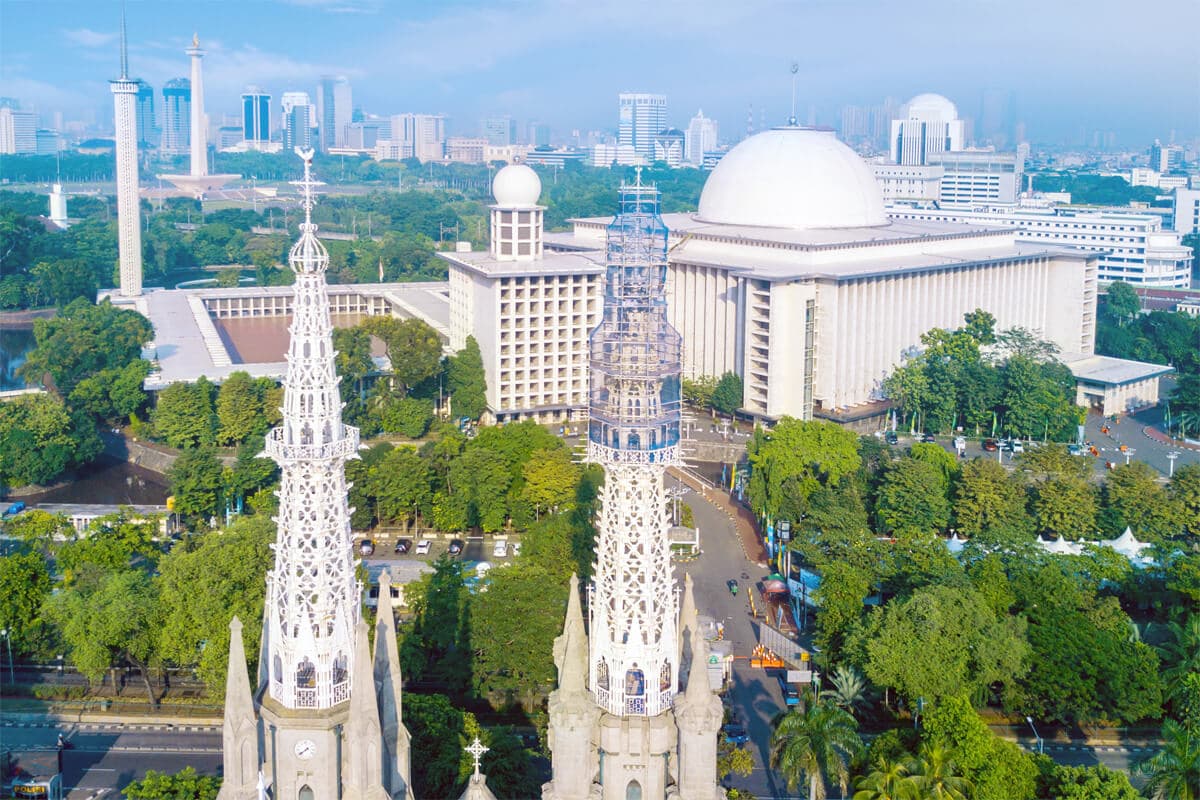
Image: Adobe Stock
Across the road from the cathedral stands Istiqlal Mosque, Indonesia’s largest Muslim house of worship.
Inaugurated nearly 80 years after Jakarta Cathedral, the mosque’s location was chosen by then-president Sukarno to highlight religious tolerance - an embodiment of the Indonesian motto Bhinneka Tunggal Ika (Unity in Diversity).
In keeping with this spirit, churchgoers are welcome to use the mosque’s parking lot, while the cathedral extends the same courtesy to Muslims attending prayers at the mosque, especially on festive occasions.
In 2021, an underground tunnel was constructed connecting both houses of worship. Named the Tunnel of Friendship, it signifies religious tolerance and interfaith harmony.