7 Facts About Shwedagon Pagoda, the Golden Crown of Yangon
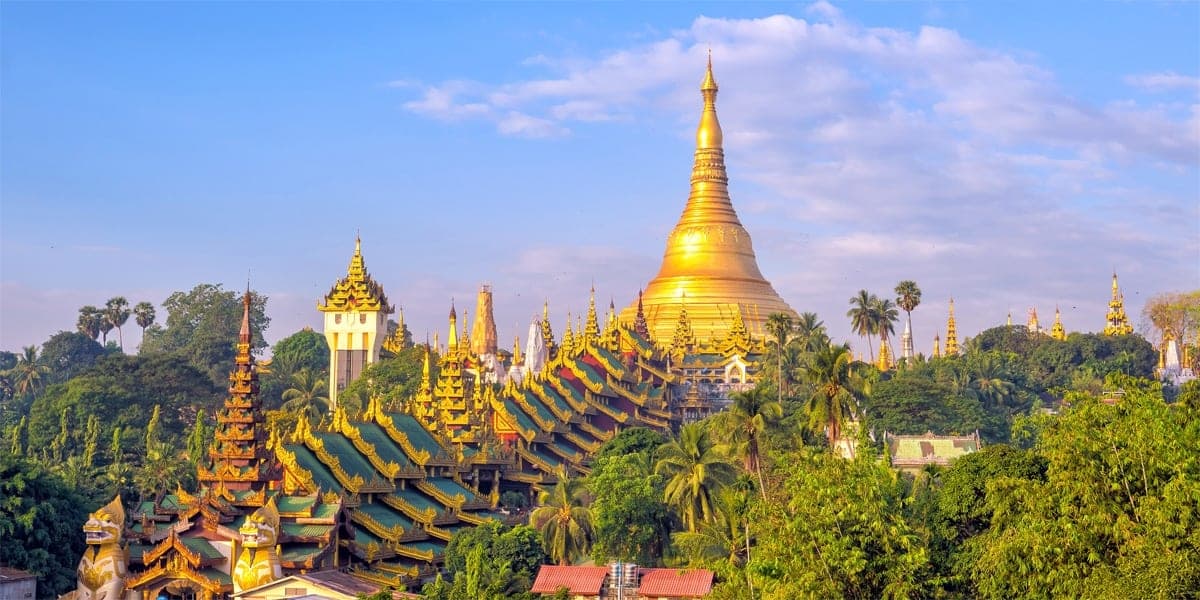
Perched atop a hill in downtown Yangon, Myanmar’s largest city, is Shwedagon Pagoda.
Known to locals as Shwedagon Zedi Daw or the “Great Golden Stupa”, the sacred Buddhist site has a colourful history spanning centuries of wars and foreign invasions, as well as democracy movements.
The gilded stupa is revered by the Burmese people, who believe that gold represents the sun and is associated with generosity, knowledge and enlightenment.
It is one of Asia’s oldest surviving temples
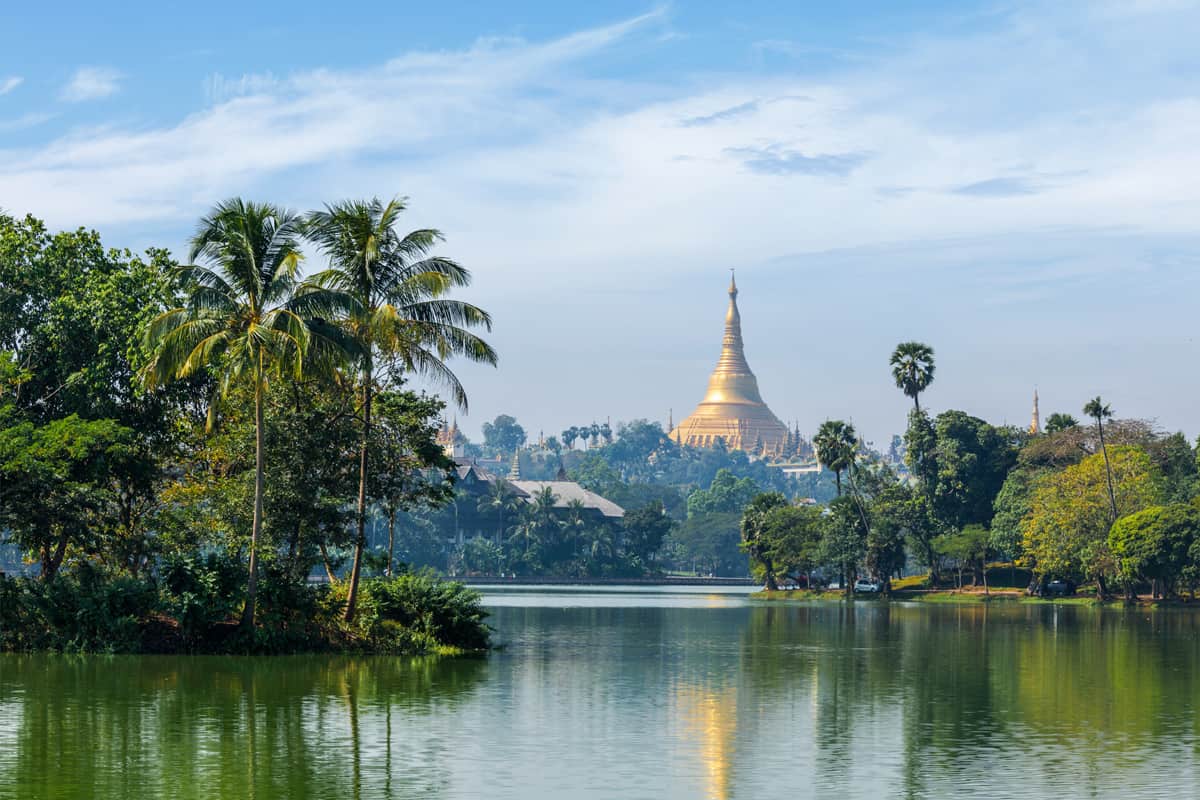
Image: Adobe Stock
The exact origin date of Shwedagon Pagoda remains a mystery, but historians estimate that it was built sometime between the 6th and 10th centuries.
It was first documented in 1363 in the Burmese Chronicles, which mentions an 18-metre tall stupa erected by King Binnya U. Over the centuries, the structure was continuously rebuilt, enlarged and embellished.
According to local lore, however, the site was established over 2,500 years ago as a centre to house sacred relics acquired from four Buddhas of the present kalpa (aeon).
Among the items enshrined include eight strands of hair from Gautama Buddha, a robe worn by Kassapa Buddha, a cloth water filter that belonged to Konagamana Buddha and a staff used by Kakusandha Buddha.
It is the tallest structure in Yangon
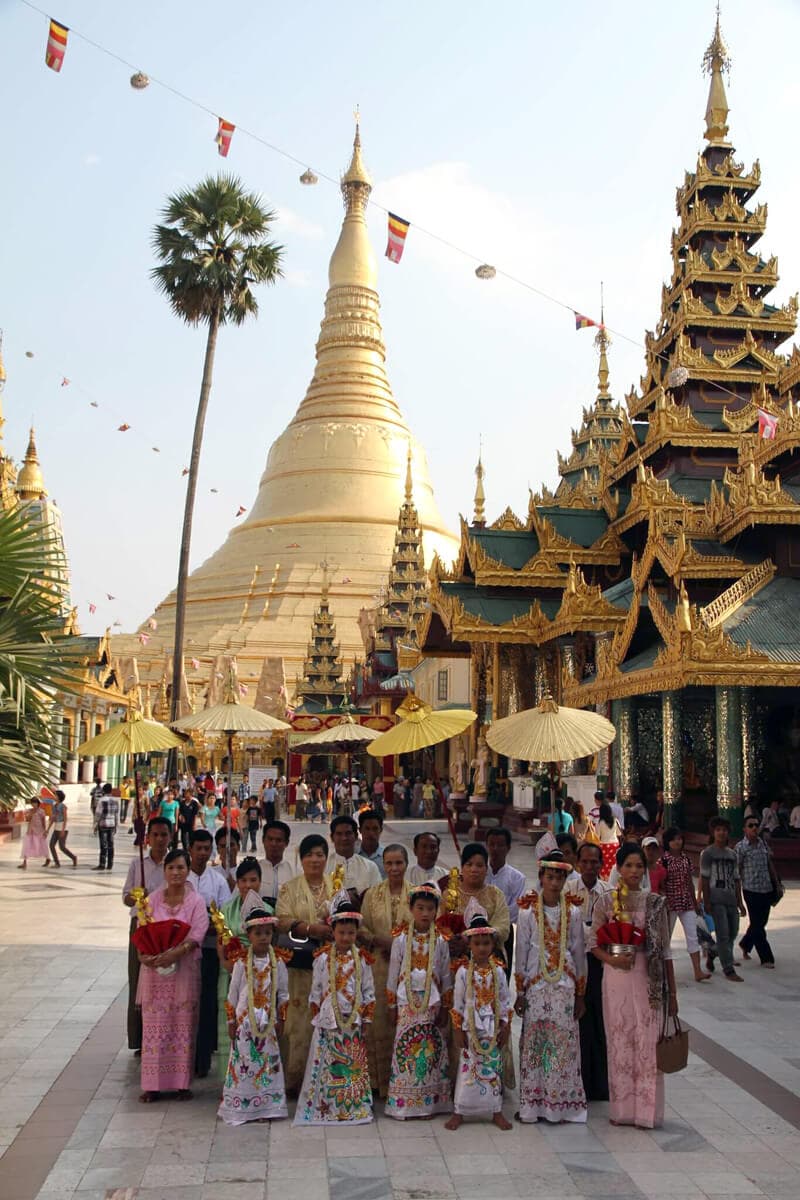
Image: Travel Aficionado / CC BY-NC 2.0
The 112-metre high Shwedagon Pagoda is located atop the 51-metre tall Singuttara Hill, right in the heart of Yangon.
Due to Yangon’s strict building regulations, which cap the height of any new building at 127 metres, the gilded stupa remains the city’s tallest structure and its crowning glory.
It is a grand example of Burmese Buddhism
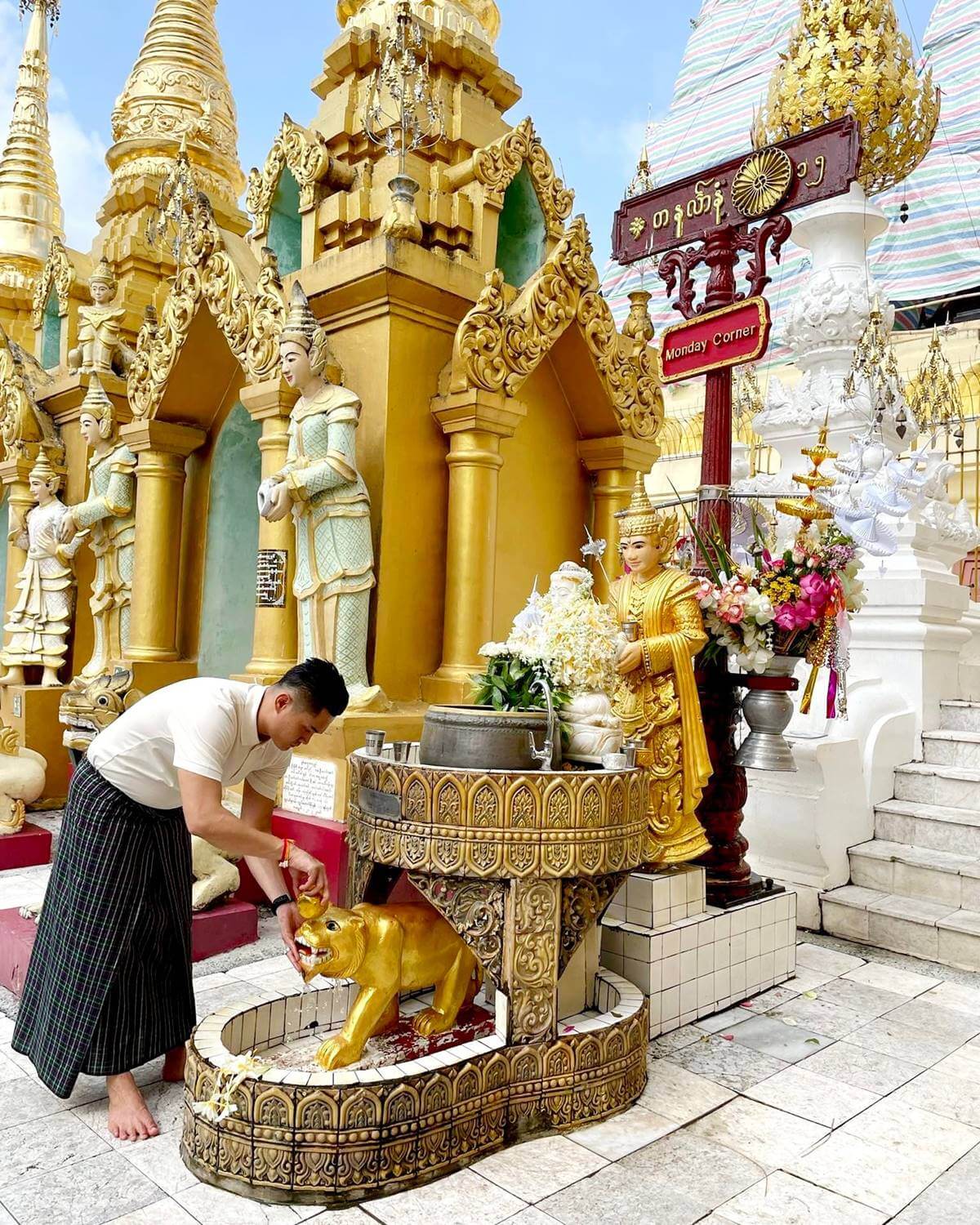
Image: Instagram @kyaw_zay_aung
Shwedagon Pagoda has four entrances, each guarded by a pair of chinthe or Burmese leographs leading up to the marble-clad terraces.
Across the 46-hectare complex dotted with shrines, pavilions and decorative statues, thousands of devotees pray and give offerings such as flowers, money and gold while circumambulating clockwise around the giant stupa.
Around the stupa are eight stations - each dedicated to a day of the week (there are two for Wednesday) with its ruling planet and associated mythical animal - where visitors can bathe a Buddha statue.
Other things to check out include the reclining Buddha, an ancient wishing well, a Bodhi tree, two historic bells and a museum showcasing the pagoda’s history.
It is crowned with a 72-carat diamond
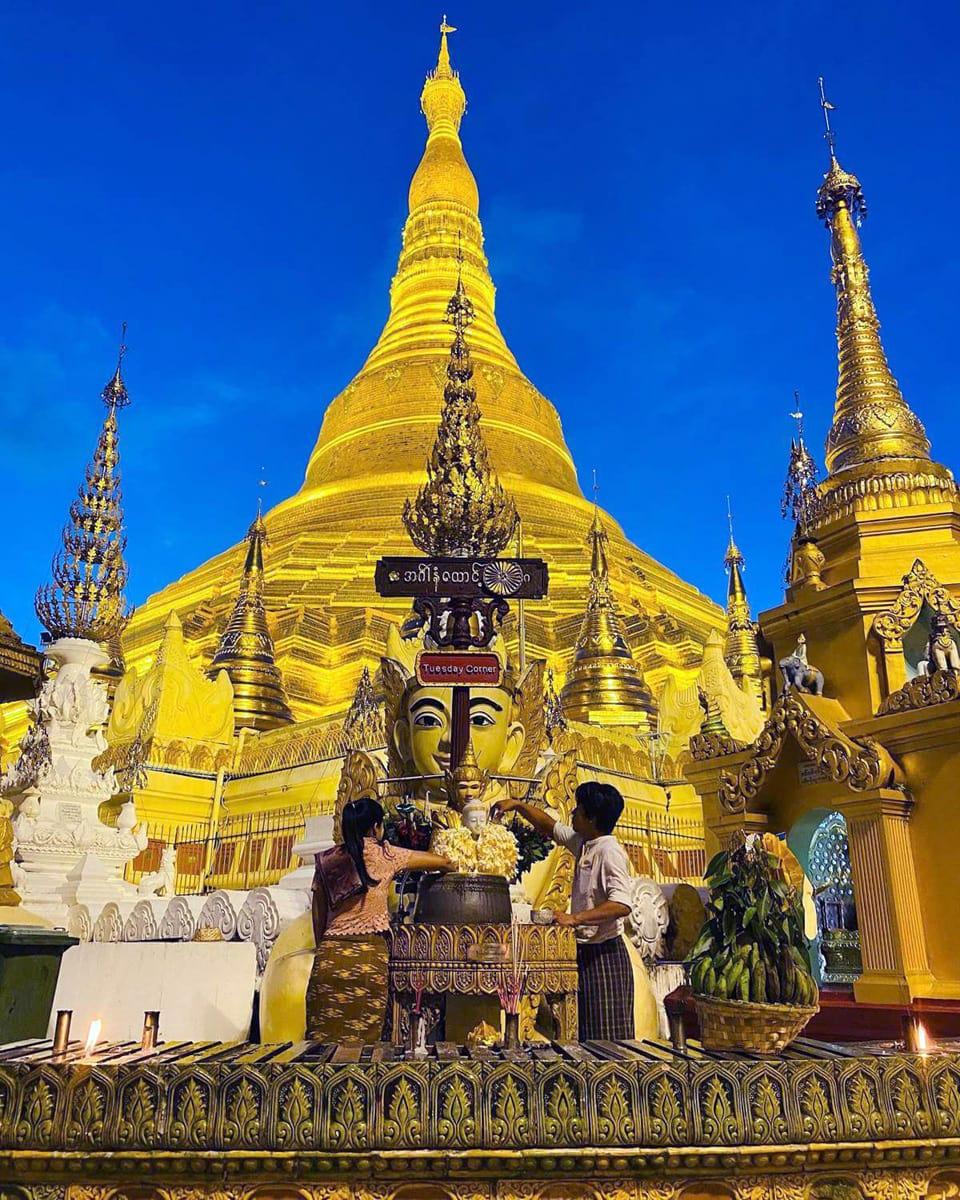
Image: Instagram @aye_zar_
The stupa is composed of three major parts including an octagonal base, a bell-shaped dome and a conical spire.
The spire, embedded with 5,448 diamonds, 2,317 rubies and other gemstones including topaz and sapphire, is truly a dazzling piece.
It is topped by a golden hti (finial ornament) festooned with 1,065 bells and crowned by a 72-carat diamond.
It was made golden by a 15th century queen
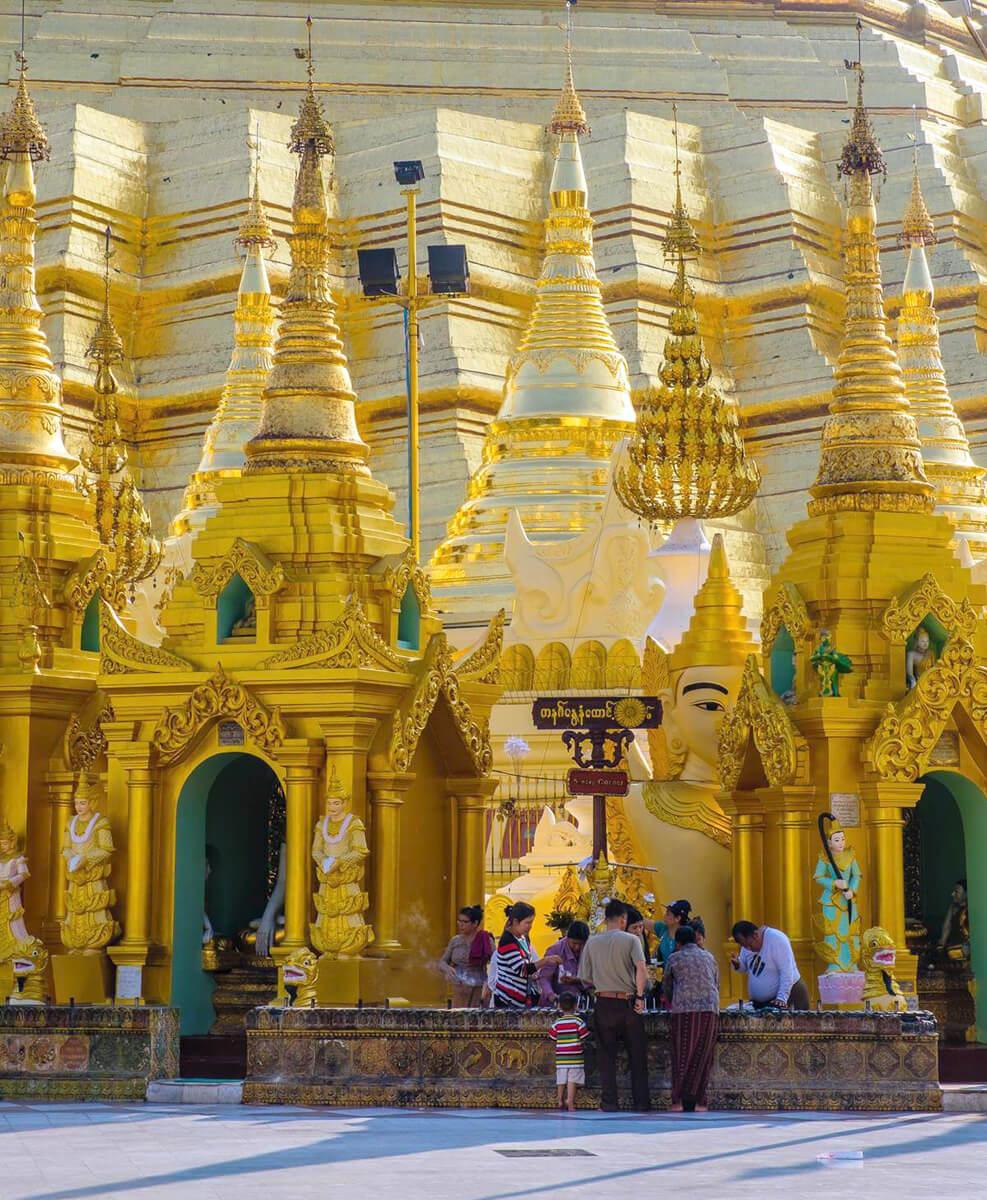
Image: alh1 / CC BY-ND 2.0
Shwedagon Pagoda was given the Midas touch by Queen Shin Sawbu beginning in the 15th century.
After abdicating the throne to King Dhammazedi, her son-in-law, the queen spent the rest of her days living next to the pagoda, dedicating her time and wealth on expanding and beautifying the site.
The queen even donated her weight in gold for the stupa, inspiring generations of monarchs and local communities to match her generosity until now.
Today, it is estimated that Shwedagon Pagoda is covered in 27 tons of gold.
It was plundered by the British
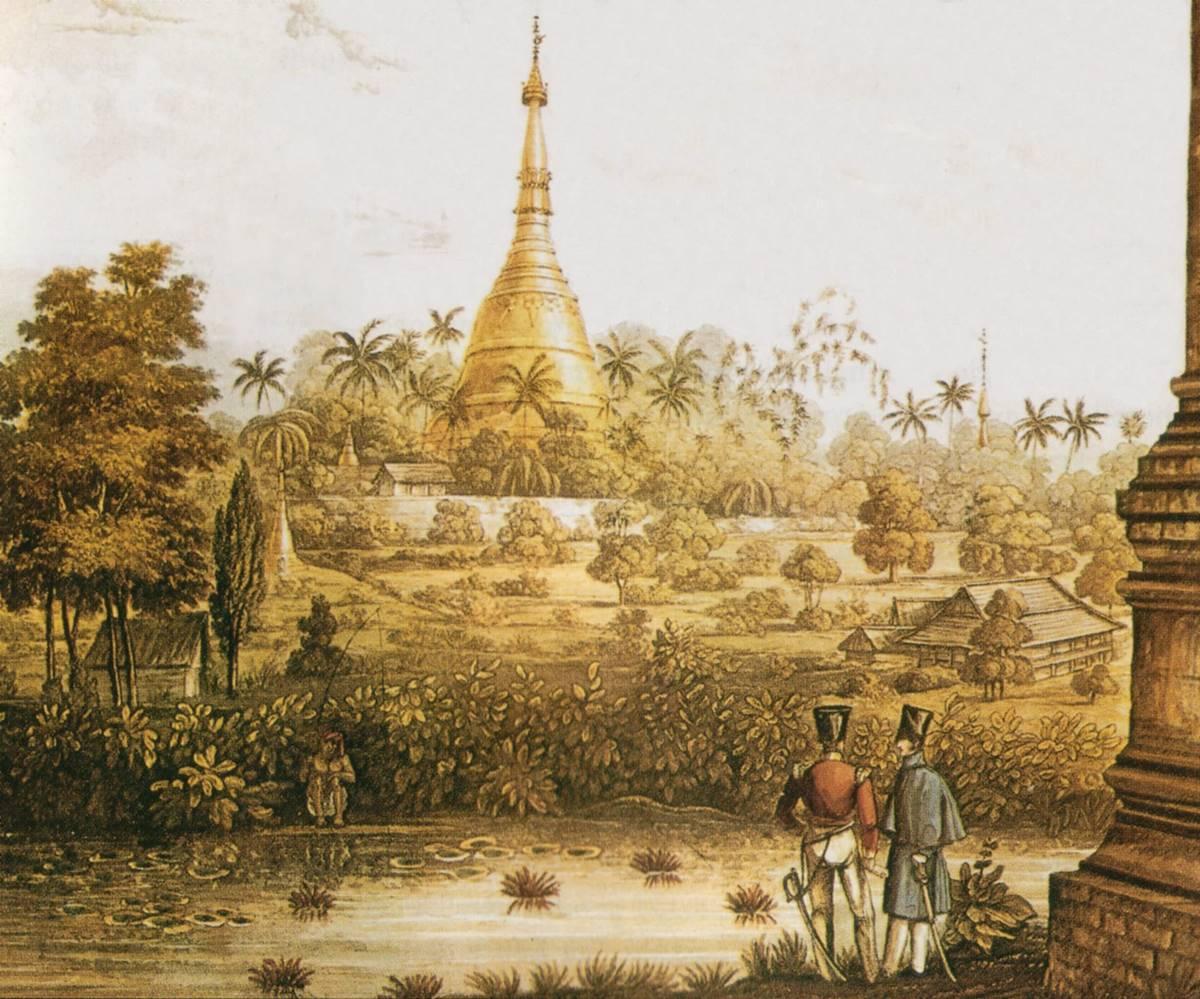
Image: Wikimedia Commons
In 1824, during the First Anglo-Burmese War, the British occupied Shwedagon Pagoda, using it as a fortress to fight off the Royal Burmese Army for two years until the Treaty of Yandabo was agreed.
Nearly three decades later, during the Second Anglo-Burmese War, the British once again pillaged and plundered the pagoda.
Not only was the sacred site used as a military compound, British troops even drilled holes on the pretext of storing gunpowder - but, in truth, it was to hunt for treasured relics.
Many precious items were looted. These include a gem-encrusted gold headpiece worn by Queen Shin Sawbu that’s currently on display at the Victoria and Albert Museum in London.
It has bells, big and small
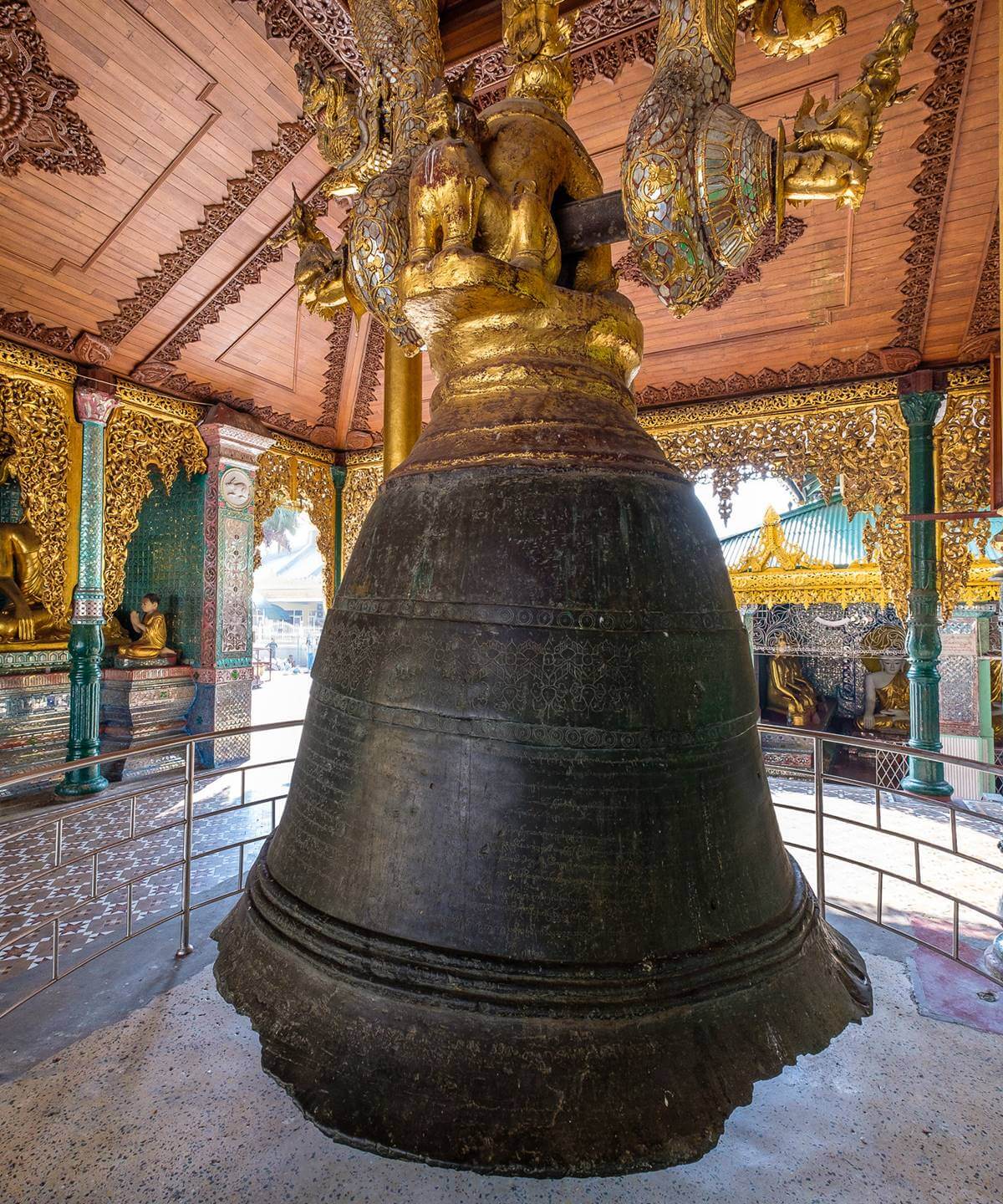
Image: alh1 / CC BY-ND 2.0
There are two noteworthy bells to see at Shwedagon Pagoda - the 42-ton Tharawaddy Min Bell crafted in 1841 and the Singu Min Bell, a 2.13-metre high bronze beauty from 1799.
In 1825, the British attempted to loot the Singu Min Bell but it rolled off the ship and fell into Yangon River. Many years later, the bell was successfully retrieved by a group of Burmese who ingeniously floated the bell by tying hundreds of bamboo poles under it.
Today, the antiquated bronze bell, which features 12 lines of inscription telling the story of King Singu, is safely kept at the Hall of Singu’s Bell.
A different fate befell its predecessor, the Great Bell of Dhammazedi, in 1608. The bell - said to be the world’s largest at 294 tons - was stolen by Filipe de Brito e Nicote, a Portuguese warlord who planned to melt it into cannon. The weight of the bell sunk de Brito’s ship, and both went down to the bottom of Yangon River, never to be recovered.